At a glance
- Most toddler hair tantrums aren't about pain tolerance — they're about dry, tangled hair and a brush started at the roots.
- A gentle kids' conditioner makes hair slippery so knots slide apart instead of snapping.
- Detangle on damp, conditioned hair with a wide-tooth comb, working bottom-up — never dry, never top-down.
- Look for a tear-free, pH-balanced, fragrance-light formula. Skip strong perfumes, drying sulphates and "adult" conditioners.
- Hard water and dusty Indian summers make tangles worse — a leave-in slip helps.
You know the scene. Post-bath, towel still around the shoulders, and the second the comb touches your toddler's head it's a full-body protest. The hair near the nape has felted into a little clump. The comb catches. And now nobody's having a good evening.
I've been formulating for small heads for years, so let me say the unglamorous part out loud: the tears are almost never about a "dramatic" child. They're about friction. Toddler hair is fine, often curly or wavy, sleeps against a pillow, collects dust all day, and usually gets washed with something a touch too stripping. Dry hair tangles. Tangled hair pulls. Pulling hurts. Sort out the friction and most of the drama just goes away.
Why does my toddler's hair tangle so easily?
A few things pile on at once, and most of them are very Indian.
Start with texture — plenty of Indian toddlers have wavy-to-curly hair, and curl tangles by nature because the strands wrap around each other. Then there's the water. Hard water is the norm across Nagpur, Delhi, Chennai and most of urban India, and it leaves a mineral film that makes hair feel rough and grabby. Add a summer afternoon of play: fine hair gets coated in grit, and grit is just friction by another name. And the pillow finishes the job — toddlers sleep hard and thrash all night, so a smooth evening head wakes up with a bird's nest at the back.
Then we go and make it worse without meaning to. We comb dry hair. We start at the scalp. We use a shampoo that squeaks the hair clean — and that squeak is the sound of stripped, thirsty hair.
What actually detangles toddler hair? An honest comparison
Parents ask me to pick a winner between coconut oil, a kids' conditioner, a detangling spray, and "just water and patience." Truth is they all earn their place — just not for the same job. Here's where each one actually pulls its weight.
| Option | How it works | Best for | Honest catch |
|---|---|---|---|
| Kids' conditioner (rinse-out) | Coats the strand, smooths the cuticle so knots slide apart | The everyday after-wash detangle — the biggest win for most toddlers | Must be a gentle, tear-free kids' formula, not an adult one |
| Plain coconut/almond oil | Softens hair, adds slip, loosens matted clumps before a wash | Pre-wash "malish," very dry ends, weekend deep care | Heavy if left in; needs a proper wash after or hair looks greasy and attracts more dust |
| Detangling / leave-in spray | Light slip on damp or next-day hair | Morning touch-ups, the school-gate redo, curly hair | Read the label — some are basically perfume and alcohol, which dries hair |
| Water + wide-tooth comb only | Wets hair enough to comb, no added slip | Very short hair, mild tangles, in a pinch | Not enough for real knots — this is where the tears happen |
So what would we actually do?
For most toddlers with shoulder-length or curly hair, this is the whole drill: a weekly oil massage before bath, a gentle kids' conditioner after every shampoo, and a wide-tooth comb on damp hair. Do those three and you've covered the vast majority of homes. Keep a light leave-in spray on the shelf only if mornings are a battle or the hair is properly curly. You don't need all four every day — that's just extra product on a tiny scalp for no reason.
How do I choose a gentle kids' conditioner in India?
Here's where I get fussy, and I make no apology for it: "for kids" on the front of a bottle means nothing on its own. Flip it over. Read the back.
- Tear-free and pH-balanced. A toddler will get it near their eyes. The formula should be mild and close to hair's natural slightly-acidic pH so the cuticle lies flat (flat cuticle = smooth = fewer tangles).
- Real conditioning agents. Look for gentle conditioners and humectants — think behentrimonium or cetearyl-type smoothers, glycerin, light plant oils. These are what give slip.
- Light or no added fragrance. Strong perfume is the most common irritant on the label and adds nothing for the hair. A barely-there scent is fine; a strong one is a flag.
- Skip the harsh stuff. No drying sulphates as the main cleanser (in a shampoo), no added colour, and you don't need silicones that build up over hard water.
- Made and tested honestly. Dermatologically tested, a clear ingredient list, and ideally made in a facility the brand actually controls. I'm biased here — we make ours in our own GMP-certified facility in Nagpur precisely so we can stand behind every batch.
The tear-free detangling routine (do this tonight)
Get the sequence right and the products almost don't matter. This is the order we recommend, step by step.
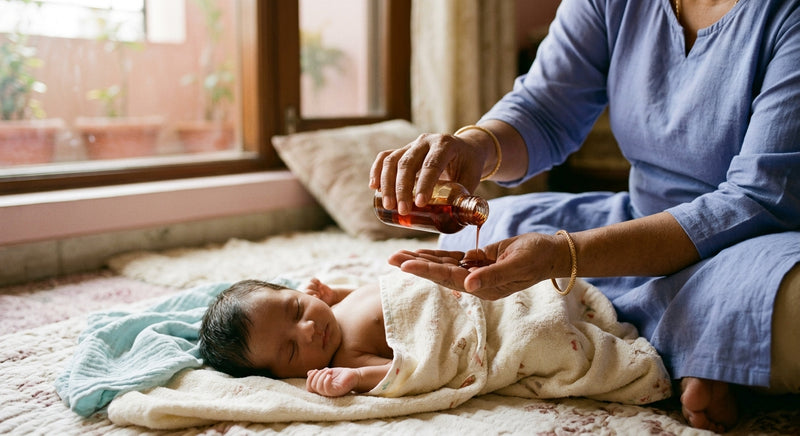
- Optional pre-wash oil. On wash days, warm a little coconut or almond oil between your palms and smooth it through the lengths (not drowning the scalp) 20–30 minutes before bath. It loosens knots in advance.
- Wash gently. Use a small coin-size of a mild, tear-free kids' shampoo. Massage the scalp, don't scrub the lengths into a knot.
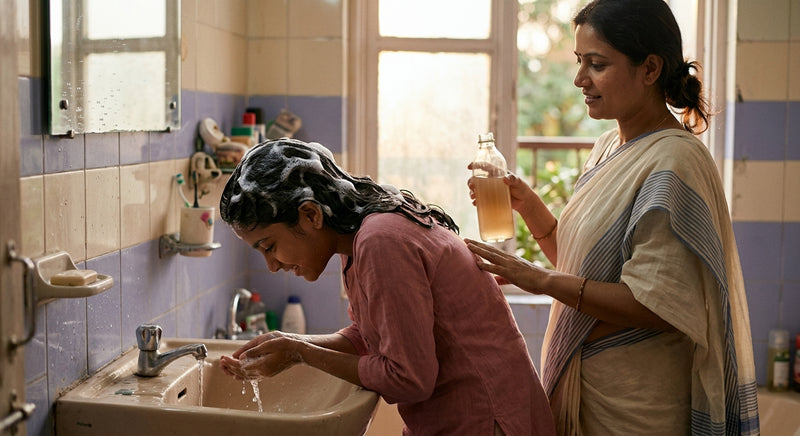
- Condition the lengths. Smooth a pea-to-marble-size of kids' conditioner through the mid-lengths and ends — the tangly bottom two-thirds, not the scalp. Leave it a minute. This is the slip that does the real work.
- Detangle in the water, with conditioner still in. Use a wide-tooth comb and start at the very ends. Comb the bottom inch, then move up an inch, then another. Never start at the scalp — that just drags every knot down into one big mat.
- Hold the hair above where you comb. Grip the section between scalp and comb so any tug pulls against your hand, not their head. This one trick stops most of the "ow."
- Rinse, then air-dry or pat. Don't rub vigorously with a towel — scrunch gently. Rough towel-drying re-tangles everything you just fixed.
What about hard water and curly toddler hair?
If your tap water is hard, you'll feel it on your hands — hair that's rough even after a clean wash. A good rinse-out conditioner helps cut through that film. And for a genuinely curly toddler, conditioner stops being optional; curls need moisture to clump nicely instead of frizzing into knots. A light leave-in detangler on day-two hair keeps the curls defined without a daily wash — which curls don't want anyway. Two to three washes a week is plenty.
When to see a doctor
Detangling is a comfort issue, not usually a medical one — but check with your paediatrician if you notice: patches of hair loss or broken hair in one spot, an itchy, flaky or weepy scalp, persistent redness or sores, or visible signs of lice (tiny eggs glued near the scalp). Sudden or patchy hair loss in a toddler is always worth a professional look rather than a guess.
If detangling stays a fight even with a gentle routine, the missing piece in most homes is a smooth, kid-safe slip — a gentle detangling conditioner made for little heads is the simplest place to start.
In summary
- Toddler hair tears are usually from friction and dryness, not a dramatic child — fix the slip, not the patience.
- Condition the lengths after every wash and detangle on damp hair with a wide-tooth comb, working bottom-up.
- Choose a tear-free, pH-balanced, lightly-scented kids' conditioner — skip adult formulas and strong perfumes.
- Use coconut or almond oil as a weekly pre-wash softener, not a daily leave-in.
- See your paediatrician for patchy hair loss, an itchy or weepy scalp, or signs of lice.
Frequently asked questions
Can I use my own conditioner on my toddler's hair?
It's best not to as a default. Adult conditioners are formulated for adult hair and a thicker scalp, and many carry strong fragrances that can irritate. A toddler's skin is far more delicate, so choose a gentle, tear-free kids' conditioner that's pH-balanced and lightly scented. In an occasional pinch a tiny amount on the ends only is unlikely to harm, but it isn't ideal day to day.
Should I detangle my toddler's hair wet or dry?
Wet, with conditioner still in. Damp, conditioned hair has slip, so knots slide apart instead of snapping. Dry, tangled hair is when most of the pulling and tears happen. Use a wide-tooth comb, start at the very ends, and work upward in small sections rather than dragging from the scalp down.
How often should I wash and condition toddler hair?
For most toddlers, two to three washes a week is plenty — daily washing strips natural oils and actually makes hair drier and tanglier. Condition the lengths after every shampoo. Between washes, a quick comb with a light leave-in spray or just water on damp hair keeps knots from setting in, especially after dusty afternoons of play.
Is coconut oil or conditioner better for detangling?
They do different jobs. Coconut oil is great as a pre-wash treatment to soften hair and loosen mats, but it's heavy if left in and needs washing out. A rinse-out kids' conditioner is the everyday detangler — it smooths the cuticle so the comb glides. The honest best routine uses oil weekly before bath and conditioner after every wash.
Why does my toddler's hair tangle so much in India specifically?
Hard water, dust and texture. Hard water leaves a mineral film that makes hair rough and grabby, summer dust coats fine strands with grit, and many Indian toddlers have wavy or curly hair that naturally knots more. Sleeping movement adds the classic morning nest at the nape. A good conditioner counters the roughness from hard water and dust.