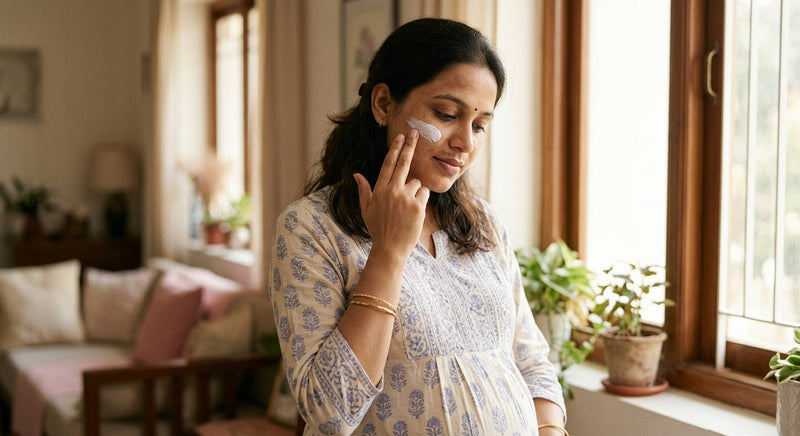
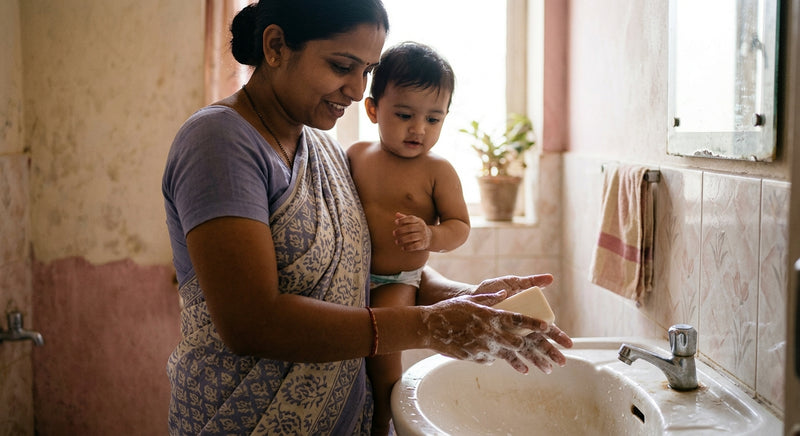
Two weeks old, and there are dry, flaky patches on her shins and the backs of her hands. Three people have already pressed three jars into your hands — coconut oil, ghee, a tin of ubtan. You just want to know which one is safe on skin this new.
Short version: plain virgin coconut oil and a fragrance-free baby moisturiser are the safest, evidence-friendly choices. Ghee is fine as an occasional occlusive but spoils and can trap heat. Ubtan, besan scrubs, mustard oil and lemon do not belong on a newborn. Now the honest detail — what each one really does on newborn skin, and what I'd reach for first.
At a glance
- A newborn's skin is 20-30% thinner than an adult's, so it loses water fast and absorbs whatever you apply more readily.
- Most newborn dryness and flaking in the first few weeks is normal peeling, not a problem to fix aggressively.
- Safest home options: virgin coconut oil, a colloidal oatmeal bath, and a fragrance-free emollient.
- Skip on newborns: ubtan/besan scrubs, mustard oil, lemon, raw turmeric paste and heavily fragranced products.
- Moisturise on damp skin within 3 minutes of a bath — timing matters more than the jar.
Why is my newborn's skin so dry in the first place?
Nine months in fluid, and then suddenly air. That top protective layer — the stratum corneum — is still maturing, and the waxy vernix that coated her is gone. So the skin dries and flakes, usually around the ankles, wrists and tummy, often in the first two weeks. Most of the time this is normal newborn peeling. Not eczema. Not anything you did.
What makes it worse here is the room the baby is in. Dry winter air. An AC running all night through a Nagpur summer. Hard water in the bath. Bathing her too often. If you want the whole first-month routine, our complete guide to newborn skin basics covers it end to end. This piece answers the one question I get asked most: which gharelu nuskha is actually safe to put on?
Newborn dry skin remedies, compared honestly
Here's how the common kitchen and ubtan options actually behave on newborn skin. I formulate baby products for a living, so I'll be blunt — what works as an emollient or occlusive, and what's a tradition we love but shouldn't be putting on a two-week-old.
| Remedy | What it actually does | Safe for a newborn? |
|---|---|---|
| Virgin coconut oil | Light emollient; some lab work suggests it supports the skin barrier and has mild antimicrobial fatty acids | Yes — a small amount, patch-test first |
| Colloidal oatmeal bath | Soothes and softens; oat compounds calm the look of irritated skin | Yes — finely ground, lukewarm, short soak |
| A2 ghee / malai (milk cream) | Heavy occlusive; seals in water but can spoil, trap heat and feel greasy | Okay occasionally — fresh, tiny amount, not in hot weather |
| Petroleum jelly (plain) | Pure occlusive; locks moisture in well, no actives | Yes — fragrance-free, thin layer on dry patches |
| Mustard oil (sarson) | Warming massage oil; can sting and disrupt the barrier on very thin skin | No — too harsh for a newborn |
| Besan / ubtan scrub | Abrasive cleansing paste meant to exfoliate | No — never scrub newborn skin |
| Lemon, raw turmeric, salt | Acidic or gritty; disrupt skin pH and can burn | No |
So what would we actually do tonight?
If she's dry and flaky but feeding and sleeping fine, the routine is short. No scrubbing. No ten-step ritual.
- Bathe less, not more. Two to three short baths a week, lukewarm — never hot. Long daily baths strip the very oils you're trying to keep.
- Skip soap on dry patches. Plain water, or a tear-free pH-balanced baby wash, is plenty for a newborn. Harsh soap makes the flaking worse.
- Pat, don't rub, dry. Leave her skin a little damp.
- Moisturise within 3 minutes. This is the step that does the real work. Damp skin plus a barrier balm or fragrance-free moisturiser traps the water in.
- For the stubborn patches — shins, ankles — a thin layer of a richer balm at night beats reapplying a thin lotion all day.
- Patch-test anything new. A coin-sized area on the inner arm, 24 hours, before it goes on all over.
If you'd rather get the bath itself right first, our honest look at newborn skincare myths vs facts covers water temperature, frequency and what to genuinely skip.
Coconut oil or a baby moisturiser — which is better?
For mild dryness, a few drops of warmed virgin coconut oil massaged in is perfectly fine, and the malish itself is lovely for both of you. But coconut oil is an emollient, not a strong sealant. In dry winter air, or against hard water, it often isn't enough on its own. A formulated baby moisturiser stacks humectants (which pull water in), emollients (which soften) and occlusives (which seal), so the moisture holds for longer. If you're curious how those three layers work together, we explained how to tell normal newborn skin changes apart in the same plain way.
What I read on a label before it touches a newborn: fragrance-free or very low fragrance, no added colour, a short ingredient list, dermatologically tested, and a barrier ingredient like a ceramide or a well-studied butter. That's the whole list. Nothing fancier needed.
When to see a doctor
Most newborn dryness settles with gentle care. Still, call your paediatrician if you see any of these:
- Dry, red, weepy or cracked patches that look raw, ooze or bleed.
- Dryness that spreads, especially with intense scratching or poor sleep — possible early eczema (up to roughly half of babies experience atopic-type skin issues).
- Yellow crusting, pus, or skin that feels hot — signs of possible infection.
- Dryness with fever, poor feeding or a baby who seems unwell.
- Deep cracks or peeling all over from birth, which a doctor should review.
When you're unsure, a quick paediatric check is always the right call — this article is guidance, not a diagnosis.
If you want one simple, fragrance-conscious option that works as both a daily moisturiser and a richer seal for the stubborn patches, our Hydra Healing Moisturizing Balm is made for exactly this — gentle enough for newborns, with barrier support built in.
In summary
- Virgin coconut oil, a colloidal oatmeal bath and a fragrance-free moisturiser are the safest home remedies for newborn dry skin.
- Skip ubtan, besan scrubs, mustard oil, lemon and raw turmeric on a newborn — the skin is far too thin.
- Bathe just 2-3 times a week in lukewarm water and avoid harsh soap on dry patches.
- Moisturise on damp skin within three minutes of a bath — timing matters more than the product.
- See a paediatrician if dry skin becomes red, weepy, cracked, infected-looking or comes with fever or poor feeding.
Frequently asked questions
Is coconut oil safe for a newborn's dry skin?
Yes, virgin (cold-pressed) coconut oil is one of the safer home options for mild newborn dryness. It's a light emollient and some studies suggest it supports the skin barrier. Use only a small amount, warm it slightly, and patch-test on the inner arm for 24 hours first. In dry winter air it may not seal enough on its own, so pair it with a fragrance-free moisturiser if flaking continues.
Can I use ghee or malai on my newborn's dry skin?
Occasionally, yes. Fresh ghee is a heavy occlusive that seals moisture in, and it's a respected tradition. But it spoils quickly, can feel greasy and may trap heat in humid or summer weather, so use only a tiny amount of fresh ghee and avoid it in hot months. For everyday dryness a lighter coconut oil or a formulated baby moisturiser is easier and more reliable.
Why is my two-week-old's skin peeling and flaking?
This is usually normal newborn peeling. Babies arrive coated in vernix after months in fluid, and once that's gone the maturing top skin layer dries and flakes — often around the ankles, wrists and tummy in the first couple of weeks. As long as your baby is feeding and settling well, gentle moisturising is all that's needed. See a doctor if patches turn red, raw, weepy or cracked.
Should I use mustard oil for my newborn's dry skin?
It's best avoided on newborns. Traditional sarson ka tel is a warming massage oil that can sting and disrupt the very thin newborn skin barrier, and some babies react to it. If you want to do malish, a few drops of warmed virgin coconut oil is gentler and better studied for babies. Always patch-test any oil first.
How often should I bathe a newborn with dry skin?
Two to three short baths a week is plenty for most newborns, in lukewarm — not hot — water. Daily long baths strip natural oils and make dryness worse. Use plain water or a tear-free, pH-balanced baby wash, pat the skin almost dry, and moisturise within about three minutes while the skin is still damp to lock water in.