You notice it first on the cheeks. Two rough, red patches that weren't there last week, and your baby keeps rubbing her face against your shoulder. By the weekend it's on the backs of her knees too, and she's scratchy and unsettled at night. If that's roughly where you are — trying to work out whether this is plain dry skin or something with a name — read on.
Baby eczema — atopic dermatitis, if you ask a paediatrician — is dry, itchy, inflamed skin that flares and settles in cycles. It's common. It's manageable. And honestly, the day-to-day comes down to two dull, powerful habits: gentle cleansing and generous moisturising. Here's exactly what to look for, and a routine you can start tonight.
At a glance
- Eczema looks like dry, red, rough patches that itch — classically on cheeks, scalp and the creases of elbows and knees.
- It comes and goes in flares. That's normal and doesn't mean you're doing something wrong.
- The whole routine is two things done well: a short, lukewarm bath and a thick moisturiser sealed on within 3 minutes.
- Moisturise even on clear-skin days — you're supporting the barrier, not just treating a flare.
- Weeping, yellow crusting, fever or a baby too itchy to sleep means it's time to call your paediatrician.
How do I know it's eczema and not just dry skin?
The honest answer: the biggest tell is the itch. Plain dry skin feels tight and looks flaky, but it rarely torments a baby. Eczema itches — and you'll read it in her behaviour before you see it clearly on the skin. Cheeks rubbed against the cot sheet. Legs kicked together. A night-time fussiness you can't otherwise explain.
Here's what the patches themselves tend to look like on Indian babies:
- Where: in the first months, the cheeks, forehead and scalp. Once babies start crawling it moves to the folds — inner elbows, behind the knees, wrists, ankles, neck.
- What: dry, rough, slightly raised patches. Redness can be hard to spot on deeper skin tones, so go by texture — run a finger over it and you'll feel sandpapery, warm skin, sometimes with tiny bumps.
- How it behaves: it flares, calms, and flares again. Heat, sweat, harsh soap, wool, hard water and dry winter air are the usual triggers.
Something that surprises a lot of parents: eczema isn't caused by poor hygiene, and it's rarely "something in your milk." It's a barrier problem. The skin's outer layer doesn't hold water or keep irritants out the way it should — so it dries, cracks and reacts. Which is precisely why the routine below works. Every step is doing one job: rebuilding that barrier.
The gentle care routine you can start tonight
Don't overhaul everything. This is deliberately short — a tired parent at 9pm should be able to do all of it. Print it, stick it near the changing table, work down the list.
- Keep the bath short and lukewarm. Five to ten minutes, water that feels neutral on your wrist — not warm. Hot water strips the skin's oils and leaves eczema angrier than before.
- Skip soap. Use a gentle, tear-free wash. Ordinary soap is alkaline and harsh on a barrier that's already struggling. A mild, fragrance-light cleanser on the sweaty, grubby bits is plenty — you don't need to lather the whole body every day.
- Pat dry, don't rub. Press a soft cotton towel gently. Leave the skin very slightly damp — that leftover moisture is what you're about to lock in.
- Moisturise within 3 minutes, generously. This is the single most important step. A thick balm or cream over the whole body while the skin is still damp, extra on the dry patches. "Greasy enough that it takes a moment to soak in" is the right amount.
- Dress in loose cotton. No wool or synthetics directly on the skin. Cotton lets the skin breathe and doesn't scratch a baby who's already itchy.
- Moisturise again in the morning — and any time the skin looks dry through the day. On a bad flare, twice isn't enough; go up to three or four times.
What should I look for in the moisturiser?
Advice first, product second — because the ingredient list matters more than the brand on the front. For an eczema-prone baby you want a thick, fragrance-free formula built to support the skin barrier: humectants that pull water in, emollients that soften, and occlusives that seal it all shut. If you want the science of how those three layers actually work together, we broke it down in the Janma Journal's guide to dry, flaky baby skin — the same barrier logic applies to eczema, just more so.
Look for:
| Look for | Be cautious with |
|---|---|
| Fragrance-free or very low fragrance | Added perfume / "parfum" high on the list |
| Barrier ingredients — ceramides, natural butters, oats | Alcohol-heavy, quick-drying lotions |
| A thick balm or cream texture | Thin, watery lotions that vanish in seconds |
| Dermatologically / in-vivo tested | Antibacterial "medicated" soaps |
Our Hydra Healing Moisturizing Balm was built for exactly this job — clinically tested and formulated to help support the skin barrier (in a lab study it increased Keratin-10 and Filaggrin expression, two proteins that help hold the barrier together), with in-vivo testing showing visibly calmer skin in as little as one day. It suits all ages, so the same tub works for a flare on a newborn and dry patches on an older sibling.
What about bath time — do I bathe her at all?
Yes. There's an old myth that eczema babies shouldn't be bathed. In practice a short, lukewarm bath is good — it lifts sweat, dust and city grime that can trigger a flare, and it hydrates the skin as long as you moisturise straight after. The mistakes are hot water, harsh soap and long soaks. Reach for a tear-free, low-fragrance option like the Head to Toe Baby Foam Wash on the parts that actually need it, and keep the whole thing under ten minutes.
Small things that make a real difference in India
A few local realities are worth naming, because they trip up a lot of parents here:
- Hard water. Much of urban India runs on hard water, which can aggravate eczema. If flares track with bath time, a quick rinse with stored or softened water for the final splash sometimes helps.
- Heat and sweat. A sweaty summer afternoon is a classic trigger. Keep rooms cool, dress her light, and wipe sweat out of the creases gently — trapped sweat in a hot elbow fold is a flare waiting to happen.
- Malish, sensibly. A gentle oil massage is lovely for bonding, but during an active, weeping flare, hold off on heavy oils on the raw patches and let your moisturiser do the work. Go back to malish once the skin has calmed.
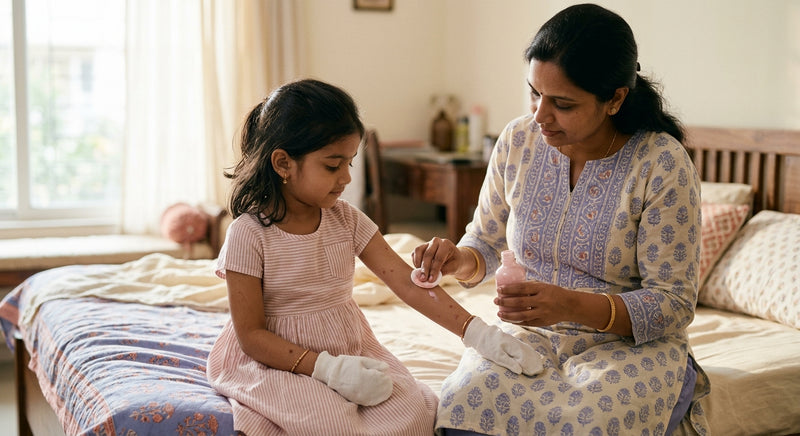
- Nails. Keep them short and filed. Most of the damage in eczema isn't the rash — it's the scratching that breaks the skin and lets infection in. Cotton mittens at night during a bad phase genuinely help.
When to see a doctor
Most baby eczema is managed at home with gentle bathing and diligent moisturising. But see your paediatrician if you notice any of these — they can point to infection or a flare that needs prescription help:
- Weeping, oozing, or yellow-golden crusting on the patches (possible infection)
- Blisters, pus, or a patch that's hot, swollen and spreading
- Fever alongside a bad flare
- Your baby is so itchy she can't sleep or feed, despite your routine
- The eczema isn't improving after a couple of weeks of consistent gentle care
And if you're ever unsure — especially with a very young newborn — it's always reasonable to get it looked at. A doctor can prescribe a short course of a topical treatment when the barrier care alone isn't enough, and that's a normal, safe part of managing eczema.
The one thing I'd most want you to hold onto: eczema is a marathon of small, gentle, repeated steps, not a single cure. On the good weeks you'll be tempted to stop moisturising. Don't. That quiet daily habit on clear skin is exactly what keeps the next flare smaller.
In summary
- Look for dry, rough, itchy patches on the cheeks, scalp and skin creases — the itch is the biggest tell.
- Keep baths short and lukewarm, skip soap, and use a mild tear-free cleanser only where needed.
- Moisturise generously within three minutes of the bath while the skin is still damp — this is the key step.
- Keep moisturising on clear-skin days too, and dress your baby in loose cotton with short nails.
- See a paediatrician if you spot weeping, yellow crusting, fever, or a flare that won't settle.
Frequently asked questions
What are the first signs of eczema in a baby?
The earliest signs are dry, rough, slightly red patches that itch — most often on the cheeks, forehead and scalp in young babies. You'll often notice the itch through behaviour first: rubbing the face on bedding, restlessness at night, kicking the legs together. On deeper skin tones, go by texture (sandpapery, warm skin) rather than looking only for redness.
How often should I moisturise a baby with eczema?
At least twice a day — once within three minutes of the bath while the skin is still damp, and again in the morning. During an active flare, moisturise more often, up to three or four times a day, and reapply any time the skin looks or feels dry. Keep going even on clear-skin days, because consistent moisturising supports the barrier and helps keep the next flare smaller.
Can I bathe my baby if they have eczema?
Yes. A short, lukewarm bath under ten minutes is good for eczema — it removes sweat and irritants and hydrates the skin, as long as you moisturise straight after. The mistakes to avoid are hot water, harsh soap and long soaks, which strip the skin's natural oils. Use a mild, tear-free, low-fragrance cleanser only on the parts that need it.
What triggers baby eczema flares?
Common triggers include heat and sweat, dry air (winter or air-conditioning), harsh soaps and fragrances, hard water, wool and synthetic fabrics, and rough towel-drying. In India, sweaty summers and hard tap water are frequent culprits. Eczema naturally comes and goes in cycles, so occasional flares don't mean you're doing anything wrong — the routine is about making them smaller and less frequent.
Is baby eczema caused by something in my diet or breast milk?
Usually not. Baby eczema is primarily a skin-barrier issue, not a hygiene or feeding problem, so it's rarely caused by your diet or breast milk. Restrictive elimination diets aren't recommended without a doctor's guidance, as they can do more harm than good. If you suspect a specific food is triggering flares in an older baby, talk to your paediatrician before cutting anything out.
When does baby eczema usually go away?
Many babies outgrow eczema as they get older, and flares often become milder over time with consistent gentle care. Some children grow out of it entirely by the toddler or school years, while others have skin that stays sensitive. There's no fixed timeline, and it varies a lot from child to child. Steady bathing-and-moisturising habits are what keep it well managed in the meantime.