Every April it's the same story. The eczema you finally got quiet over winter comes roaring back the day the heat sets in. Your baby wakes up scratching, the patches behind the knees turn red and weepy, and the cream that saved you in December just… stops working. If that's your house right now, here's the short version — summer eczema runs on heat, sweat and humidity, not dryness alone. So the fix isn't a heavier cream. It's a cooler, lighter, more frequent routine. Keep the skin cool, keep it barely damp with moisturiser, and break the itch-scratch cycle before it takes hold.
What follows is the exact routine I'd hand a friend, step by step. You can start tonight. And if you want the bigger picture on what's going on under the skin, our complete guide to baby eczema and dry skin is worth ten quiet minutes.
At a glance
- Summer flares are usually set off by sweat and heat, not a lack of moisture — so cool the skin first.
- Moisturise more often, not more heavily: a lighter layer, at least twice a day and always after a bath.
- Short, lukewarm baths with a gentle, soap-free wash calm skin faster than skipping baths in the heat.
- Cotton, loose clothing and a cooler room at night stop the 2am scratch.
- Weeping, crusting, yellow ooze or fever means it's time to call your paediatrician.
Why does eczema get worse in Indian summer?
It feels backwards. Winter is the dry season, so summer should be the easy one — right? Not for eczema-prone skin. Here's what actually shifts when the heat arrives.
Sweat is the big one. It carries salts and traces of nickel and other irritants, and on skin that's already inflamed, it stings and itches. In a sticky Mumbai or Chennai summer, sweat pools in the folds — neck, elbow creases, behind the knees — and never quite dries. Put a ceiling fan pushing warm air over that, add a synthetic onesie and a hot car seat on the afternoon drive, and the flare almost builds itself.
Heat does its own damage. It widens blood vessels and turns up the itch signal. And a baby's skin starts from behind — a baby's skin is 20-30% thinner than an adult's, part of why up to ~48.6% of babies experience atopic-type skin issues at some point. So when summer piles on sweat and friction, that fragile barrier gives way faster.
What triggers a summer flare — and the quick fix
Before the routine, it's worth seeing the triggers side by side with what calms each one. Nearly every flare I see comes down to one of these five.
| Summer trigger | What to do instead |
|---|---|
| Sweat pooling in neck & knee folds | Pat dry through the day; a quick cool-water rinse of folds, then reapply moisturiser |
| Synthetic or tight clothing | Loose, breathable cotton; one light layer, not two |
| Hot, stuffy room at night | Cool the room to comfortable, fan on low, light cotton bedding |
| Long or hot baths | Short, lukewarm bath with a soap-free wash |
| Prickly heat mistaken for eczema | Cool the skin; if tiny surface bumps clear in a day or two, it was heat rash |
That last row earns its place. Prickly heat and eczema look almost identical in a hot month but want opposite handling — spot which one you're dealing with early and you save yourself a week of guessing.
The summer eczema routine: what to do each day
This is the backbone. None of it is clever — it's the simple things, done every day, especially on the days you're too hot and too tired to bother. Work top to bottom.
- Cool first, always. Baby hot and scratching? Cool the skin before you reach for anything — a fan, one less layer, or a cool (not cold) damp cloth held on the itchy patch for a minute. Cooling breaks the itch signal faster than any cream.
- One short, lukewarm bath a day. Five to ten minutes, water that feels like nothing on the inside of your wrist — not warm. Hot water strips the barrier and leaves skin itchier than before.
- A gentle, soap-free wash. Regular soap pushes up skin pH and dries it out. Pick a tear-free, fragrance-light cleanser, and use it only where it's needed — not head to toe every single time.
- Pat dry — never rub. A rough towel is just friction on sore skin. Blot gently and leave the skin a little damp.
- Moisturise within 3 minutes. This one's non-negotiable. Onto that barely-damp skin, smooth on a fragrance-free moisturiser, generously, while the skin is still soft. It's the single most protective thing you'll do all day.
- Reapply through the day. Once won't cut it in summer. A lighter re-coat after a sweaty nap or before evening play keeps the barrier topped up.
- Dress light and loose. One layer of soft cotton. Skip synthetics, and anything with a scratchy seam or a tag riding against the skin.
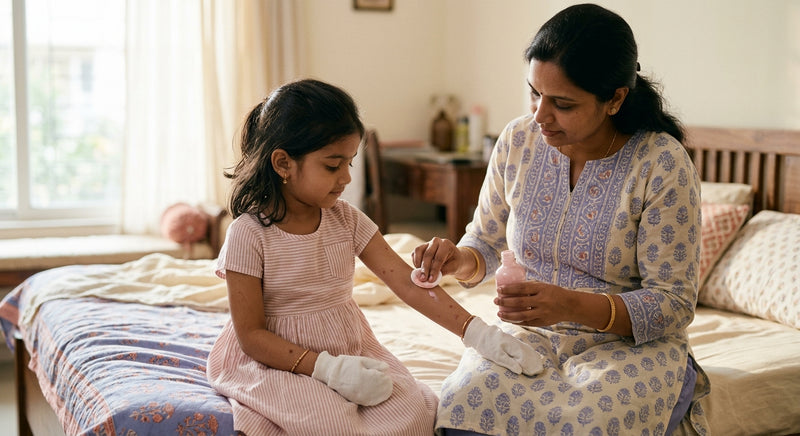
- Keep nails short. Trim them, and for a bad flare, cotton mittens at night stop the scratching that breaks the skin open.
- Cool the sleep space. A comfortable, cooler room and light cotton bedding are what head off the 2am wake-and-scratch.
Which moisturiser and wash actually help in summer?
Every instinct in a flare says reach for something heavy. But in humid heat, a thick, greasy layer traps sweat and makes the whole thing worse. What you actually want is a moisturiser that helps support the skin barrier without smothering it — one you can apply generously and often.
Look for fragrance-free, with barrier ingredients like ceramides or gentle emollients, and a texture you don't mind reapplying. Our Hydra Healing Moisturizing Balm is built for exactly this — clinically tested in-vivo, with visibly calmer skin in as little as 1 day, and it helps comfort dry, sensitive, eczema-prone skin without a heavy, sweaty finish. In summer, go lighter and more often rather than one thick coat. And if you want the reasoning behind the frequency, here's how often to moisturise eczema-prone baby skin.
For the bath, a tear-free, soap-free wash matters more than most parents think — the wrong cleanser quietly undoes all the moisturising. Something mild like the Head to Toe Baby Foam Wash cleans without stripping. And to get the whole bath right for eczema skin, we've written a full bathing routine for a baby with eczema in India.
What to fix around the routine
Two things outside the bathroom quietly drive summer flares. Clothing first — the gap between a cotton vest and a polyester one on a sweaty afternoon is bigger than it looks, and we've compared cotton vs synthetic clothing for eczema babies in detail. The second is hard water, which a lot of Indian cities live with — it leaves skin tighter and itchier after a bath, so if your supply runs hard, moisturising the second you're out of the tub matters even more.
When to see a doctor
Most summer flares settle with a cool, steady routine. But call your paediatrician if you see any of these: skin that's weeping, crusting, or oozing yellow fluid, or honey-coloured scabs — that can signal infection and needs proper treatment. Check in too if your baby runs a fever alongside the rash, if the eczema is spreading fast or itching so hard it's wrecking sleep and feeds, or if it just isn't budging after a week or two of good care. There's no prize for waiting it out — a doctor can prescribe what a moisturiser can't, and eczema is very manageable with the right help.
Summer will test an eczema-prone baby's skin. The routine above holds up to it. Cool first, moisturise often and light, dress soft, keep nights comfortable — that's what keeps the itch quiet.
In summary
- Cool your baby's skin first — heat and sweat, not just dryness, drive summer flares.
- Give one short, lukewarm bath a day with a gentle, soap-free wash.
- Moisturise within three minutes of the bath and reapply a lighter layer through the day.
- Dress your baby in loose cotton and keep the sleep space comfortably cool.
- See a paediatrician if skin weeps, crusts, oozes yellow, or comes with a fever.
Frequently asked questions
Why does my baby's eczema get worse in summer, not winter?
Summer eczema is usually driven by sweat and heat rather than dryness. Sweat contains salts and irritants that sting inflamed skin, and it pools in neck and knee folds in humid weather. Heat also widens blood vessels and increases the itch signal. That's why heavier creams don't help — cooling the skin, lighter frequent moisturising, and breathable cotton work better.
Should I bathe my baby more or less often during a summer flare?
Keep to one short, lukewarm bath a day rather than skipping baths in the heat. A quick five-to-ten minute bath with a soap-free wash rinses away sweat and irritants that trigger itching. What matters most is moisturising within three minutes of patting the skin dry, while it's still slightly damp, to lock in moisture and support the barrier.
Is a thick, greasy cream best for eczema in summer?
Not always. In humid heat a very heavy, occlusive layer can trap sweat and make skin worse. A fragrance-free moisturiser that supports the barrier, applied as a lighter layer more often, usually works better than one thick coat. Reapply after sweaty naps or before evening play so the barrier stays topped up through the day.
How can I tell summer eczema from prickly heat?
They look similar but behave differently. Prickly heat shows as tiny surface bumps that appear in sweaty areas and usually clear within a day or two once the skin is cooled. Eczema tends to be drier, rougher, red, and persistently itchy in the same spots — elbow creases, behind the knees, cheeks. If cooling clears it fast, it was likely heat rash.
What should my baby wear to avoid summer eczema flares?
Loose, breathable cotton in a single light layer. Synthetics trap heat and sweat against the skin, and tight clothing or scratchy seams and tags rub inflamed patches. Keep the room comfortably cool at night with light cotton bedding — an overheated, stuffy room is a common cause of the 2am scratch that breaks the skin.
When should I take my baby to a doctor for eczema?
See your paediatrician if the skin is weeping, crusting, or oozing yellow fluid, or has honey-coloured scabs, as these can signal infection. Also seek help if there's a fever with the rash, if it's spreading fast or badly disrupting sleep and feeding, or if it isn't improving after a week or two of good care. Eczema is very manageable with the right treatment.