Somewhere around week three, it shows up. Shins that itch through your pyjamas during the 3am feed. Knuckles that sting every time the sanitiser bottle comes out. A face that feels one size too small by evening. If this is you — postpartum dry skin is real, it's mostly hormonal, and in most cases you can settle it at home with a routine short enough to survive life with a newborn.
The short version: after delivery, oestrogen falls sharply and your skin makes less of its own oil. If you're breastfeeding, a good share of your fluid intake goes into milk. Add twenty hand-washes a day, geyser-hot bucket baths and whatever season India is throwing at you, and dryness is almost guaranteed. The fix is not a 10-step routine — it's three small habits, done consistently. For the bigger picture, this sits inside our complete guide to mother skincare.
At a glance
- Postpartum dryness is driven by the oestrogen drop, breastfeeding's fluid demand and constant hand-washing — not by anything you did wrong.
- The single highest-impact habit: moisturise within 3 minutes of stepping out of the bath, while skin is still damp.
- Indian weather changes the problem — dry winters crack skin, summer AC dehydrates it, monsoon dampness irritates folds. Adjust one thing per season.
- Hard water (most Indian cities) leaves a mineral film that worsens tightness — shorter, cooler baths help more than fancy products.
- Itching all over with no rash, or yellowing skin, needs a doctor — not a thicker cream.
Why does skin get so dry after delivery?
During pregnancy, high oestrogen keeps skin plump and slightly oily — many women get their best skin in the second trimester. After delivery, that hormone support drops within days. Oil production slows, the skin barrier holds water less well, and everything from your face to your heels starts to feel parched.
Then daily life piles on:
- Breastfeeding is thirsty work. Your body prioritises milk. If you're not drinking noticeably more water than before, your skin is where the shortfall shows first.
- Your hands are being washed constantly. Diaper changes, bottle rinses, sanitiser before every feed. Each wash strips a little of the skin's protective oil. Cracked, stinging knuckles by week four are almost universal.
- Sleep deprivation slows skin repair. The skin does most of its barrier rebuilding overnight. Broken sleep means slower recovery from all of the above.
How Indian weather makes postpartum dryness worse
Most postpartum skincare advice online is written for cold, soft-water countries. India is different. Hard water is the year-round constant — in most Indian cities it leaves a mineral film on skin that makes tightness and itching worse. We've written about this for babies in our hard water guide, and the same rule holds for you: shorter, cooler washes beat stronger soaps. Beyond that, the season you delivered in changes what your skin needs.
| Season | What it does to postpartum skin | The one change to make |
|---|---|---|
| Winter (Nov–Feb) | Low humidity pulls water out of already-depleted skin. Shins, heels and knuckles crack first. | Switch from lotion to a thicker balm on shins, hands and heels at night. |
| Summer (Mar–Jun) | You sweat, then sit in an AC room with the baby — AC air is desert-dry and quietly dehydrates skin for hours. | Keep a light moisturiser at the feeding station; reapply on face and arms mid-afternoon. |
| Monsoon (Jul–Oct) | Humid air, damp clothes and sweat trapped under a nursing bra irritate skin folds even while other areas stay flaky. | Dry skin folds properly after bathing, wear loose cotton, moisturise only the areas that are actually dry. |
The season decides where and how you moisturise — never whether. The base routine below stays the same all year.
A realistic postpartum self-care routine (that survives a newborn)
Honestly, most elaborate routines fail by day three of motherhood. This one is built around moments you already have. If even this feels like too much, start with the bath step alone — it does most of the work. For your face specifically, we've written a 5-minute skincare routine for new moms that slots in alongside this one.
The bath: where dryness is won or lost
- Keep the water warm, not geyser-hot. Water hot enough to redden your skin is stripping it. This is the hardest habit change for anyone raised on scalding bucket baths — and the most effective.
- Cap it at about 10 minutes. Long soaks in hard water leave skin tighter, not softer.
- Use a gentle, low-foam body wash only where you need it — underarms, folds, feet. Plain water is enough for arms and legs most days.
- Pat dry, don't rub. Leave skin slightly damp.
- Moisturise within 3 minutes, head to toe. This single step traps the bath's water in your skin instead of letting it evaporate.
Hands: the part everyone forgets
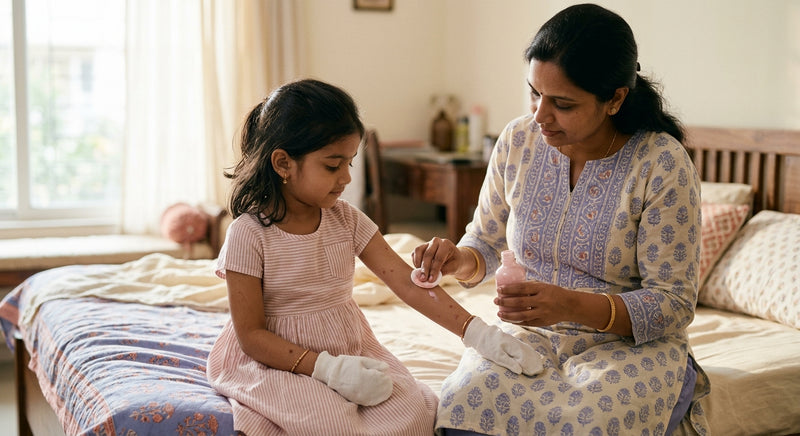
Your hands take the worst beating and get the least care. The trick is placement, not discipline: keep a small tube of cream at the diaper station and one at your feeding spot. Apply after every second or third wash. A thicker balm on knuckles at night, and cotton gloves if they've started cracking, helps the skin recover in days from what stinging sanitiser undoes in one.
Night: the two-minute version
Face: rinse, then a simple moisturiser. Body: balm on whatever itched today — usually shins, elbows, heels. That's it. If your nipples are cracked or sore from feeding, that's a separate problem with its own gentle fix — our guide to cracked nipples from breastfeeding covers it properly.
What about traditional postpartum care — malish, ubtan, hot baths?
The traditional Indian confinement period gets a lot right. A daily oil malish for the mother — not just the baby — is genuinely good for dry postpartum skin; warm sesame or coconut oil before the bath adds an oil layer that hard water can't fully strip. Keep it, and enjoy it.
Two traditions are worth adjusting. Very hot baths, often insisted on by well-meaning elders, actively worsen dryness — warm is enough, and it's just as safe. And harsh ubtan scrubbing on already-dry skin does more harm than good in the first weeks; if you love ubtan, use it soft and infrequent, more paste than scrub. On most of this, the grandmothers and the dermatologists are on the same side.
What should you look for in a postpartum moisturiser?
You don't need a "postpartum" label — you need the right texture and a short, honest ingredient list. Look for:
- Humectants + occlusives together — ingredients that draw water in (glycerin, oats) plus ones that seal it (butters, ghee, oils). A watery lotion alone won't hold in Indian winter.
- Fragrance-light or fragrance-free, since you're holding a newborn against your skin for hours a day.
- Something you can share with the baby. One tub for both of you means it actually gets used at 2am.
This is exactly why we formulated our Hydra Healing Moisturizing Balm for all ages, mothers included — in lab studies it helps support the skin barrier (increased Keratin-10 and Filaggrin expression), and it's made in our own GMP-certified facility, so we know precisely what's in the tub you're sharing with your baby.
One more thing while you're outdoors with the pram: postpartum skin pigments easily, and the "mask of pregnancy" often lingers or darkens with sun exposure. A daily mineral sunscreen on the face is the simplest protection — we've covered the why and how in our guide to pregnancy melasma.
When to see a doctor
Be a little patient with your skin
Hormones take months to settle after delivery — often longer if you're breastfeeding, which is normal and fine. Your skin isn't broken; it's recalibrating. Give it lukewarm water, a moisturiser within three minutes of bathing, and a balm within reach of your feeding chair, and it will quietly come back to itself, usually well before your baby's first birthday.
If your shins are itching as you read this, a rich, share-with-baby option like the Hydra Healing Moisturizing Balm is a gentle place to start tonight.
In summary
- Moisturise within 3 minutes of stepping out of the bath — it's the single habit that does the most for postpartum dry skin.
- Keep baths warm (not geyser-hot) and under 10 minutes; hard water plus hot water is what strips postpartum skin fastest.
- Match the season: thicker balm at night in winter, midday reapplication in AC-heavy summers, and dry-your-folds discipline in monsoon.
- Station a hand cream at the diaper table and feeding chair so care happens during feeds, not in stolen extra minutes.
- See a doctor for intense itching without a rash, yellowing skin, or dryness with extreme fatigue — those aren't cream problems.
Frequently asked questions
How long does postpartum dry skin last?
For most women it improves noticeably within 3 to 6 months as hormones settle, though it can linger while breastfeeding since your fluid intake prioritises milk. With a consistent routine — lukewarm baths, moisturising within 3 minutes of bathing, and extra hand care — most mothers feel a real difference within two weeks. Persistent severe dryness beyond six months is worth mentioning to your doctor.
Can I use my baby's moisturiser on my own skin?
Yes, and it's often the practical choice. Baby moisturisers are formulated to be gentle, fragrance-light and free of harsh actives, which suits sensitive postpartum skin well. Sharing one tub also means you'll actually apply it — it's already at the changing station. Choose an all-ages product with both humectants and richer occlusives so it's substantial enough for adult dry skin.
Is it safe to use body lotion while breastfeeding?
Plain moisturisers, balms and lotions applied to the body are generally considered safe while breastfeeding. Choose fragrance-light products since your baby rests against your skin for hours, and wipe any product off the nipple area before feeding. Avoid strong actives like retinoids without medical advice. When in doubt about a specific ingredient, ask your doctor or paediatrician.
Does drinking more water help postpartum dry skin?
It helps more postpartum than at other times, because breastfeeding diverts a large share of your fluids into milk — if you're under-drinking, skin shows it first. Keep a bottle at your feeding spot and drink at every feed. But water alone won't fix dryness: you still need to moisturise damp skin after bathing to stop that water evaporating right back out.
Why is my skin itchy after delivery even without a rash?
Mild all-over itching usually comes from dryness itself — dehydrated skin itches, especially shins and a stretching-back belly. Moisturising twice daily typically settles it within days. However, intense itching without a rash, particularly on palms and soles, or itching with yellowing skin or extreme fatigue, needs a prompt doctor visit to rule out liver or thyroid issues.