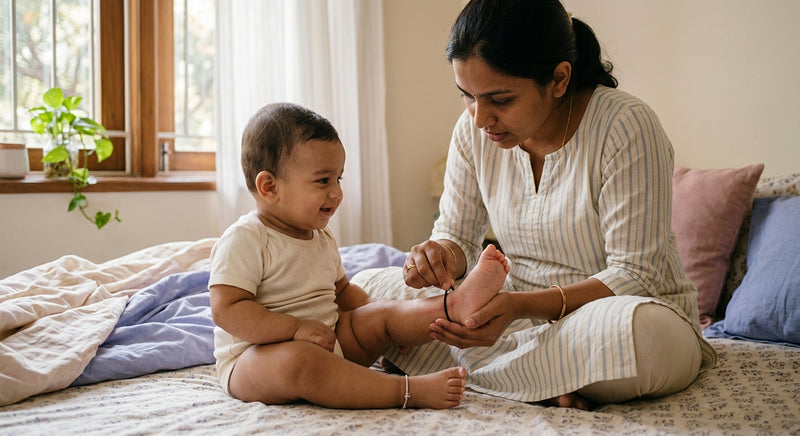
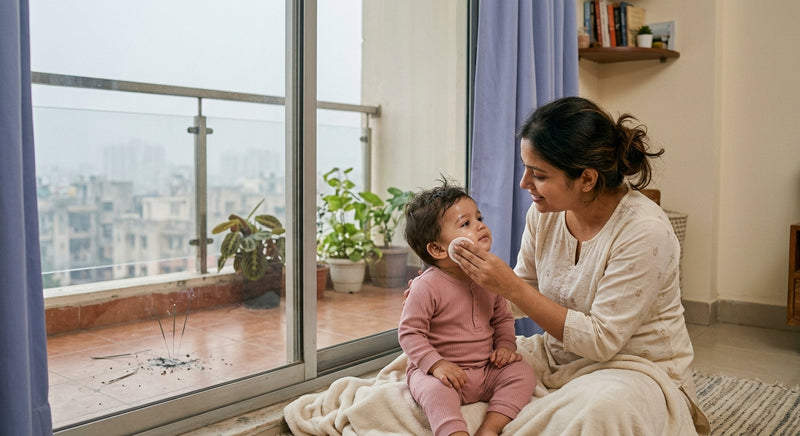
It starts around the second week of December. Your child comes home from school with lips that look powdery and peeling, and two rough pink patches on the cheeks — exactly where the wind hit them on the scooter ride. The short answer: cold, dry winter air plus the lip-licking habit strips moisture from the thinnest skin on the face faster than a child's body can replace it. The fix is boring, and it works — a thick balm reapplied through the day, lukewarm (never hot) washing, and gently breaking the licking loop. Stick with it for three to five days and most kids look dramatically better.
This is one of the most common winter questions we get from parents of school-going children, and it's part of a bigger seasonal picture — our complete guide to skincare for kids aged 3 and up covers the head-to-toe version. This article fixes the lips and cheeks specifically.
At a glance
- Lips have no oil glands and cheeks are the most wind-exposed skin on a child's face — that's why they crack first.
- Lip-licking makes chapping worse: saliva evaporates and takes more moisture with it, sometimes leaving a red ring around the mouth.
- Wash with lukewarm water, pat dry, and apply a thick balm within 3 minutes — then reapply 4–5 times through the day.
- A thin layer of ghee at night is a reasonable traditional occlusive; malai can irritate some children.
- See a doctor if lips bleed, mouth corners split, you see yellow crusting, or there's no improvement in 2 weeks.
Why do lips and cheeks crack first in an Indian winter?
Three things gang up on a child's face between November and February.
The skin there is genuinely thinner. Lip skin has no oil glands at all — it can't produce its own protective layer, so it depends entirely on ambient humidity and whatever you put on it. And children's skin is still maturing; a baby's skin is 20–30% thinner than an adult's, and even at 5 or 8 years old the barrier hasn't fully caught up. Less barrier means faster water loss.
The air is working against you. North Indian winters are cold and dry. Even in central India — Nagpur mornings in January are a good example — humidity drops sharply while days stay sunny and breezy. Add a room heater running at night, which dries indoor air further, and an open cycle or scooter ride to school, and the moisture your child's skin loses in one morning is more than it loses in a whole monsoon week.
Hard water and hot baths finish the job. Most Indian cities have hard water, which leaves mineral residue that makes dry skin feel tighter. A steaming hot face wash feels lovely in December but strips the little natural oil the cheeks had. If your child's whole body is flaky too, not just the face, start with our simple nightly routine for kids' dry winter skin alongside this.
The lip-licking loop (and why balm alone isn't enough)
This surprises parents: the biggest driver of badly chapped lips in kids is usually not the weather — it's the child's own tongue. Dry lips feel tight, so the child licks them for relief. The saliva evaporates within seconds and pulls even more moisture out, and its digestive enzymes mildly irritate the skin. Lick often enough and you get a distinct red, rough ring around the mouth — doctors call it lip-licker's dermatitis, and it's very common in this age group every winter.
So the routine has two jobs: seal in moisture, and make licking pointless. A thick balm does both — lips that don't feel tight don't get licked. For younger kids, keep the reminders light and blame-free ("balm time!" works better than "stop licking!"). For kids 6+, a small balm in the school bag with one fixed habit — apply after lunch — beats any amount of nagging.
What's drying them out — and what to do instead
| The winter habit | Swap it for |
|---|---|
| Hot water face wash before school | Lukewarm water — comfortably warm on your wrist, not steaming |
| Licking or biting dry lips | Balm within reach: bedside, school bag, and one after every meal |
| Woollen scarf or monkey cap rubbing directly on cheeks | A soft cotton layer between wool and skin |
| Scrubbing flaky lips or peeling the skin off | Let flakes soften under balm overnight; never pull them |
| Regular soap on the face | A mild, pH-friendly cleanser made for children |
A routine you can start tonight
- Wash gently. Lukewarm water and a mild kids' cleanser on the face — our guide to gentle face wash for kids and tweens explains what actually counts as gentle.
- Pat, don't rub. Dab the face dry with a soft towel, leaving the skin slightly damp.
- Moisturise within 3 minutes. A light daily lotion works for the body — something like the Hydrating & Soothing Moisturizing Lotion after the evening bath — but the cheek patches and lips need something thicker.
- Layer a thick balm on the trouble spots. On the rough cheek patches and lips, use a rich, occlusive balm. Look for one that helps support the skin barrier, without camphor, menthol or strong fragrance — those tingle, and tingling means irritation on a child's lips.
- Repeat a thin balm layer at bedtime. Night is when the heater is running and repair happens; if they get only one layer all day, make it this one.
- Morning: one more layer before school. Balm on lips and cheeks after breakfast, right before they head out into the wind.
Do ghee and malai on chapped lips actually work?
Grandmothers across India have been dabbing ghee on children's lips for generations, and honestly, the logic holds up: ghee is an occlusive fat, and a thin layer at night slows moisture loss. If your family already does this, there's no reason to stop. Two caveats. First, malai (milk cream) is a different story — it can sit heavy, and the milk proteins irritate some children's skin, so watch for redness. Second, ghee wears off fast during the day and kids tend to lick it off because it tastes nice — which restarts the licking loop. Tradition at night, a proper balm through the day, is the combination that actually works.
Don't skip sunscreen just because it's cold
Winter sun in India is deceptive. December and January days are often clear and bright, kids spend lunch breaks and sports periods outdoors, and UV doesn't take the season off — wind-chapped cheeks are even more sun-sensitive because the barrier is already down. Keep a mineral sunscreen in the morning routine before school; our guide on how much sunscreen kids need and how often has the exact amounts. Apply balm first, let it settle a minute, sunscreen on top.
When to see a doctor
The bottom line
Chapped lips and rough cheeks are not a sign you've done anything wrong — they're what an Indian winter does to the thinnest, most exposed skin on a small face. Seal it, reapply, keep the water lukewarm, make licking pointless, and give it a few days. By next weekend the powdery lips and pink patches should be a memory, and you'll have a routine that carries you through every winter after this one.
If you want one thing that does the heavy lifting for those rough cheek patches and lips, a rich barrier balm like Janma's Hydra Healing Moisturizing Balm — in-vivo tested and shown to help support the skin barrier — is a gentle place to start.
In summary
- Winter chapping happens because lips have no oil glands and cheeks face the wind — seal both with a thick, fragrance-light balm reapplied 4–5 times a day.
- Wash the face with lukewarm (never hot) water and a mild kids' cleanser, then moisturise within 3 minutes of patting dry.
- Break the lip-licking loop gently — a balm at the bedside, in the school bag, and after every meal makes licking pointless.
- A thin layer of ghee at night is a fine traditional occlusive, but keep sunscreen in the morning routine because winter sun still counts.
- See a paediatrician if lips bleed, mouth corners split, crusting appears, or there's no improvement after two weeks of consistent care.
Frequently asked questions
Why do my child's lips get chapped only in winter?
Lip skin has no oil glands, so it depends entirely on humidity in the air. Indian winters combine cold, dry outdoor air with heater-dried indoor air, so lips lose moisture faster than the body replaces it. Lip-licking speeds this up because saliva evaporates and pulls even more moisture out. A thick balm reapplied four to five times a day usually fixes it within a week.
Can I put ghee or malai on my child's chapped lips?
A thin layer of ghee at night is a reasonable traditional remedy — it's an occlusive fat that slows moisture loss, and it's generally well tolerated. Malai is less reliable; milk proteins irritate some children's skin, so watch for redness. During the day ghee wears off quickly and kids often lick it off, so pair the night-time ghee with a proper balm through the day.
Why are my child's cheeks red and rough in winter, not just the lips?
Cheeks are the most wind-exposed skin on a child's face, especially on open scooter or cycle rides to school. Cold dry air, wind, hot-water washing and wool rubbing directly on the skin all strip the barrier, leaving rough pink patches. Lukewarm washing, a thick balm on the patches twice a day, and a cotton layer under any woollen scarf usually clears it in days.
Is it safe for kids to use an adult lip balm?
Check the label first. Many adult balms contain camphor, menthol or strong fragrance — they give a cooling tingle that adults like, but on a child's thin lip skin that tingle usually means irritation, and kids swallow small amounts of whatever is on their lips. Choose a plain, thick, fragrance-light balm made for children, and reapply it often; frequency matters more than brand.
How long do chapped lips take to heal in a child?
With consistent care — lukewarm washing, a thick balm applied four to five times a day including bedtime, and no licking or peeling of flakes — most kids improve noticeably in three to five days and look normal within a week. If lips are still cracked after two weeks, or you see bleeding, split mouth corners or yellow crusting, have a paediatrician take a look.