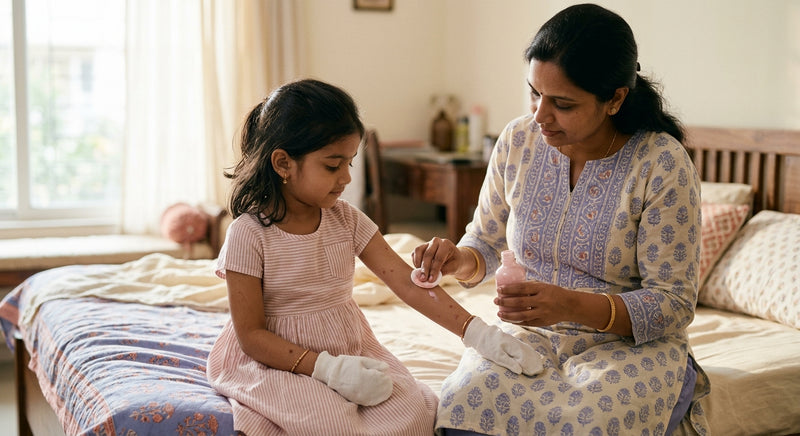
Short answer, so you can stop worrying at 2am: yes, colloidal oatmeal is considered safe to use on your skin during pregnancy and while breastfeeding. It's a finely milled whole oat that sits on the surface of the skin, soothes itch, and is barely absorbed into the body — which is exactly why dermatologists reach for it when a pregnant belly starts to itch. What it can't do is tell you why you're itching. And that part matters.
I get this question constantly. Usually it's a mum in her third trimester — belly, breasts and shins all prickling, worse in the summer heat and worse again at night — who has read every ingredient label in the house twice and squinted at a few more at the chemist. So here's the honest version. What oatmeal actually is, why it earns its "safe" label, how it holds up against the other things people grab, and the one kind of itch that means you call your doctor instead of your moisturiser. This piece sits inside our complete guide to pregnancy-safe skincare, if you want the wider picture.
At a glance
- Colloidal oatmeal is topical and barely absorbed — considered safe in pregnancy and breastfeeding, including on the belly, breasts and forearms.
- It helps soothe itch and comfort dry, stretched skin — it doesn't treat a medical condition.
- Look for it named as Avena sativa (colloidal oatmeal / oat kernel flour) high on the ingredient list, ideally fragrance-free.
- Itchy palms and soles with no rash, especially at night, needs a doctor — that pattern can signal a liver issue in pregnancy, not dry skin.
- Skip loose kitchen oats slapped on the skin — grind is everything, and raw oats can harbour contaminants.
What is colloidal oatmeal, really?
It isn't the porridge in your kitchen. It's the whole oat grain — bran and all — milled to a very fine powder and processed so it disperses evenly in water and in a cream. That fine, uniform grind is the entire point. It's what lets the oat form a soft, film-like layer over your skin instead of settling as gritty flakes at the bottom of the bath.
The work happens because of what the oat carries. Beta-glucans — large sugars that hold water and lay down a soothing film. Avenanthramides — oat-specific compounds studied for calming the redness-and-itch response. Plus starches and oat lipids that soften and support the skin's surface. These are big molecules, and they do their job on top of the skin, so very little of anything crosses into your bloodstream. That, really, is the whole pregnancy-and-breastfeeding safety answer in one sentence.
Why is it considered safe in pregnancy and breastfeeding?
None of the reasons are complicated. Here they are.
It stays on the surface. The active molecules are large and water-loving; they aren't built to be absorbed. Compare that with the ingredients we genuinely tell mums to pause — high-strength retinoids and salicylic acid peels — which get flagged precisely because they can be absorbed and act on the whole body. Oatmeal is the opposite sort of ingredient.
It's food-derived and low-allergen. A true oat allergy on the skin is uncommon. (If you have coeliac disease, that's a gut reaction to gluten from eating grains — putting colloidal oatmeal on your skin is a different thing altogether, though a patch test is still sensible.)
It has a long track record on the most delicate skin there is. Colloidal oatmeal is a mainstay in soothing formulas for babies and eczema-prone skin — the same reasoning we walk through in our honest look at colloidal oatmeal for baby skin. If it's gentle enough for a newborn's barrier, it's gentle enough for your pregnant belly.
Honestly, of all the questions I get about pregnancy skincare, this is one of the easy yeses — the same relaxed category as ceramides and, for most mums, niacinamide. The real question is never "is oatmeal safe." It's making sure you're soothing an ordinary itch and not quietening one that needs a doctor's eye.
Colloidal oatmeal vs the other things mums reach for
When your skin itches, the medicine cabinet — and the kitchen shelf — offer a few options. Here's how I'd rank them, honestly, for a pregnant or breastfeeding mum with ordinary dry, stretched, prickly skin.
| Option | What it does | Pregnancy / breastfeeding view |
|---|---|---|
| Colloidal oatmeal cream/soak | Soothes itch, holds water, comforts dry skin, supports the surface | Considered safe; gentle daily use is fine |
| Ceramide + humectant moisturiser | Rebuilds and reinforces the barrier so skin holds moisture | Considered safe; pairs beautifully with oatmeal |
| Calamine lotion | Cooling, mild anti-itch; can be quite drying over time | Generally used in pregnancy; fine for spot relief, not for whole-body daily dryness |
| Fragranced "soothing" lotions | Feel nice briefly; fragrance can itself irritate itchy skin | Best avoided when skin is already reactive — go fragrance-free |
| Hydrocortisone / steroid cream | Calms inflammation of a diagnosed rash | Only on a doctor's say-so — right tool for a real flare, not a daily moisturiser |
Read down that table and one thing stands out: colloidal oatmeal and a good barrier moisturiser are the two you can lean on daily without a second thought. Everything under them is either a short-term spot fix or a doctor's-call medicine.
What we'd actually do
Say you've got an itchy, dry, stretched belly, or the general tightness of the postpartum months. Here's the routine I'd actually follow. Nothing fancy.
- Cool the itch first. A 10-15 minute lukewarm (never hot) soak with a colloidal-oat product, or a cool oat compress on the worst patch. Hot water feels lovely for a second and makes the itch worse for the next hour.
- Pat, don't rub, dry. Leave the skin slightly damp.
- Seal within three minutes. While skin is still damp, put on a fragrance-free moisturiser — ideally one that pairs oat or soothing actives with barrier ingredients — so the water stays trapped in.
- Reapply twice a day, and again after every shower. Belly, breasts, shins and forearms are the usual hotspots.
- Go fragrance-free everywhere on itchy skin, body wash included. Perfume is the most common hidden itch-trigger I see, and in our heat you're washing more often, so it adds up.
Does it help with stretch marks or postpartum dryness?
Straight answer: no topical, oatmeal included, prevents or erases stretch marks — those form deeper down, in the dermis, well past the reach of any cream. What colloidal oatmeal genuinely does is make the itch that rides along with fast-stretching skin far more bearable, and keep the surface comfortable and less flaky. After delivery, when hormone shifts leave so many mums with tight, parched skin, that same oat-plus-barrier pairing is a kind, low-drama way to feel at home in your skin again.
For barrier support specifically, reach for a moisturiser that doesn't just soothe but actively helps rebuild the skin's surface. Comfort tonight, a stronger barrier over the following weeks — that's the combination that finally stops the dry-itch cycle from restarting every single night.
When to see a doctor
Colloidal oatmeal soothes ordinary dry, prickly, stretched skin. It does not treat a medical condition, and some itches in pregnancy are signals, not skin problems. See your doctor if:
- Your palms and soles itch — often worse at night — with little or no rash. This can be a sign of intrahepatic cholestasis of pregnancy (a liver condition) and needs a same-week check, not a moisturiser.
- You have an intense, spreading rash, blisters, or itchy bumps around stretch marks in later pregnancy.
- The itch is severe, keeping you awake, or not settling with gentle care over a few days.
- You notice yellowing of the skin or eyes, dark urine, or pale stools.
- A patch is hot, weepy, crusted or spreading — that suggests infection or eczema that may need prescription care.
When in doubt during pregnancy, ring your obstetrician or a paediatrician for the baby — it's always the right call.
So use colloidal oatmeal freely, and with a clear conscience, for the everyday itch and dryness of these months. Just don't let a comforting cream quiet an itch your body is using to get your attention.
In summary
- Colloidal oatmeal is topical and barely absorbed, making it a safe soother for itchy, dry skin in pregnancy and breastfeeding.
- It helps soothe itch and comfort stretched skin — it doesn't treat a medical condition or erase stretch marks.
- Look for Avena sativa listed as colloidal oatmeal high on the label, fragrance-free, not loose kitchen oats.
- Pair a lukewarm oat soak with a barrier moisturiser sealed on damp skin, twice a day, on belly, breasts and shins.
- Itchy palms and soles without a rash, or yellowing skin, needs a same-week doctor's check, not a cream.
Frequently asked questions
Is colloidal oatmeal safe to use during pregnancy?
Yes. Colloidal oatmeal is a topical, whole-oat ingredient that sits on the skin's surface and is barely absorbed into the body, which is why it's considered safe to use throughout pregnancy. It helps soothe the itchy, dry, stretched skin many mums get on the belly, breasts and shins. It comforts the skin but doesn't treat a medical condition, so unusual or severe itching still needs a doctor's check.
Can I use colloidal oatmeal while breastfeeding?
Yes, it's considered safe while breastfeeding. Because the active oat molecules are large and stay on the skin's surface rather than entering the bloodstream, colloidal oatmeal is a gentle choice for the dry, tight skin of the postpartum months. If you're applying it near the breast, keep it away from the nipple and areola where baby latches, and wipe the area before a feed if any product is on it.
Is colloidal oatmeal the same as putting oats in my bath?
No. Colloidal oatmeal is the whole oat milled to a very fine, uniform powder that disperses in water and forms a soothing film on the skin. Loose kitchen oats or oat flour won't disperse properly, make the tub slippery, and aren't processed for skin contact. For itchy pregnancy skin, use a product that lists Avena sativa as colloidal oatmeal or oat kernel flour near the top of the ingredients.
Does colloidal oatmeal help with pregnancy stretch marks?
It won't prevent or erase stretch marks, since those form deep in the skin and no topical reaches them. What colloidal oatmeal genuinely helps with is the itch and dryness that come as skin stretches, which can be intense in the third trimester. Pairing it with a barrier-supporting moisturiser keeps the surface comfortable and less flaky, which makes the stretching phase far easier to live with.
I'm allergic to gluten — can I still use colloidal oatmeal on my skin?
For most people, yes, but patch test first. Coeliac disease is a gut reaction to eating gluten, which is different from applying oats to the skin, and true skin allergy to oats is uncommon. If you have very reactive skin or a known oat sensitivity, dab a little on your inner forearm and wait 24 hours before wider use. When unsure, check with your doctor before starting anything new in pregnancy.