It's 41°C outside, your baby's back is damp with sweat, and every summer someone in the family says the same line: "Give her a cold-water bath twice a day, she'll feel fresh." It sounds right. Hot baby, cold water. Done. But a lot of what we're told about summer bathing is half-true, and some of it quietly makes a baby's skin worse.
Here's what I've learned. A short lukewarm bath once a day, a gentle wash only where it's actually needed, and a light moisturiser after — that's kinder to baby skin than a cold double-bath and a cloud of powder, nearly every time. Let me walk you through it.
At a glance
- Cold water isn't cooling — it makes tiny blood vessels tighten and can leave a baby shivering. Lukewarm (37–38°C) is right even in peak summer.
- One bath a day is plenty. For a second cool-down, a plain water rinse or a wipe-down beats a full soapy bath.
- Keep it short — around 5 minutes. Long soaks strip the skin's natural oils and dry it out.
- Powder is optional, not protective. It doesn't stop prickly heat; a dry, well-aired fold does.
- Moisturise after every bath, even in summer — a light layer, not a heavy one.
Want the wider picture on keeping little ones comfortable through the heat? We've pulled it together in our complete guide to prickly heat and summer skin care. This one is just about the bath.
Myth vs fact: what Indian summer bathing gets wrong
These are the beliefs I hear most, in clinic and over WhatsApp, set next to what the skin science actually says.
| The belief | What's actually true |
|---|---|
| "Cold water cools a hot baby down." | Cold water makes surface blood vessels constrict, so heat gets trapped inside — and a baby can shiver. Lukewarm water cools gently and comfortably. |
| "Two or three baths a day keep prickly heat away." | Over-washing removes protective skin oils and can leave skin drier and more irritable. One bath plus plain-water rinses does what you need. |
| "A good dusting of powder stops ghamori." | Powder can clump in sweaty folds and block sweat ducts — the very thing that causes prickly heat. Airing and drying folds works better. |
| "Skip moisturiser in summer — skin's already sweaty." | Sweat isn't moisture. AC, repeated washing and sun still dry the skin barrier. A light lotion or balm keeps it intact. |
| "More soap = cleaner, fresher baby." | A baby isn't very dirty. Sweat rinses off with water. Cleanser is really only needed on the scalp, nappy area and any grubby folds. |
Why lukewarm beats cold (the barrier science)
A baby's skin is 20–30% thinner than an adult's, and its barrier — the layer that holds water in and irritants out — is still maturing. That barrier runs on a thin film of natural lipids. Two things wreck it quickly: water that's too hot or too cold, and too much time in the tub.
The cold-water instinct catches a lot of parents out. It feels like the obvious answer to heat. Physiologically it does the opposite — it triggers vasoconstriction, where the small vessels near the skin tighten to hold warmth in. Your baby ends up cool on the surface and no more comfortable underneath, sometimes with goosebumps. Lukewarm water, close to body temperature, lets the skin let go of heat without that shock. Test it with your elbow or the inside of your wrist, not your hand — it should feel neutral. Not warm, not cool.
Time matters as much as temperature. The longer skin sits in water, the more it swells, then loses its own oils as it dries. In summer, with sweat and sun already working on the skin, a quick 5-minute bath protects the barrier far better than a long soak.
The 5-minute summer bath, step by step
This is the routine I'd hand a new parent for a scorching Nagpur or Chennai afternoon. Nothing fancy — just the order and timing that keep skin calm.
- Run lukewarm water first and check it on your inner wrist (37–38°C). Keep the room comfortable — don't blast the AC straight onto a wet baby.
- Wet the body and, if you're using a cleanser, take a small amount of a tear-free, soap-free wash. Focus on scalp, neck folds, underarms, nappy area — not every inch.
- Rinse well. Leftover product in a sweaty fold is a common cause of irritation.
- Keep the whole bath to about 5 minutes. A sweaty toddler on a very hot day can have a plain-water rinse in the evening instead of a second wash.
- Pat — don't rub — dry, paying real attention to the neck, groin, behind the knees and armpits. Damp folds are where ghamori (prickly heat) starts.
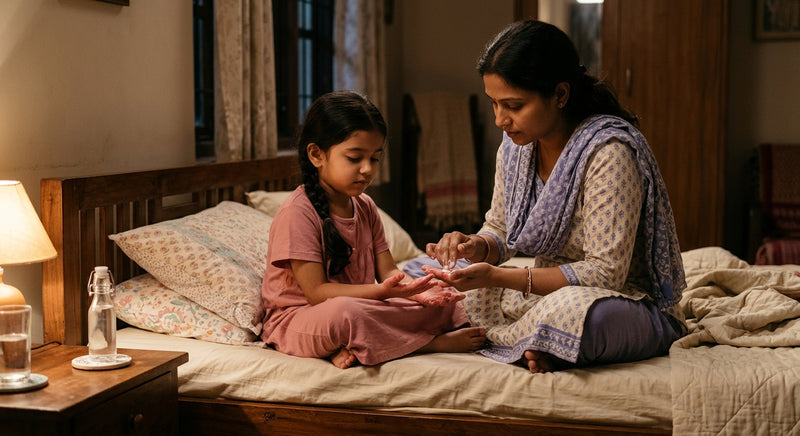
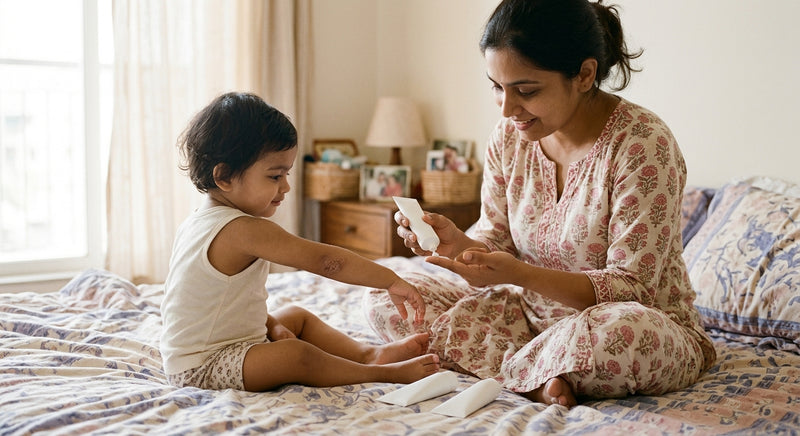
- Moisturise within a few minutes, while skin is still slightly damp, with a light layer.
A word on the cleanser: in summer you want something that lifts sweat and grime without stripping. A gentle, tear-free option like the Head to Toe Baby Foam Wash is made for this — a soft foam that rinses clean and doesn't sting the eyes, so a quick summer bath stays a happy one. Advice first, though: even the mildest wash only needs to touch scalp and folds, not the whole body, every day.
"But it's summer — does she really need moisturiser?"
Yes. And of every summer myth, this is the one I'd most like to put to rest. Sweat is water and salt; it evaporates and can leave skin drier than before. Layer on air-conditioning, chlorinated pool dips and repeated washing, and a summer baby's barrier is taking real strain.
The fix is to go lighter, not to skip. After the bath, a thin layer of a barrier-supporting moisturiser locks in the water your baby's skin just soaked up. For most babies a light lotion is enough in the heat. For dry patches, eczema-prone skin or the nappy area, a richer balm like the Hydra Healing Moisturizing Balm comforts and protects where the skin needs more. It's formulated to support the skin barrier — use it in a thin film on the spots that need it, not head to toe on a hot day.
For the wider summer picture — clothing, hydration, indoor temperature — our guide on how to keep baby skin cool in Indian summer pairs well with this routine. And if you're already seeing redness in the neck creases, the sweat rash in baby neck folds guide walks through calming it.
When to see a doctor
A good summer routine heads off most heat-related skin trouble. Still, see your paediatrician if you notice any of these:
- A rash that spreads, blisters, weeps or has pus-filled bumps — heat rash can occasionally get infected.
- Redness in a fold that's warm, painful or has a bad smell.
- Fever, unusual fussiness, poor feeding or signs of dehydration (fewer wet nappies, a sunken soft spot) during very hot weather.
- Any rash that doesn't settle within a few days of cooling and drying the skin.
None of this is for a home routine to sort out on its own. On a hot day, when you're unsure, the quick check is always worth it.
In summary
- Use lukewarm water (37–38°C), not cold — cold traps heat and can make baby shiver.
- Bathe once a day; use a plain-water rinse or wipe-down for a second summer cool-down.
- Keep baths to about five minutes and wash cleanser only where it's needed.
- Skip powder in folds — dry, well-aired creases prevent prickly heat better.
- Apply a light moisturiser after every bath, even in summer, to protect the barrier.
Frequently asked questions
Should I give my baby a cold water bath in summer in India?
No. Cold water makes the skin's small blood vessels tighten, which traps heat inside and can leave a baby shivering rather than cooled. Use lukewarm water around 37–38°C even in peak summer — test it on the inside of your wrist. It cools your baby gently without shocking the skin or the barrier.
How many times a day should I bathe my baby in Indian summer?
Once a day is enough, even in a heatwave. If your baby is very sweaty later, a plain lukewarm-water rinse or a wipe-down with a damp cotton cloth refreshes without a full soapy bath. Bathing two or three times daily with cleanser can strip natural oils and leave the skin drier and more prone to irritation.
Does baby powder prevent prickly heat?
Not reliably — and it can backfire. Powder tends to clump in warm, damp folds and may block sweat ducts, which is exactly what triggers prickly heat (ghamori). Keeping folds clean, dry and well-aired protects far better. After a bath, pat the neck, groin and underarms thoroughly dry instead of dusting them with powder.
Do babies need moisturiser in summer?
Yes, just a lighter layer. Sweat is water and salt, not moisture, and it can leave skin drier as it evaporates. Air-conditioning, sun and repeated washing also stress a baby's barrier. Apply a thin layer of a gentle lotion or balm within a few minutes of the bath, while skin is still slightly damp, to lock in water.
How long should a baby's summer bath be?
Around five minutes. The longer skin stays in water, the more it swells and then loses its own protective oils as it dries. A short lukewarm bath cleans off sweat and grime while keeping the barrier intact. Save time by washing only the scalp, neck, underarms and nappy area with cleanser, and simply rinsing the rest.