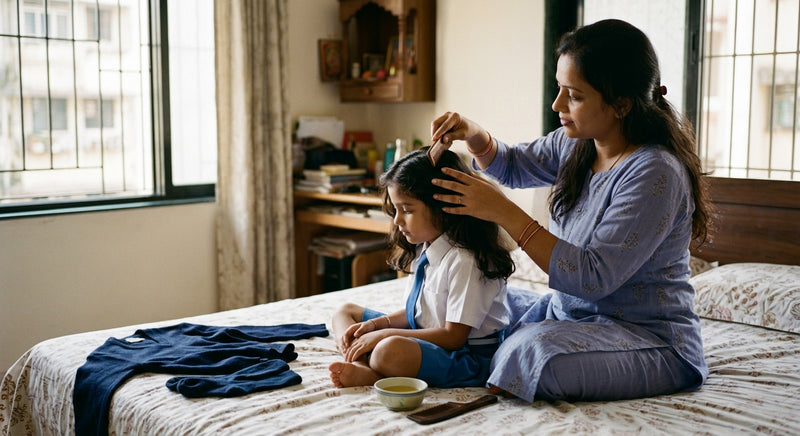
It's usually the car that gives it away. Windows up, evening traffic, PT kit somewhere in the back. And there it is: a sharp, oniony smell coming off a child who was, until about six months ago, entirely odourless.
Short answer: most 10-year-olds don't need deodorant. They need a longer wash, a proper dry, and clothes that are actually clean. But if the smell is back within two or three hours of a good bath, and it's coming specifically from the underarms, that's real body odour from puberty getting started, and a simple deodorant is a reasonable, safe thing to add.
Three days is enough to tell which one you have. Here's how, and what to change tonight either way.
At a glance
- Sweat itself has no smell. Odour happens when skin bacteria break sweat down, so the fix is washing and drying, not perfuming over it.
- The three-day test: after a proper bath, does the smell come back in hours (real odour), or does it never really leave (clothes, towel, shoes)?
- Most "my child smells" cases at 10 are a 45-second shower, a damp towel and a polyester uniform. Not a deodorant deficiency.
- If the odour is real, an unscented or lightly scented roll-on deodorant is fine at 10. Clean, dry skin only. Never on freshly shaved or broken skin.
- Odour with other puberty signs before 8 in girls or 9 in boys is worth a paediatrician's opinion. Not panic. Just a check.
Why does my 10-year-old suddenly smell?
Around 8 or 9, the adrenal glands start producing more androgens. This is puberty starting, well before anything visible happens. One of its effects: the apocrine sweat glands, the ones clustered in the underarms and groin, wake up.
Apocrine sweat isn't the watery stuff on a child's forehead in May. It's thicker, it carries proteins and fats, and the bacteria living on warm, damp underarm skin feed on it happily. What you smell is their by-product. The sweat itself leaves the skin odourless.
Which tells you what to do next. Take away the bacteria's food, keep the area dry, and the smell goes with it. Add fragrance on top and within the hour you have the same smell plus body spray, the single most common mistake in this age group.
Then there are the Indian variables. A polyester-blend uniform. A classroom in Nagpur in April where the ceiling fan only really reaches the third row. Canvas school shoes that never fully dry through monsoon. A towel that lives on a hook behind the bathroom door and has been damp since Tuesday. A PT kit that goes into the school bag on Wednesday and comes out on Wednesday. None of that is a hygiene failing. It's just how school life works. But every one of them is a place where smell gets made, and then kept.
Is it body odour, or is it the clothes and the bath?
Run this for three days before you buy anything.
Give your child a thorough bath, the routine below. Fresh clothes straight from the cupboard. Dry towel, dry hair. Then just notice: how long until the smell is back, and where is it coming from? Two to three hours, from the underarms, on a school day? That's real apocrine odour. Still faintly there ten minutes after a bath, or you can smell the T-shirt before it's worn? That isn't your child. That's laundry.
| Where it's really coming from | The tell | What actually fixes it |
|---|---|---|
| Underarms | Sharp, oniony; returns 2-3 hrs after a proper bath | Longer wash of the actual armpit, dry fully, deodorant if it persists |
| Clothes and uniform | The shirt smells before he wears it; worse when damp | Wash uniforms separately, warmer water, dry fully in sun. Never fold a slightly damp shirt |
| Feet and shoes | Cheesy smell that peaks when shoes come off after school | Fresh cotton socks daily, two pairs of shoes rotated, dry between the toes |
| Scalp and hair | Oily by evening, smells at the crown | Shampoo more often. Many 10-year-olds need it every day or two now, not twice a week |
| The towel | Smell is back the moment he steps out of the bathroom | Own towel, changed twice a week, dried outdoors, not on the bathroom hook |
Honestly? The towel and the uniform account for more of this than most parents expect. Fix those two first, and you may well find the deodorant question answers itself.
What does a "better bath routine" look like at 10?
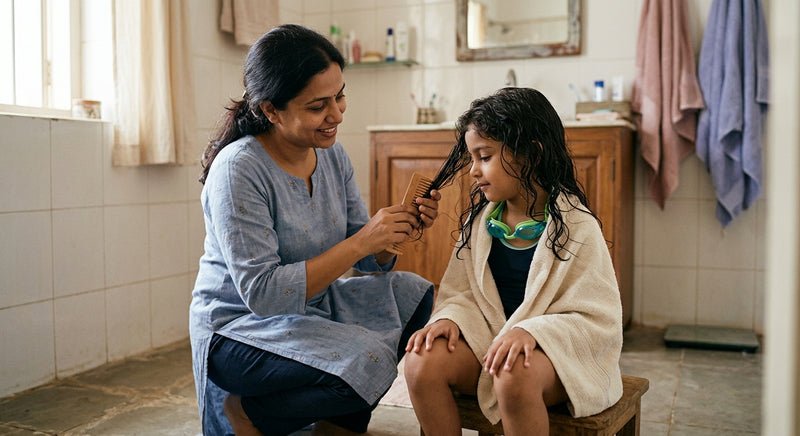
A 10-year-old's idea of a bath is standing under water. That's the whole problem. The underarm is a fold, and water doesn't reach into a fold on its own. It needs a hand, a cleanser and about a minute.
- Wash the underarms deliberately. Cleanser on the fingertips, into the hollow, roughly 20-30 seconds each side, arm lifted. This one change fixes more cases than everything else on this list put together.
- Groin, feet, behind the ears. The other apocrine zones, plus where sweat pools inside shoes.
- Use a mild, soap-free cleanser. A syndet-type wash close to skin pH rather than a hard soap bar. Soap plus India's hard water leaves a film, and that film traps odour instead of removing it.
- Rinse until the skin doesn't feel slippery. Two extra mugs.
- Dry the folds. Properly, not a wave of the towel. A damp underarm at 7:45am has the whole school day to work with.
- Fresh cotton vest under the uniform. It takes the sweat before the polyester can trap it. Cheapest odour control there is.
- Heavy sports day? Same wash before bed. Not a full production. Underarms, feet, face, done.
One caution the other way: don't let this tip into scrubbing. Parents who suddenly get serious about hygiene tend to overshoot. Twice-daily hot showers, a loofah, a strong soap, and by week two you have ashy, flaky shins and an itchy back on top of the smell. More thorough, not more aggressive. Then a light moisturiser on the arms and legs afterwards. A simple daily lotion for kids after the bath comforts skin that's now being washed more often than it used to be.
So does he need a deodorant — and which one?
If the three-day test pointed at real underarm odour, then yes, and there's nothing to feel odd about. The question was never how old he is. It's whether he smells by lunchtime after a proper bath. A roll-on is a smaller thing to manage than a child who has started sitting at the back of the class hoping nobody notices.
Know the difference before you're standing in the aisle. A deodorant works on the bacteria and the smell, which is what a child this age needs. An antiperspirant uses aluminium salts to physically reduce the amount of sweat. For most tweens, a deodorant is enough. Antiperspirants are worth a conversation with your paediatrician first, particularly if sweating rather than smell is the actual complaint.
What I'd look for: a roll-on or stick, not an aerosol. Unscented or very lightly scented. A short ingredient list. Patch test it first, a small amount on the inner forearm, left 24 hours, before it goes anywhere near an armpit. Then clean, dry skin only, one swipe each side, in the morning. Not over yesterday's application. Not instead of a bath. And never on skin that's just been shaved, or is broken, sore or rashy.
Say it once, plainly: deodorant goes on after the wash, not in place of it. Most of the parenting on this topic is that one sentence.
When to see a doctor
Body odour at 9 or 10 is usually early puberty, on schedule. Book a paediatrician's appointment if:
- Odour appears alongside other puberty signs, such as breast development, pubic hair or a sudden growth spurt, before 8 in girls or 9 in boys.
- Sweating is heavy enough to soak through a uniform shirt, drip from the palms, or interfere with writing and school.
- The smell is sudden, strong and comes with weight loss, tiredness or unusual thirst.
- There's peeling, cracking or itching between the toes, or a red rash in a fold that stings and isn't settling. Those need a look, not a home remedy.
- A rash, burning or raised bumps appear after starting any deodorant. Stop it and get it checked.
None of that is a diagnosis. It's the point where you stop reading and call the doctor.
Junior skin is doing something new at this age: more oil, more sweat, more washing than it's used to, and often a first run-in with dryness or bumps because of it. There's more on the 8-12 transition across the Janma Journal if you're working through it.
If the wash is the piece you're fixing first, look for a mild, soap-free cleanser close to skin pH that won't strip skin already being washed twice a day — our Kids Gentle Body Cleanser is one option made for this stage.
In summary
- Run the three-day test first: if odour returns within hours of a thorough bath, it's real body odour; if it never leaves, it's the towel, uniform or shoes.
- Teach a deliberate 20-30 second cleanser wash of each underarm — a fold doesn't get clean under running water alone.
- Dry the underarms, groin and between the toes properly, and put on a fresh cotton vest under a polyester school uniform.
- If odour is genuine, an unscented roll-on deodorant on clean, dry skin is fine at 10 — patch test first, skip aerosols, and never apply over broken skin.
- See a paediatrician if odour comes with other puberty signs before 8 in girls or 9 in boys, if sweating soaks through clothes, or if any rash appears after starting a deodorant.
Frequently asked questions
At what age should a child start using deodorant?
There's no fixed age. Most children begin needing it somewhere between 9 and 12, when early puberty switches on the apocrine sweat glands. The signal isn't the birthday — it's whether underarm odour returns within a few hours of a thorough bath. If it does, a mild deodorant is reasonable. If a better wash routine holds the smell off all day, wait.
Is deodorant safe for a 10-year-old?
A simple deodorant applied to clean, dry underarm skin is generally fine at 10. Choose a roll-on or stick over an aerosol spray, unscented or lightly scented, and patch test on the inner forearm for 24 hours first. Avoid applying it to broken, sore or freshly shaved skin. If sweating rather than smell is the problem, ask your paediatrician before using an antiperspirant.
Why does my child still smell right after a bath?
Almost always the towel, the clothes or a rushed wash. Underarms are folds, and water alone doesn't reach into them — they need cleanser and about 20-30 seconds each side. A damp towel on the bathroom hook re-deposits bacteria instantly, and a uniform shirt that was folded slightly damp will smell before it's even worn. Fix those three before buying anything.
Deodorant or antiperspirant for a tween?
Deodorant, in most cases. It targets the bacteria that cause the smell, which is the actual problem at this age. An antiperspirant uses aluminium salts to reduce sweat volume, which most tweens don't need. If your child sweats heavily enough to soak a school shirt or struggles to write because of damp palms, that's a paediatrician conversation, not a supermarket decision.
Does body odour at 10 mean early puberty?
Usually it means puberty is starting normally — adrenal changes around 8 or 9 commonly bring odour before anything else is visible. It becomes worth checking when odour appears alongside other signs like breast development, pubic hair or a rapid growth spurt before age 8 in girls or 9 in boys. Your paediatrician can assess it simply and quickly.
Can I use my own deodorant on my child?
Better not to. Adult deodorants are often heavily fragranced and many are antiperspirants with a higher aluminium content than a child needs. Fragrance is the most common cause of underarm irritation in this age group. If you're using one temporarily, patch test it, apply a very small amount to clean dry skin, and stop at the first sign of redness or stinging.