It's 3am. Your baby was fast asleep, and now they're twisting, rubbing a cheek into the pillow, scratching the back of a knee until you give up and switch on the light. The skin looks angrier than it did at bedtime. If your first thought is “garmi” — heat rising in the body — or something you fed at dinner, you're in very good company. It's the most common thing parents say to me.
So let me be straight with you. The 3am flare is real, it's predictable, and it comes down to temperature, water loss and the itch-scratch loop — not some mysterious internal fire. And that's good news, because the moment you know what's driving it, most of it can be headed off before you even go to bed.
At a glance
- Eczema itch genuinely peaks at night — skin loses more water, body temperature rises slightly, and there are fewer daytime distractions.
- It is not a sign of “internal heat” or (usually) a food you need to cut — chasing those first wastes the nights you could be fixing.
- The single biggest lever is a generous moisturiser layered on damp skin, last thing before sleep.
- A cooler room and breathable cotton do more than any bundle of blankets.
- Widening, weeping, oozing or crusting skin, or a feverish baby, is a doctor visit — not a routine tweak.
Why does baby eczema get worse at night?
Three things quietly line up against you after dark.
Skin loses more water at night. Transepidermal water loss — the slow evaporation of moisture up through the skin — runs higher in the evening and overnight. Eczema-prone skin already has a leaky barrier, so it dries faster, tightens, and itches. And there's less to work with in the first place: a baby's skin is 20–30% thinner than an adult's, so it holds less water to begin with.
Then there's warmth. Skin temperature ticks up as your baby settles into sleep, and warmth is about the most reliable itch trigger going. Now add a warm room, a synthetic sleepsuit, and that extra blanket we all instinctively tuck in “just in case” — and you've built a little greenhouse around inflamed skin.
And at 3am, nothing else is happening. The day is full of feeds, faces, play, noise. Night is just the itch, so the brain turns the volume up. This is the itch-scratch cycle at its most stubborn: the scratch feels good for a second, nicks the barrier a little more, and sets up the next itch to be worse.
Myth vs fact: the 3am flare
Let me put the common beliefs next to what actually helps. Gently — because nearly every one of these comes from a real place of care.
| What many parents believe | What actually helps |
|---|---|
| “It's internal heat (garmi) — I need to cool the body from inside with certain foods.” | The heat that matters is on the skin. Cool the room and lighten the bedding; that's what settles the itch. |
| “Keep the baby warm and well-covered so they don't catch cold.” | Overheating is a top night trigger. Aim for a comfortable, cool room and one breathable cotton layer, not a bundle. |
| “Skip the evening bath — water dries the skin.” | A short, lukewarm bath followed immediately by moisturiser (“soak and seal”) actually adds water and calms skin. |
| “A thick layer of mustard or heated oil will calm the flare.” | Hot oils and strong-smelling oils can sting and irritate broken skin. A bland, barrier-supporting moisturiser is safer and more effective. |
| “There must be a food causing this — I'll cut milk/egg tonight.” | Food only drives a minority of cases, and cutting foods without guidance can harm nutrition. Fix the skin routine first; discuss diet with your paediatrician. |
That last one is worth sitting with. Most of the night flares parents ask me about settle with barrier care and a cooler room — not diet changes. If you want to go deeper before you eliminate anything, we've written more on what the evidence says about food and baby eczema.
The bedtime routine that breaks the flare
Here's the part you can do tonight. You're aiming to put your baby to bed with a well-hydrated, sealed barrier, in a cool space, with hands that can't do much damage. Budget about 20 minutes before sleep.
- Lukewarm bath, kept short. 5–10 minutes, water that feels barely warm on your inner wrist — not hot. Use a gentle, fragrance-light, soap-free wash only where it's needed; plain water is fine for most of the body.
- Pat, don't rub, dry. Leave the skin slightly damp — that surface water is what you're about to seal in.
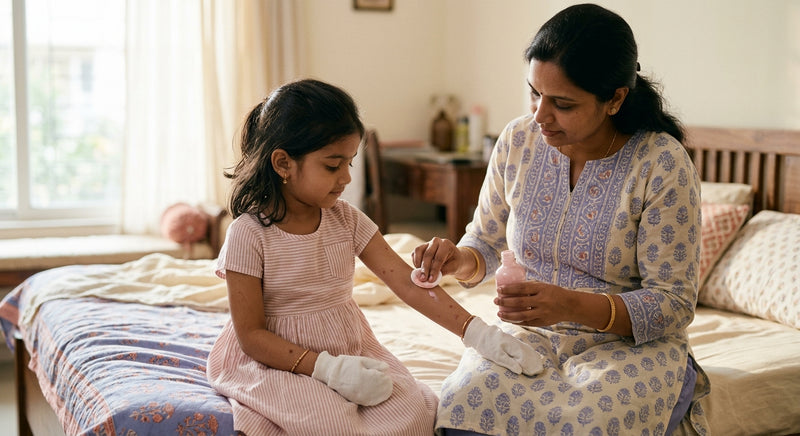
- Moisturise within 3 minutes. This “soak and seal” window is the whole point. Use a generous amount — more than feels normal — of a thick, barrier-supporting moisturiser, smoothed downwards in the direction of hair growth, not rubbed in circles.
- Dress in loose cotton. One breathable layer. Skip fleece, wool-next-to-skin, and anything with rough seams or tags.
- Cool the room. A fan or AC that keeps the room comfortably cool beats a warm room every single time. Cotton bedsheets, minimal blankets.
- Short, smooth nails and soft cotton mittens for the younger ones, so a 3am scratch does less damage.
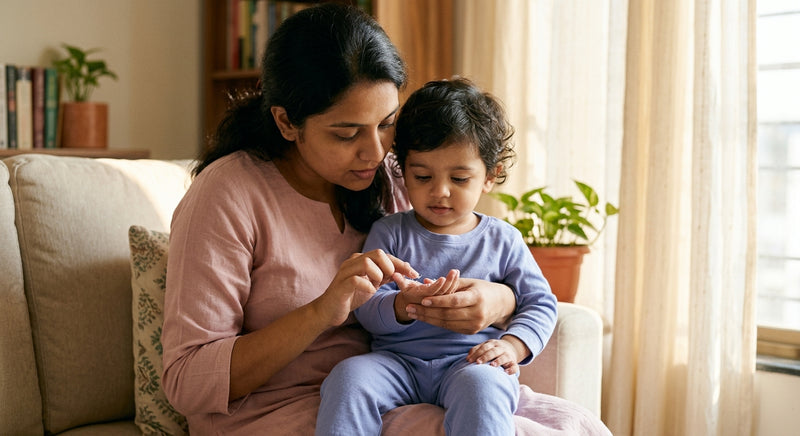
- Top up if they wake. A quick dab of moisturiser on the itchy spot at a night waking is often all it takes to settle them — no full production required.
What to actually look for in a night-time moisturiser
I formulate these for a living, so let me tell you what a bedtime eczema moisturiser is really doing. It works in three layers.
Humectants, emollients and occlusives
Humectants (like glycerin) pull water into the skin. Emollients (butters, plant oils) smooth and soften that rough, cracked feel. Occlusives lay a light seal on top that slows the overnight water loss. For a 3am problem, that occlusive seal is the one doing quiet work all night while your baby sleeps — which is exactly why a thicker balm or butter texture holds up far better than a light lotion that's soaked in and gone by midnight.
Ingredients that support the barrier
You want things that help rebuild the skin's own wall, not just coat it — ceramide-supporting lipids, and soothing actives like colloidal oatmeal. A well-made barrier balm can help support the skin barrier: in our own lab study we saw increased Keratin-10 and Filaggrin expression — two proteins the skin uses to build and hold that barrier together.
What to skip at night
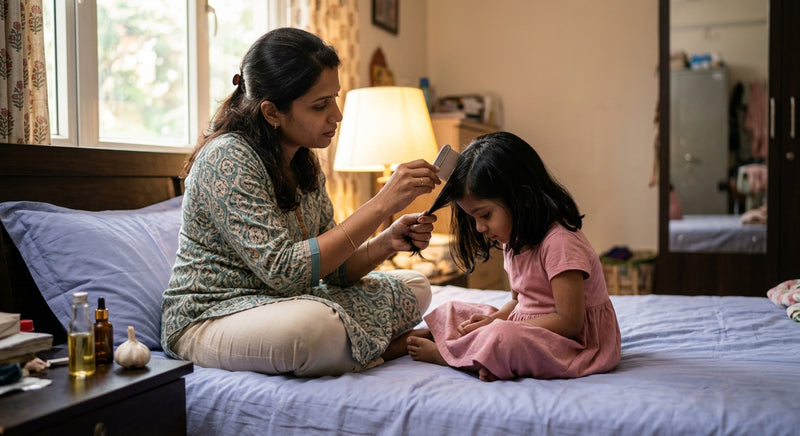
Fragrance (natural essential oils included), high alcohol content, and heated or strongly pungent oils. On inflamed, possibly broken skin these sting and can push the flare further. For eczema, “bland and boring” is the whole goal.
When to see a doctor
A routine tweak isn't the answer to everything. See your paediatrician or a dermatologist if you notice:
- Skin that is weeping, oozing, yellow-crusted or has blisters — signs of possible infection.
- A flare that is spreading fast or not settling at all despite consistent barrier care.
- Your baby is feverish, off feeds, or unusually unsettled alongside the skin.
- Sleep is broken most nights and your baby (or you) is genuinely exhausted — there are safe prescription options that help.
- You suspect a food trigger — get guidance before cutting anything, especially milk, from a baby's diet.
None of this means you've done something wrong. Eczema is common — up to around 48.6% of babies experience atopic-type skin issues — and it flares in cycles. Your job at 3am isn't to cure it. It's to keep the barrier soft, the skin cool, and the scratching to a minimum until the cycle passes.
Do the soak-and-seal tonight, cool the room, and use enough moisturiser that you can actually see it. That's where most of the calm comes from.
For eczema-prone, dry patches that flare overnight, a thick, barrier-supporting balm like the Janma Hydra Healing Moisturizing Balm is the layer I'd reach for last thing before bed.
In summary
- Night eczema flares are driven by skin water loss, warmth and the itch-scratch cycle — not internal heat or a food you must cut.
- Do soak and seal tonight: a short lukewarm bath, then a generous barrier moisturiser on damp skin within three minutes.
- Keep the room cool and dress your baby in one loose cotton layer instead of warm bundles.
- Choose a thick, fragrance-light balm that seals in moisture overnight, and re-apply at any itchy waking.
- See a doctor for weeping, crusting, fast-spreading or infected-looking skin, fever, or sleep that's exhausting you both.
Frequently asked questions
Why does my baby's eczema itch more at night?
Three things line up after dark: skin loses more water overnight so it dries and tightens, body and room warmth rise slightly (warmth is a strong itch trigger), and there are no daytime distractions, so the brain amplifies the itch. Together they make eczema-prone skin feel far itchier at 3am than it did at bedtime.
Is a 3am eczema flare caused by internal heat or something I fed my baby?
Usually no. The heat that matters is on the skin surface, not inside the body, so cooling the room helps more than changing the diet. Food drives only a minority of eczema cases. Fix the skin routine and temperature first, and discuss any suspected food trigger with your paediatrician before cutting foods.
Should I stop bathing my baby if they have eczema?
No. A short, lukewarm bath followed immediately by moisturiser actually adds water to the skin — it's called soak and seal. The key is keeping the water barely warm, using minimal gentle cleanser, patting the skin dry so it stays slightly damp, and applying a generous moisturiser within about three minutes.
How often should I moisturise eczema-prone baby skin?
Generously and often — at minimum after every bath and last thing before bed, and again at any itchy night waking. Eczema skin needs a visible film, not a thin smear. Many babies do best with two to three applications a day, more during a flare. Thick balms hold up through the night better than light lotions.
What kind of moisturiser is best for a night-time eczema flare?
A thick, fragrance-light, barrier-supporting balm or butter. It should combine humectants that draw in water, emollients that soften, and occlusives that seal the surface to slow overnight water loss. Skip fragrance, high alcohol and heated or pungent oils on inflamed skin — they can sting and worsen the flare. Bland and boring is the goal.
When should I take my baby with eczema to a doctor?
See a paediatrician or dermatologist if the skin is weeping, oozing, yellow-crusted or blistered, if a flare spreads fast or won't settle with consistent care, if your baby is feverish or off feeds, or if broken sleep is exhausting you both. Also get guidance before removing any food, especially milk, from a baby's diet.