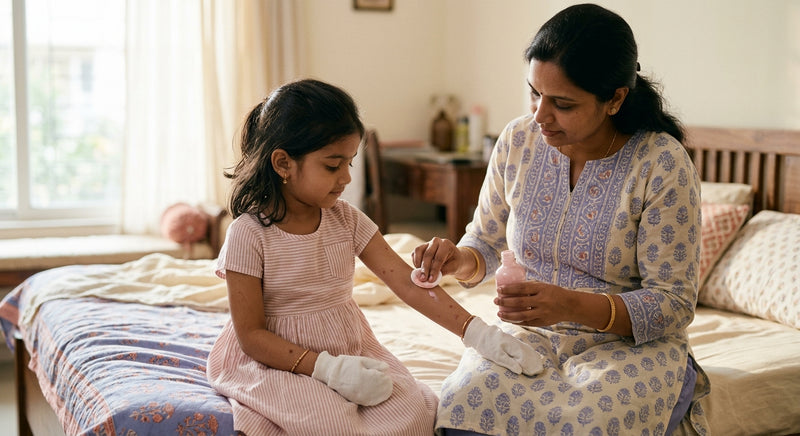
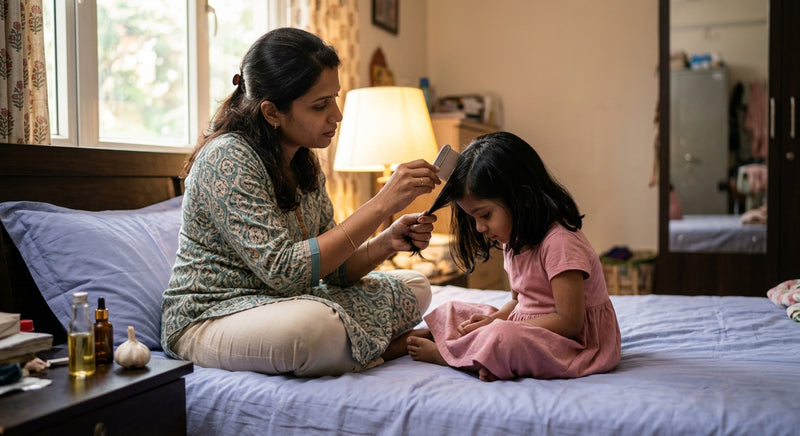
Most parents want one thing from me at the first visit: a chart. “Just tell me what to put on her, and when.” Fair enough. A one-month-old and a four-year-old don't need the same shelf, and a Nagpur June is a different planet from a Pune December. So — what changes with age, what changes with season, and where the two meet.
Here's the whole thing in two lines. For the first year, keep it to a gentle wash and a moisturiser, and let the season decide how heavy that moisturiser is. From one to five, you add sun protection and a slightly richer cleanser. The skeleton barely moves. Nearly everything else on the aisle is optional.
At a glance
- Under 1 year: wash + moisturise is the whole routine. Sunscreen only from about 6 months, and shade first.
- The season changes texture, not the number of steps — balm in winter, light lotion in summer, extra drying-off in monsoon.
- A baby's skin is 20–30% thinner than an adult's, so it loses water and reacts faster — that's why the routine is deliberately short.
- You do not need a toner, a serum, a face cream or a “baby anti-tan” anything for a child under five.
- Any rash that breaks the skin, spreads fast or comes with fever is a doctor visit, not a new product.
Why age changes the routine more than you'd think
A newborn's skin barrier is still assembling itself. It's thinner, it holds less water, and its acid mantle — the slightly acidic film that keeps microbes and irritation out — is still settling in those first weeks. That's the entire reason baby routines are stripped back: fewer ingredients, milder surfactants, no fragrance load, no actives. As your child grows, the barrier matures, the oil glands wake up a little, and by three or four she can handle a normal (still gentle) body cleanser and daily sunscreen.
Put simply: age is about how much her skin can tolerate. Season is about water — how fast the air, the bathwater and the sweat are pulling moisture out of that thin skin, or trapping it in.
The routine chart: month 0 to year 5
Treat this as a floor, not a target. If your child's skin is happy on less, use less. Age and season are the columns that matter; the rest is detail.
| Age | Core routine | Winter tweak | Summer / monsoon tweak |
|---|---|---|---|
| 0–3 months | Sponge or short tub bath 2–3x/week; plain water or a tear-free wash; moisturise once daily. | Warm room, quick bath, richer balm on cheeks, shins, nappy area. | Bathe more often in heat; light lotion; dry skin folds fully in monsoon. |
| 3–12 months | Daily or alternate-day bath; tear-free foam wash; moisturise after every bath. | Balm on exposed skin before outdoor time; lip care. | Light lotion, loose cotton, watch neck and thigh folds for sweat rash. |
| 1–3 years | Wash + moisturise; sunscreen on exposed skin for outdoor play. | Richer moisturiser, more often; shorter warm baths. | SPF reapplied; extra bath in summer; towel-dry creases in monsoon. |
| 3–5 years | Gentle body cleanser; daily moisturiser; daily sunscreen for outdoor days. | Layer moisturiser morning and night; barrier balm on chapped cheeks. | Lighter lotion, sweat management, sunscreen non-negotiable for pools and playgrounds. |
Season by season, plainly
Indian winter (Nov–Feb)
Dry air is the villain. Cold outside, heaters or shut rooms inside, and thin skin loses water fast — you'll spot it first on cheeks, shins and the backs of the hands. So shorten the baths. Keep the water warm, not hot. Switch to something with more occlusion, so the moisture you seal in actually stays put. This is balm-and-butter season. If you want the full winter walk-through, we've written a guide on what products suit which age that pairs well with this chart.
Indian summer (Mar–Jun)
Now it flips. Heat and sweat bring prickly heat, neck-fold rash and general stickiness. Bathe more often. Drop the heavy balm for a light lotion. Dress her in loose cotton. And from six months — shade first — start thinking about sun protection for any real time outdoors. A thick winter balm in a Nagpur May just traps the heat against her skin.
Monsoon (Jul–Sep)
The sneaky one. It's humid, so everyone assumes skin is fine — but damp skin folds are exactly where fungal irritation and sweat rash begin. This season isn't about adding product. It's about drying properly. Pat the neck, thighs, wrists and behind the knees fully after every bath. Keep the moisturiser light. And yes — sunscreen still matters on a bright monsoon day.
- Bath: gentle, tear-free, and shorter in cold or humid weather.
- Moisturise within a couple of minutes of towelling off, while skin is still slightly damp.
- Match texture to season: balm in winter, light lotion in summer and monsoon.
- Dry every skin fold completely in monsoon — damp folds are where trouble starts.
- Sunscreen from ~6 months for outdoor play; reapply every two hours outside.
- Patch-test any new product on the inner arm for 24 hours before full use.
What actually changes when you buy — what to look for
This is a buying decision too, so here's how I read a label for a child in this age range. On the wash: a mild, tear-free surfactant system, no added fragrance for the youngest babies, and a pH close to skin's own — harsh, high-pH soap strips that fragile barrier. On the moisturiser: humectants (draw water in), emollients (smooth) and occlusives (seal), with the balance tipped toward occlusion in winter. A butter or balm does that sealing job; a light lotion suits the heat.
And a call I'll make plainly: you don't need a different product for every season and every age. A well-made moisturising balm that helps support the skin barrier can carry a newborn through winter and, layered lighter, a toddler through a dry AC summer. Our Hydra Healing Moisturizing Balm is built for all ages for exactly this reason — one jar works across the chart, richer in the cold, a thin layer when it's warm. Fewer products, not more.
Sun protection: the one addition that's age-gated
Under six months, sunscreen isn't the plan. Shade is. A hat, outings timed away from peak sun, long light cotton. From about six months you can use a mineral sunscreen on exposed skin, and by toddlerhood it becomes a daily habit for outdoor days, pools and playgrounds. Look for non-nano zinc oxide, broad-spectrum UVA and UVB cover, and reapplication every two hours outside. We go deeper on the right age to start sunscreen and other products if you want the full reasoning.
When to see a doctor
A routine handles dryness and mild irritation. It doesn't handle these — see a paediatrician if you notice:
- A rash that breaks the skin, oozes, blisters or spreads quickly.
- Redness with fever, or a baby who seems unwell, not just itchy.
- Eczema-type patches that keep flaring despite gentle care and moisturising.
- Any skin change in a newborn under two months that worries you — always worth a call.
Up to nearly half of babies experience atopic-type skin issues at some point, so a flare doesn't mean you did anything wrong. It means the barrier needs help — and sometimes that help is medical, not cosmetic.
Keep the chart on your phone. Match the texture to the weather outside your window. Resist the urge to add steps her skin never asked for. And if you want one product that stretches across the whole zero-to-five span and every season, a gentle, barrier-supporting all-ages moisturising balm is the single most useful thing on the shelf.
In summary
- Keep it to wash plus moisturise for the first year; add gentle cleanser and sunscreen as your child grows.
- Let the season set the texture — richer balm in winter, light lotion in summer and monsoon.
- Dry every skin fold fully in the monsoon, since damp creases are where sweat and fungal rashes begin.
- Start sunscreen only from about six months, shade first, and reapply every two hours outdoors.
- See a paediatrician for any rash that breaks the skin, spreads fast or comes with fever.
Frequently asked questions
What skincare does a newborn actually need?
Very little. For the first months, a newborn needs a gentle sponge or short tub bath two to three times a week and a moisturiser once a day. No fragrance-heavy products, no actives, no face creams. Sunscreen isn't used under six months — shade, a hat and timing outings away from peak sun do that job instead. Keeping it minimal protects the thin, still-developing skin barrier.
How does a baby skincare routine change by season in India?
The number of steps stays the same; the texture changes. In winter, dry air pulls water from thin skin, so use a richer balm and shorter warm baths. In summer, switch to a light lotion, bathe more often and manage sweat. In monsoon, keep moisturiser light and dry every skin fold completely after bathing, since damp creases are where sweat and fungal rashes start.
At what age can my child start using sunscreen?
Sunscreen becomes an option from about six months, and shade, hats and cotton clothing come first before that. From toddlerhood it's a daily habit for outdoor days, pools and playgrounds. Look for a mineral formula with non-nano zinc oxide, broad-spectrum UVA and UVB protection, and reapply every two hours while your child is outside.
Do toddlers need a different moisturiser than babies?
Not necessarily. A well-made, all-ages moisturiser can carry a child from newborn through age five — you just adjust how much and how often. Use a richer, more occlusive layer in dry winter cold and a thinner application in summer heat. The bigger change with age is adding a gentle body cleanser and daily sunscreen, not swapping the moisturiser itself.
What products should I skip for a child under five?
Toners, serums, face creams, night creams, anti-tan and any fairness product. Children under five have no need for them, and a lightening claim on a baby product is something to avoid entirely — it's both indefensible and unsafe for infant skin. The genuinely useful shelf is short: a gentle wash, a moisturiser, and sunscreen for outdoor play from six months on.