She washed her hair on Sunday night. By Tuesday morning the front section lay flat against her forehead in thin strips. She asked me why her hair looked wet when she hadn't touched it, and she was properly upset about it.
The short version. Oil glands on the scalp are among the very first things puberty switches on, often a year or two before anything else is visible. Sebum output climbs. Hair that used to stay fresh for three days starts looking greasy by the second morning. It's normal and it's hormonal. Almost always what needs to change is the wash rhythm, not the shampoo.
At a glance
- A newly oily scalp is usually one of the earliest signs of puberty, most often somewhere between eight and eleven. It has nothing to do with how well your child washes.
- Washing more often does not make a scalp produce more oil. I unpick that myth more than any other.
- Most tweens do well washing every one to two days with a mild shampoo. Daily is fine on days they've oiled their hair or been outdoors.
- Keep the champi. Move the oil off the scalp and onto the lengths, 30–60 minutes before a wash instead of overnight.
- Greasy yellow flakes, a scalp that stays red and itchy, or a round scaly patch with broken hairs: that's a doctor's call, not a different bottle.
Why did my child's hair get greasy almost overnight?
The adrenal glands start producing weak androgens well before the rest of puberty gets going. Sebaceous glands sit most densely on the scalp, forehead and nose, and androgens make them enlarge and produce more oil. The hair didn't change. The skin under it did.
The overnight part feels real because your routine never moved. Same shampoo, same Sunday wash, same two-day gap. At seven that gap was comfortable. At ten the scalp is putting out more oil every hour, so the same gap now shows by Tuesday.
It rarely arrives alone. A new smell after games period. A shinier T-zone by 3pm. A few blackheads on the nose. If body odour turned up in the same few months, that's one hormone surge doing two jobs. We wrote separately in the Journal about whether a ten-year-old needs deodorant or just a better bath routine, and what we said there holds here too.
And we live in India. Sweat mixes with sebum and the hair goes heavy faster. A full school day in a tight oiled braid. A bus window full of road dust. A cricket helmet on a Nagpur April afternoon. I have watched a 7am wash give up by 4pm, and the shampoo had nothing to do with it.
More often than not, the sudden greasiness parents describe to me is a routine that hasn't caught up with the child's body. The scalp is doing what it is supposed to do.
How often should my tween wash their hair now?
Every one to two days suits most children. Daily is perfectly fine if they've applied hair oil, swum, or come home sweaty from practice. There is no rule anywhere that a child's hair may only be washed twice a week. That schedule came from a time when their scalp behaved differently.
The belief I hear most is that frequent washing strips the scalp and provokes it into making more oil. It doesn't. Sebum production is driven by hormones, not by how recently someone shampooed. A harsh adult shampoo used daily does do damage — dry mid-lengths, dull ends, an itchy tight feeling — while the scalp carries on producing exactly as much oil as before. Wash gently, and wash more often.
In the bottle I want a mild surfactant system that lathers well without a huge dose. Nothing so heavily conditioning that fine hair goes limp within hours. Light fragrance, or none at all, because tweens are suddenly, fiercely sensitive about smelling "like a baby". Adult clarifying and anti-dandruff formulas are not everyday washes for a child unless a doctor has specifically said so. We make ours in our own GMP-certified facility, so I know precisely what goes in, but the checklist matters more than the label.
Technique earns as much as frequency. Fingertips, never nails. Work the lather into the scalp; the lengths get cleaned by what rinses down. Two short lathers on a day the hair was oiled, one is enough otherwise. Then rinse for a full minute. Hard water in most Indian cities leaves a film that reads as grease again within hours, so finish with a mug under running water instead of the last of the bucket.
Conditioner goes on mid-lengths and ends, a coin-sized amount, rinsed properly. A gentle detangling conditioner keeps the ends soft without adding anything to a scalp that already has plenty. One thing surprises parents every single time: hair has to be fully dry before it's tied. Damp hair in a tight braid in humid weather smells by lunchtime, and no amount of extra washing fixes that.
Is it just oil, or is it dandruff?
Usually this is the real question. Plain oiliness is flat, shiny hair with no flakes and no itch. Flaking that itches, sits in yellowish greasy scales, or comes with a scalp that stays red is a different conversation, and it belongs with a paediatrician rather than the shampoo aisle. What follows is what parents typically notice. It is not a diagnosis. Only a doctor can tell you which one you're dealing with.
| What you notice | Usually just puberty oil | Worth a doctor's look |
|---|---|---|
| The hair | Flat, shiny, heavy by day two | Greasy plus visibly flaking at the roots |
| Flakes | None, or a little fine dust after a dry week | Yellowish, greasy, stuck to the scalp in scales |
| Itch | Little to none | Persistent; child scratches in class or at night |
| Scalp skin | Normal colour, comfortable | Stays red, sore, weepy or crusted |
| Response to routine | Clearly better within a week of washing more often | No real change after three to four weeks |
One pattern is worth knowing about — not so you can name it yourself, but so you know to move quickly: a round scaly patch with hairs broken off short, sometimes with a grey dusty look. Only a doctor can say what is behind it, and this one warrants a prompt appointment, because some causes are contagious between children and need prescription treatment. No shampoo, medicated or otherwise, is the answer here. Until it has been looked at, combs, pillows and caps get shared with nobody.
Do we have to stop the Sunday champi?
No. Change where the oil goes and how long it stays, and the ritual survives intact.
An overnight oiling on a puberty scalp means eight to ten hours of occlusion over glands that are already working harder, plus whatever the pillow adds. There is a second reason nobody says out loud. A child who walks into school with visibly oiled hair gets comments, and at eleven that lands harder than we like to admit. Mine asked me to stop. She was right.
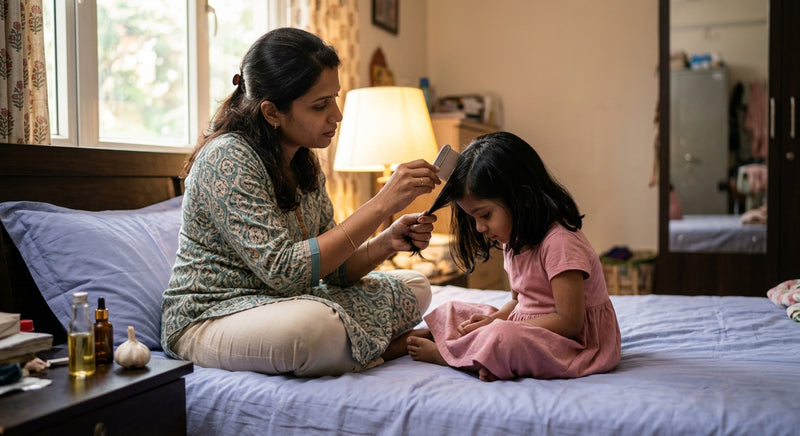
- Oil the lengths and ends, never the scalp. One teaspoon for shoulder-length hair, two for waist-length.
- Warm it slightly between your palms. Not hot, and never heated on the stove.
- Leave it 30–60 minutes, on a day you were washing anyway. Overnight is the part to drop.
- Comb through with a wide-tooth comb while the oil is on. That is where the detangling benefit comes from.
- Wash out with two short lathers. Coconut oil has decent published work behind it for reducing protein loss from the hair shaft, so it earns its place on the lengths.
- Never on a school morning, never before PT or sports day.
What does a realistic school-week routine look like?
Simple enough that a ten-year-old runs it without you standing there:
- Sunday evening: oil on lengths for 45 minutes, comb through, then wash.
- Wash days: alternate days as a baseline, daily in a sweaty week. Two lathers if oiled, one if not.
- Every wash: conditioner on ends only, rinse for a full minute under running water.
- Before school: hair completely dry before it's tied. A loose plait beats a tight one in humid weather.
- Twice a week: change the pillowcase. It picks up more oil than anyone expects.
- Weekly: wash hair ties, caps, helmet liners and the hair towel. Keep that towel separate from the face towel.
- Same-day wash after swimming, a dusty outdoor match, or a long bus journey with the windows down.
When to see a doctor
Two things are worth asking about instead of guessing at. If the greasiness has arrived alongside other early puberty signs before roughly eight in girls or nine in boys, get a paediatrician's opinion on the timing. Not because something is wrong. Because they can tell you quickly. The second: before any adult anti-dandruff shampoo goes on a child's scalp, check the frequency with a doctor. Those are active formulations, and the dose and the gap matter on younger skin.
Most of what you're managing here is a routine that needs to grow up alongside your child, and a bit of self-consciousness that arrives with it. If you're moving to more frequent washes, a mild everyday formula like our Loving & Balancing Shampoo is the sort of thing to reach for. Gentle enough to use often, which is the whole point.
In summary
- Treat a newly greasy scalp as an early, normal sign of puberty — update the routine rather than switching to a harsher shampoo.
- Move to washing every one to two days, daily if your child has oiled their hair or played outdoors.
- Lather on the scalp with fingertips, rinse for a full minute under running water, and keep conditioner on the ends only.
- Shift hair oiling to the lengths for 30 to 60 minutes before a wash instead of leaving it on overnight.
- See a paediatrician for greasy yellow scaling, an itch that breaks the skin, or any patch of broken hairs or hair loss.
Frequently asked questions
Why did my 9-year-old's hair suddenly become oily?
The adrenal glands begin producing weak androgens well before other signs of puberty appear, and the oil glands on the scalp respond by producing more sebum. Nothing about the hair changed — the skin under it did. Because the wash routine stayed the same, the extra oil shows up as hair that looks greasy by the second morning.
Is it okay for a child to wash their hair every day?
Yes, provided the shampoo is mild. Daily washing does not make the scalp produce more oil — sebum output is hormone-driven, not a rebound to shampooing. What a harsh adult formula used daily can cause is dry, dull mid-lengths. Wash the scalp gently, keep conditioner on the ends, and rinse thoroughly.
Should I stop oiling my child's hair during puberty?
You don't have to stop, but change how you do it. Move the oil off the scalp and onto the lengths, use about a teaspoon for shoulder-length hair, and leave it 30 to 60 minutes before a wash instead of overnight. Skip it entirely on school mornings and sports days.
How do I tell greasy hair from dandruff in a tween?
Plain puberty oiliness means flat, shiny hair with no flakes and no itch, and it improves noticeably within a week of washing more often. Yellowish greasy scales stuck to the scalp, persistent itching, or scalp skin that stays red and sore point to something else and should be seen by a paediatrician.
Does an oily scalp mean my child has started puberty early?
Not on its own. A greasier scalp is one of the earliest changes and usually shows up somewhere between eight and eleven, often with a new body odour and a shinier T-zone. If it appears alongside other puberty signs before roughly eight in girls or nine in boys, ask your paediatrician about the timing.
Why does my child's hair smell by the end of the school day?
Sweat mixing with the extra sebum, then trapped under a tight braid, cap or helmet in humid weather. The most common avoidable cause is hair tied up while still damp. Dry it fully before school, keep the plait loose, wash hair ties and caps weekly, and wash the hair the same day after outdoor sport.