A mum in Nagpur sent me a photo last May: her balm had gone sandy, like someone had stirred sugar into it. Two afternoons in a car parked outside a clinic. She wanted one thing from me - is this still safe for my baby?
Short answer: Indian heat rarely makes a baby product unsafe on its own. What it does is change the texture - separation, thinning, graininess, faded fragrance - and slowly wear down the oils and actives inside. Keep things below about 30°C, out of direct sun, capped tight, and finish them inside the open-jar window on the label. Bin anything that smells rancid or sour, has clearly changed colour, or has split into layers that won't mix back.
This one belongs to our complete guide to reading and judging baby products in India. Storage is the part nobody mentions at the pharmacy counter. So: shelf by shelf, here is how I'd decide.
At a glance
- Heat pushes two separate things along: the oils going rancid, and the emulsion losing its structure. Rancid is a bin. Split is often fixable.
- A grainy butter balm is almost always re-crystallised butter. A watery layer that won't mix back in is a broken emulsion - stop there.
- In most Indian homes the bathroom is the worst shelf in the house. Steam, splash water, wet fingers in the jar.
- The fridge isn't an upgrade for most baby products. Those condensation cycles stress an emulsion more than a steady 29°C cupboard ever will.
- Two dates and one symbol: manufacture, best-before, and the open-jar "M" number.
Does Indian heat actually spoil baby skincare?
Heat doesn't break a product. It hurries along chemistry that was already ticking over slowly.
In a hot cupboard, unsaturated plant oils - almond, sunflower, avocado - oxidise faster, and oxidation is what your nose reads as rancid. You know the smell. An old packet of walnuts, that crayon-ish, slightly paint-like note. Meanwhile the emulsion is going soft. Any lotion or cream is water and oil held together by emulsifiers, so warm it and it thins, the droplets drift, they coalesce, and eventually the thing separates. Fragrance goes earliest of all - top notes evaporate, so a product smells weaker long before anything is wrong with it.
How much does heat matter? Look at what the industry does with it. Stability testing is routinely run hot and humid - around 40°C with high relative humidity - precisely because those conditions push a formula along faster than a normal shelf would, which is how brands get an early read on how it will hold up. Heat plus humidity is the accelerator. Now, a Chennai flat in May is no test cabinet. It is also nothing like 20°C Europe, and a formula designed only for 20°C Europe will tell on itself here.
Where should you keep it? Six spots in an Indian home, compared
Most parents think they are choosing a brand. Mostly they are choosing a shelf.
| Where you keep it | What heat and humidity do there | Honest verdict |
|---|---|---|
| Bathroom shelf or window ledge | Steam cycles, splash water into open jars, wet hands, sometimes afternoon sun through frosted glass | Worst spot. Also the handiest one, which is exactly why I'd move it first |
| Inside a bedroom cupboard or steel almirah | Warm but steady, dark, dry. The temperature drifts instead of spiking | Best spot. Steady warm beats cold-and-swinging |
| Top of the almirah / on top of the fridge | Hottest air in the room collects up there, and the fridge motor warms the top panel | Avoid. Parents put things up high to keep them away from the baby, then cook them |
| Fridge door | Cold, but every use is a condensation cycle; thick creams go stiff, some emulsions thin for good | Only for aloe gel or an after-sun gel you want cool. Not lotions, balms or sunscreen |
| Diaper bag | Rides along at whatever the day is doing. Fine in a stroller, brutal on a scooter footboard in May | OK for small tubes you finish in weeks. Keep it out of the sun, never near a hot engine |
| Car glovebox or dashboard | A closed cabin in the sun runs far hotter than the air outside, and stays there for hours | Never. This is the single most common way a good product dies |
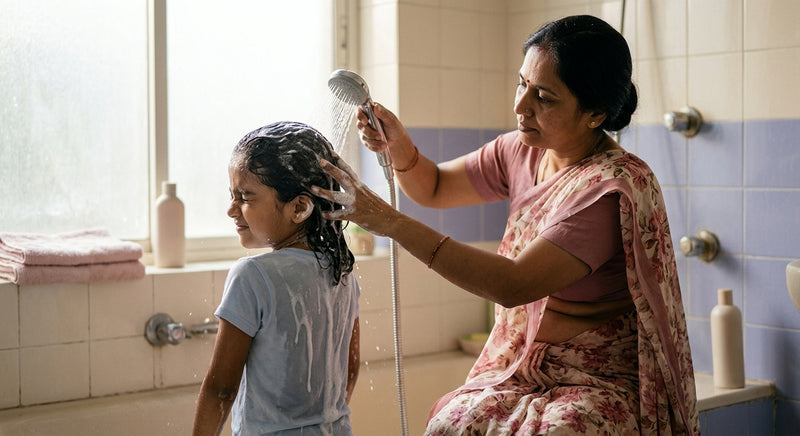
What I'd actually do: one shoebox-sized basket inside a bedroom cupboard, waist height, holding everything except the wash. The wash has to stay in the bathroom. So buy it in a pump or flip-cap bottle rather than a tub, keep it up off the floor where bucket water splashes, and don't park it on the geyser side of the wall. A pump-dispensed foam wash handles the bathroom by design - nothing goes back in, nothing splashes in. That is packaging doing real work.
Separation, graininess, watery top layer: which are fine and which aren't?
Parents bin good products over a cosmetic change, then hang on to genuinely spoiled ones because the date on the label hasn't passed. This is how I sort them.
| What you're seeing | What it usually is | Keep or bin |
|---|---|---|
| Butter balm has gone grainy or sandy | Shea and kokum butters melted, then re-set into bigger crystals. Texture, nothing more | Keep. Warm the jar in your palms or a bowl of warm water, stir it, let it set in the cupboard |
| Lotion looks thinner; stirs back smooth | Viscosity drops as the temperature climbs. Normal | Keep. Shake before use |
| A clear water layer sits on top and will not re-mix | The emulsion has broken. The preservative was dosed for a mixed system, not for a free pool of water | Bin. No exceptions |
| Oil or balm smells like old nuts, crayon or paint | Oxidised oils. Rancid lipids are irritating on thin skin | Bin. Trust your nose over the date |
| Wash has gone runny but is clear and smells normal | Surfactant systems thin in heat, and some firm up again once it cools | Keep, use it sooner. Bin it if it turns cloudy or stringy |
| Mineral sunscreen pours watery, or you see yellow/white layers | Zinc oxide has settled, or the emulsion is stressed. An uneven film means uneven protection | Bin if shaking hard doesn't bring back an even cream |
| Colour has darkened and the smell has changed together | Two signals at once is the warning worth trusting | Bin. |
| Tube is bulging, or a jar hisses or fizzes when opened | Gas from microbial growth | Bin immediately, and don't patch test it |
Your nose is the most underrated test in the house, and it costs nothing. A baby lotion should smell like almost nothing at all. Sharp, sour, nutty-old, or simply different from last month - take that seriously.

How to read the dates - and what the open-jar symbol really means
An Indian cosmetic label gives you the month and year of manufacture, plus a best-before or use-by date. That date assumes a sealed pack, stored the way the label asks. Open it and a second clock starts - the little drawing of an open jar with a number beside it. 12M. 24M. Twelve months of use after opening; twenty-four.
Two things that number won't tell you. It comes from testing at normal storage, so a tube living out its days in a 35°C bathroom is burning through the window faster than the printed figure suggests. And a jar you dip fingers into ages quicker than a tube or a pump, because every single day you add a little skin flora and a little water. If you change one habit after this, let it be that one: a clean, dry spoon for jars, or the back of a clean fingernail.
With a sunscreen or a barrier product, the date that matters is whichever lands first - best-before, or the open-jar window counted from the day you cracked the seal. Write that day on the carton in marker. Three seconds, and the guessing stops.
Your 10-minute shelf audit, tonight
- Pull everything out of the bathroom and line it up on the bed.
- Open each one. Smell it, tilt it. Anything rancid, fizzing or permanently layered goes in the bin now, not after one more use.
- Marker pen: the day you opened it, written on every carton or base.
- Wipe the caps and the neck threads. Dried product around the rim is where contamination starts.
- Move the lot into a basket inside a bedroom cupboard. Only the wash stays behind.
- Get the stray tubes out of the car. All of them.
- Park a clean, dry spoon beside any jar you dip into.
- Smaller packs for whatever you use once a week. Big packs only for the daily stuff.
Since you're already standing over the whole lot: other things that touch your baby's skin go off, or go wrong, just as quietly. The powders many of us inherited from our mothers, and why paediatricians moved on from dusting powder. The repellent patches and roll-ons that have their own age rules. The detergent drawer too, because how you wash baby clothes causes more rashes than most parents expect.

What a formulator does about Indian heat before the product reaches you
Storage advice can't be the only thing holding a product together, and in ours it isn't. Some of the calls we make, because we're the ones at the mixing tank rather than ordering a stock base:
- Build the emulsion for 40°C, not 20°C. Emulsifier systems and polymer thickeners that hold at the top of the range - then samples held hot before anyone signs off a batch.
- Oil choice deserves respect. The polyunsaturate-rich oils feel lovely and oxidise fast. They need antioxidant support and packaging that keeps light and air out. Or a smaller pack size, honestly.
- Preservation is dosed for real use. Wet hands, a nursery in June. Not a laboratory.
- Packaging is part of the formula: opaque, narrow-necked, properly sealed. A wide-mouth clear jar on a sunny shelf is a design decision working against the product inside it.
Made in our own GMP-certified facility - we own our formulations, which is the only reason I can give you specifics here instead of generalities.
When to see a doctor
If your baby's skin reacts after you've used something that smelled or looked off - new redness, raised bumps, weeping, broken skin, swelling, or obvious discomfort - stop the product, rinse the area with plain lukewarm water, and see your paediatrician. Take the pack with you so the doctor can see the ingredient list and the batch number. Same if a rash spreads beyond where you applied it, if there's fever, or if the skin looks infected. Any reaction around the eyes, mouth or genitals, or any swelling of the lips or face, is a same-day visit, not a wait-and-see.
If your current moisturiser has already thinned out or split in the heat, a thicker, barrier-style balm tends to hold its structure far better through an Indian summer - our Hydra Healing Moisturizing Balm is the one I'd keep in that cupboard basket.
In summary
- Keep baby products below about 30°C in a dark, dry bedroom cupboard - stable warmth beats a fridge's condensation cycles.
- Move everything except the wash out of the bathroom, and never leave a tube in a parked car.
- A grainy balm or a thinner lotion is a texture change; a water layer that will not re-mix, a rancid smell or a fizzing pack means bin it.
- Check two dates and one symbol - manufacture, best-before, and the open-jar "M" number - and write the day you opened it on the carton.
- Use a clean dry spoon for jars, wipe cap threads, and buy smaller packs of anything you use less than daily.
Frequently asked questions
Should I keep baby lotion in the fridge in summer?
Usually no. A fridge is cold, but every time you take the bottle out it warms and sweats, and those condensation cycles stress an emulsion more than a steady warm cupboard does. Thick creams also go stiff and hard to spread. The exception is a plain aloe or after-sun gel, where the cool feel is the point. Everything else does better in a dark bedroom cupboard.
My baby balm has gone grainy. Is it spoiled?
Almost certainly not. Shea and kokum butters melt in heat and then re-set into bigger crystals, which feels sandy on the skin but is a texture change, not spoilage. Warm the closed jar in your palms or a bowl of warm water, stir it smooth, and let it set in a cool cupboard. If it also smells nutty-old or like crayon, that is rancidity and it goes in the bin.
How long can I use a baby product after opening it?
Look for the little open-jar symbol with a number beside it - 6M, 12M, 24M. That is the number of months to use it in once the seal is broken, and it runs alongside the printed best-before date. Whichever comes first wins. Mark the day you opened it on the carton. In a hot, humid bathroom, treat that window as shorter rather than longer.
Does expired baby cream actually harm the skin?
Past-date cream is not automatically dangerous, but two real risks rise: oils that have oxidised can irritate thin skin, and a preservative system past its life may no longer control microbial growth. A sunscreen is the clearest case to replace, because a split or settled formula gives an uneven film and therefore uneven protection. If it smells off, has changed colour, or has separated and will not re-mix, replace it.
What is the safest place to store baby skincare in an Indian home?
Inside a bedroom cupboard or steel almirah, at waist height, in a small basket - dark, dry and stable. Stability matters more than coolness. Avoid the bathroom shelf, the top of the almirah or fridge where hot air collects, sunny window ledges, and the car, where a closed cabin runs far hotter than the air outside for hours at a stretch.
Can I still use a baby wash that has become watery in the heat?
If it is clear, smells normal and lathers, yes - surfactant systems simply thin as they warm, and many firm up again once cool. Use it up sooner rather than stockpiling it. Stop if it turns cloudy, stringy or sour-smelling, or if the bottle fizzes when opened. A pump or flip-cap bottle keeps splash water and fingers out, which is the real problem in a bathroom.