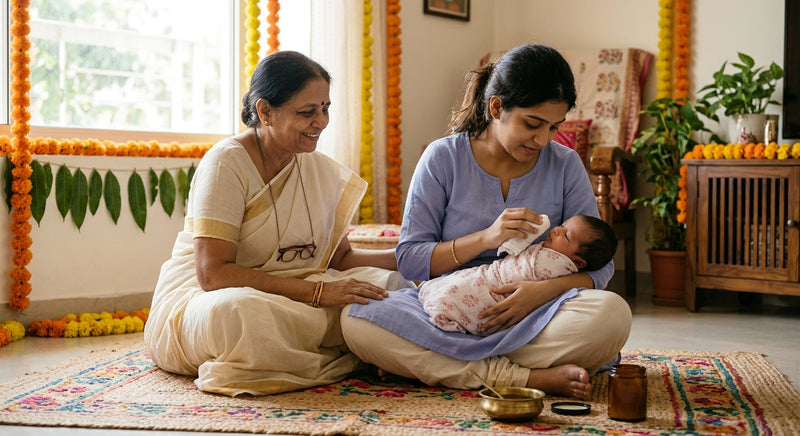
Her brother's skin never did this. I hear that sentence more than any other from a mother holding her second newborn. It tends to arrive around day eight, at 2am, with the first baby's photos open on her phone so she can check whether she's imagining the whole thing.
She isn't. And it's almost always fine. Siblings share genes; what they don't share is a starting point. The season your baby was born into, how many weeks she stayed in, how soon somebody bathed her, even which trunk the hand-me-downs came out of — every one of those changes how her skin behaves in the first six weeks. Two babies in one family, two completely different first fortnights. That is ordinary.
At a glance
- Two babies from the same parents can have visibly different skin in the newborn weeks. Peeling, flushing, dryness and heat bumps all shift with birth season and gestational age.
- A baby born at 41 weeks sheds far more skin than one born at 38 weeks. Same family, completely different first fortnight.
- Your memory is comparing a 9-day-old to a toddler. That comparison isn't fair, and it makes the gap look bigger than it is.
- Don't rebuild the routine from scratch. Cut it to one wash and one moisturiser, hold it steady for seven days, then judge.
- Hand-me-down clothes cause a lot of second-baby neck and seam-line rashes, and almost nobody checks them first.
If this is your first read in this series, start with our complete guide to newborn skin basics — it covers the baseline everything below sits on top of.
Why is my second baby's skin different from my first's?
Genes draw the outer limits. What happens inside those limits comes down to five things, and between two siblings most of the five have usually moved at once.
1. The season she was born into
A Nagpur May baby and a Nagpur December baby are not having the same experience. Summer babies get sweat trapped in the neck and thigh folds — fine pinprick bumps, at their worst after a long feed with a cheek pressed into you. Winter babies get tight, flaky patches on the cheeks, shins and the backs of the hands, and a room heater running all evening makes it worse by pulling the moisture out of the air. First baby in October, second in April? You're looking at two different problems and calling it one difference.
2. How many weeks she stayed in
Few parents expect this one. A baby born at 41 weeks has already lost most of her vernix — that creamy white coating — inside the womb. Her skin arrives drier and sheds in sheets around days 5 to 14. A baby born at 38 weeks often arrives still coated. Smoother for the first week, and far less peeling. Three weeks of gestational difference between siblings is enough to produce a dramatic difference in flaking. If that's what you're watching, our honest guide to peeling skin in a one-week-old walks through what to expect, week by week.
3. When she had her first bath
Hospital practice varies hugely across India, and it may well have changed between your two deliveries even in the same hospital. A baby bathed within a few hours of birth loses vernix she would otherwise have kept for days. Her first fortnight then reads drier. Nothing has been damaged. She simply began drier.
4. Colour, flushing and mottling
Second babies often look a different shade from their sibling at birth, then change again across six weeks as melanin production matures. Mothers tell me the second one "got darker". That's maturation, and no product should ever be used to interfere with it. We've written about why a newborn's skin tone shifts in the early weeks, including the one colour change that does need a paediatrician the same day.
5. The house is a different house now
There's a toddler in it. More hands on the baby, more kissing, more dust at floor level, and less hovering from you, because you've done this before. Then there are the clothes. The softest hand-me-downs have spent two years folded in a steel trunk, often with naphthalene balls, with the old detergent still sitting in the fibres. When a rash runs exactly along the neck seams and shoulder stitching, look at the fabric before you look at the baby.
| What differs between siblings | What it does to the skin | What you'd actually see |
|---|---|---|
| Birth season (May vs December) | Trapped sweat vs moisture loss | Pinprick bumps in folds, or tight flaky cheeks and shins |
| Gestational age (38 vs 41 weeks) | More vernix retained vs almost none | Smooth first week, or heavy shedding days 5-14 |
| Timing of the first bath | Vernix washed off early | A noticeably drier first fortnight |
| Hand-me-down clothing | Detergent residue, stiff seams, naphthalene | Redness along neck, shoulders, seam lines |
| Which sibling inherited sensitive skin | One child can be dry- and eczema-prone, the other not | Dry itchy patches that keep returning in the same spots |
The seven-day reset: a routine for a second baby's skin
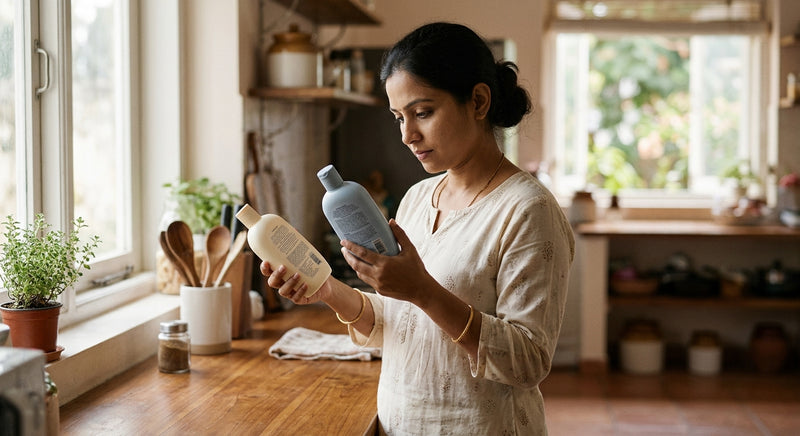
Here's the mistake I made with my own second. I reached for a new product every two days. By day five I had four half-used bottles on the shelf, a baby whose skin was no calmer, and no way of telling which thing had helped and which had made it worse. What actually works is dull: strip the routine down, hold it still, give it a week.
- Pick one wash and one moisturiser. Everything else goes in a cupboard, including whatever worked beautifully for your first. Two products, seven days, no swapping.
- Bath for 5 minutes, water at 37-38°C. Test with your elbow, not your hand. In winter, warm the room first and keep it shorter — four minutes is plenty.
- Plain water is fine most days. On wash days, a small pump of a tear-free cleanser like our Head to Toe Baby Foam Wash over the scalp, neck folds and nappy area does the job. Not the whole body, not every day.
- Pat dry, never rub. Open the folds — neck, armpits, groin, behind the knees — and dab each one. Damp folds are where most second-baby rashes begin.
- Moisturise within three minutes, while she's still slightly damp. A chickpea-sized amount per limb, a little more on shins and cheeks. Twice a day if the skin is dry: morning, and after the bath.
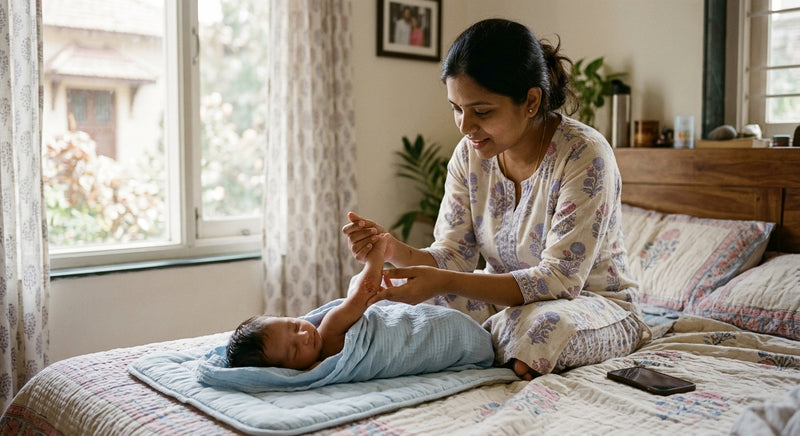
- Keep malish before the bath. Five to ten minutes of gentle strokes with a plain oil, then wash it off. Oil sitting on her all day in humid weather blocks the folds and traps sweat.
- Wash every hand-me-down twice before it touches her — once with a mild detergent, once with water alone — then air it in sunlight for a day until the stored naphthalene smell has gone.
- Dress her in one cotton layer plus a thin top layer you can pull off. Judge the temperature from the back of her neck, not her hands.
- Write one line in your phone each night. What the skin looked like, what you used, how warm the room was. Nine words is enough.
- Re-read those notes on day 7. Change exactly one thing, then hold for another week.
What to expect across the week
Nights 1-2: usually nothing visible changes, and sometimes the flaking looks worse as the older skin finishes lifting off. Don't panic-switch here. This is where most parents abandon a routine that was two days from working.
Nights 3-5: the folds should start looking cleaner and drier, and the flaking should go from sheets to something more like fine dust. Rough patches soften before they fade. You'll feel the improvement before you see it.
Day 7: compare against your own notes. Not against your memory of your first baby — that memory is a toddler now. Clearly better? Keep going, unchanged, for another fortnight. Identical? Change one variable. Nine times out of ten it's bath frequency, or how much moisturiser you're genuinely using, since most parents use about half of what dry skin needs.

What not to change just because it worked for your first
Most of what you learned the first time still holds. Short baths, warm water rather than hot, moisturise while she's damp, use fewer products than you think you need. What doesn't carry over is a verdict on a specific product. A balm that suited your December baby's cracked cheeks can sit heavy on a July baby sweating through a Nagpur afternoon — and that same baby may want it back by November.
Two things I'd leave strictly alone. Don't add a second cleanser because the first one "isn't doing enough"; newborn skin needs very little cleansing. And don't scrub or apply ubtan to lift the flakes. Peeling comes away on its own. If you can't tell whether what you're seeing at four or five weeks is ordinary shedding or real dryness, our guide to peeling skin in a one-month-old draws that line clearly.
The cord stump follows the same rule it did last time: clean, dry, nothing dusted on it. The reasons are in our piece on antiseptic powder and cord care.

When to see a doctor
Differences between siblings are normal. The following are not, and they need a paediatrician rather than a change of cream:
Call your paediatrician if you see any of these:
- Yellowing of the skin or the whites of the eyes, especially spreading below the chest, or any yellowing in the first 24 hours.
- Blisters, pus, honey-coloured crusting, or skin that weeps or breaks open.
- A rash with fever, poor feeding, unusual sleepiness, or fewer wet nappies.
- Cracked, bleeding skin, or dry itchy patches that keep returning in the same place despite a steady routine.
- Redness in the nappy area that is spreading, raised at the edges, or no better after three days of careful care.
- Any rash that doesn't fade when you press on it.
Nothing in a skincare routine replaces that visit. If you're weighing it up at 2am, go.
And the question sitting under the question: no, a second baby with different skin does not mean you're doing a worse job this time. You're doing it on less sleep, with more experience, on a different baby.
For the dry, flaky or eczema-prone stretches that siblings so often differ on, our Hydra Healing Moisturizing Balm is made in our own GMP-certified facility, in-vivo tested, and formulated to comfort dry, sensitive skin and help support its natural barrier.
In summary
- Expect siblings to have different skin — birth season, gestational age, first-bath timing and vernix retention all change the starting point.
- A baby born at 41 weeks sheds far more skin than one born at 38 weeks, so heavy peeling in days 5-14 is usually timing, not trouble.
- Strip the routine to one wash and one moisturiser, hold it unchanged for seven days, then change only one variable.
- Bathe 5 minutes at 37-38°C, pat folds dry, and moisturise within three minutes while the skin is still damp.
- Wash hand-me-downs twice and air them in sunlight — seam-line redness is usually fabric and detergent, not sensitive skin.
Frequently asked questions
Can two siblings really have completely different skin?
Yes, routinely. Genes set a range, but gestational age at birth, the season your baby was born into, when the first bath happened and how much vernix was retained all change the starting point. One sibling can also inherit dry, atopy-prone skin while the other doesn't. Different skin between siblings is expected, not a sign anything is wrong.
Why is my second baby peeling more than my first did?
Usually gestational age. A baby born closer to or past 41 weeks has already lost most of her vernix in the womb, so her skin arrives drier and sheds heavily between days 5 and 14. A baby born at 38 weeks keeps more of that coating and peels far less. An early first bath adds to it. Peeling lifts on its own — never scrub it.
Can I use my first baby's leftover products on my second?
If they're within date, unopened or hygienically used, and still suit the current season, usually yes. But don't assume the same product verdict carries over. A rich balm that suited a winter baby can feel heavy on a summer baby. Introduce one product at a time, patch test on the inner forearm first, and hold the routine steady for a week before judging it.
Could hand-me-down clothes be causing my second baby's rash?
It's one of the most common and most missed causes. Clothes stored for two years hold old detergent in the fibres, often carry naphthalene, and have stiffened seams. The giveaway is redness that follows neck seams, shoulder stitching or elastic lines rather than appearing in patches. Wash twice — once with mild detergent, once with water alone — and air in sunlight.
How long should I give a new routine before deciding it isn't working?
Seven days of a genuinely unchanged routine. Flaking can briefly look worse on days one and two as older skin finishes lifting, which is when most parents switch products and lose the information. Write one line a night about what you used and what the skin looked like, then review on day seven and change only one variable.
My second baby looks a different colour from my first. Is that normal?
Newborn skin tone shifts for about six weeks as melanin production matures, so siblings often look different at birth and change at different rates. That's maturation, and no product should be used to alter it. The exception is yellowing of the skin or eyes, which needs a paediatrician the same day — especially within the first 24 hours.