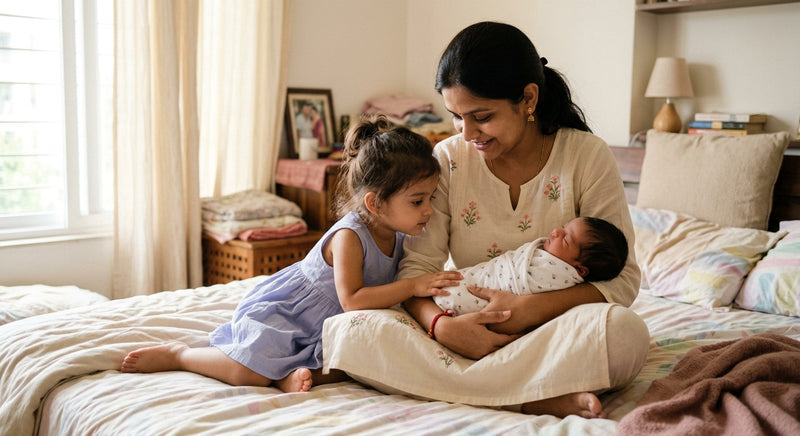
Eleven days in. Maybe three hours of sleep in a row, if you were lucky. The house smells of flowers and frying. And an aunt arrives with a katori of besan, malai and a pinch of haldi. "Lagao na, kal naamkaran hai - chehra khil jayega."
The honest answer is a relief: a newborn's skin needs almost nothing done to it before a naming ceremony. A short lukewarm bath. The same moisturiser you have been using all week. Clothes that have been washed twice. That's the list. The ubtan, the haldi paste, the kajal dot, the big oil malish an hour before the muhurat - all ritual, not skincare. Some of it is lovely and harmless. Two or three can spoil the week after.
What tends to go wrong after a ceremony often has nothing to do with the ritual anyway. A brand-new product tried for the first time that morning. Stiff zari sitting against the neck for four hours. A nappy left on through the whole puja. All three are fixable before you leave the house. If you want the wider picture on which inherited practices to keep, adapt or quietly stop, we keep a complete guide to traditional baby-care practices and their safety alongside this.
At a glance
- Nothing new on the skin in the week before the ceremony - no first-time wash, oil, cream, wipe or perfume.
- A short lukewarm bath plus your usual moisturiser is the entire prep. There is no "glow" step.
- Ubtan, besan and malai scrubs do not change a newborn's skin tone - tone is still settling on its own for weeks.
- Wash the new outfit twice and put a soft cotton layer under anything with zari or embroidery.
- Change the nappy every 2-3 hours even if the ritual is mid-flow. A nappy left on for four hours is an easily avoided cause of post-ceremony redness.
- Kajal in or near the eyes, black mehndi and talc on the face are the three to refuse outright.
What does a newborn's skin actually need before the ceremony?
Three things. All of them dull, on purpose.
Clean, briefly. Five minutes in lukewarm water on the morning of the function - or the evening before, if the muhurat is early. Not a long soak "to soften the skin". The longer a newborn sits in water, the more of the skin's own lipids wash away, and you start the day drier than you began it.
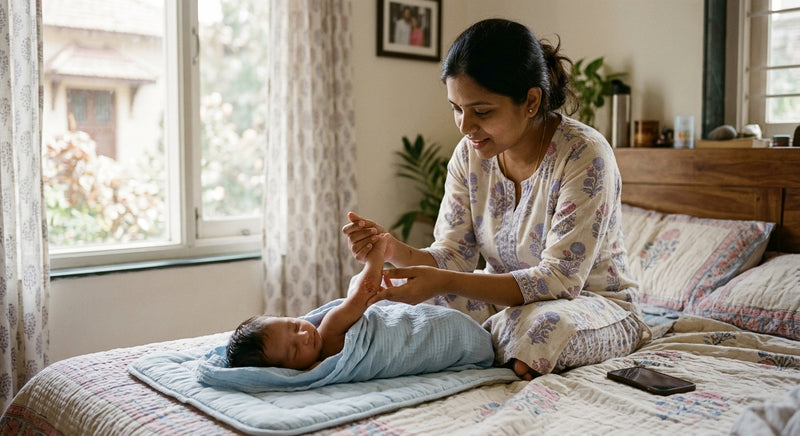
Moisturised while still damp. Pat dry with a muslin, leave the skin a little damp, and use whatever you've been using all week. You have about three minutes.
Left alone. Newborn skin isn't meant to look like a cream advertisement on day eleven. Peeling across the ankles and wrists. Milia on the nose. One blotchy cheek. A slightly yellow tinge in the photos. That is a baby adjusting to air, and no paste applied the night before polishes it away. A baby's skin is 20-30% thinner than an adult's, which is exactly why it responds so badly to being improved.
Myth: an ubtan the night before will make the baby glow in the photos
Besan is a flour. Rubbed on skin this new it works as a mild abrasive, and a newborn has no dead-skin build-up to remove in the first place. What you get isn't glow. It's faint friction redness, and that photographs worse than the skin you started with.
The "glow" is usually about colour, so let's say it plainly: nothing you apply changes your baby's skin tone. Pigment is still maturing over the first weeks and months, and many Indian babies look lighter in the first days than they will at six months. That's melanin settling, not something going wrong, and no paste, oil or ubtan can do anything about it either way. Please don't let anyone put a fairness product on an infant for a function.
If ubtan is part of your family's ritual and you want to keep it, keep it symbolic. A pinch in the thali, a touch on the feet, washed off within a minute or two with plain lukewarm water. Our longer piece on using ubtan safely goes through the age question in more detail.
Myth: a big malish right before dressing makes the skin dewy
Oil before a function sounds harmless and then goes wrong in three directions at once. An oiled baby is slippery, and is about to be passed between eight pairs of hands. Oil under silk in a warm, crowded room traps sweat in the neck and groin folds - that's how you get sweat rash by the time the pandit finishes. And oil plus incense plus garlands is a great deal of sensory input for a baby who was planning to sleep.
Do the malish the night before, give the usual bath after it, and let the morning be oil-free. If someone suggests a firm massage over the soft spot on the head to "shape" it for the photos, that one is a firmer no - we've written about why the fontanelle should never be pressed or massaged. Same answer for oiling a recent vaccination spot, which often lands in the same fortnight as a naamkaran; the evidence on massaging a vaccination site is clear enough that the argument isn't worth having.
Myth: haldi and kumkum are natural, so they are safe anywhere on a baby
Natural and gentle aren't the same word. Turmeric is a recognised contact irritant for a minority of people. Kumkum preparations vary enormously in what's actually in them. And both end up somewhere they were never meant to go - rubbed into an eye by the baby's own fist, twenty minutes later.
So move it rather than refusing it. A tilak on the feet or the back of the hand keeps it well away from the eyes. Wipe it off with lukewarm water and cotton once the ritual is done, instead of letting it sit there all evening. Nobody in the family will notice, and the ceremony loses nothing.

What helps, what to adapt, and what to skip
| Practice | Verdict | Why |
|---|---|---|
| Short lukewarm bath, morning of | Keep | Clean and comfortable; 5 minutes, elbow-test warm, no long soak |
| Your usual moisturiser on damp skin | Keep | Helps support the skin barrier before a long day in a warm room |
| Besan or malai ubtan "for glow" | Skip on a newborn | Abrasive on very new skin; cannot and does not change tone |
| Haldi or kumkum on the forehead | Adapt | Move to the feet, wipe off after; both can irritate and both reach eyes |
| Kajal in the eyes or as a nazar dot | Skip | Lead has been found in traditional kajal samples; the eye is the worst site |
| Full oil malish an hour before | Adapt | Do it the night before; oil plus silk plus a warm crowd means sweat rash |
| New zari or silk outfit straight from the shop | Adapt | Wash twice, then a soft cotton layer underneath against the neck and arms |
| Talc to "set" the face for photographs | Skip | Inhalation risk at this age, and it cakes in the neck folds |
| Attar or perfume | Adapt | A drop on your own dupatta or the pram hood, never on the baby's skin |
| Mehndi on a newborn's feet | Skip | Especially "black" mehndi, which can contain PPD and cause severe reactions |
The three-day plan you can actually follow
- Three days before: stop experimenting. No new wash, oil, cream, wipe or detergent comes into the house until the function is over.
- 48 hours before: if something new really has to be introduced, patch test it - a dab the size of a ten-paise coin on the inner forearm, checked at 24 and 48 hours.
- Two days before: wash the ceremony outfit twice in your usual mild detergent. No fabric conditioner, no starch, dry in shade. New-fabric finishes are a common cause of rash, and a completely preventable one.
- Night before: normal malish if that's your routine, normal bath after it, and trim the nails while they're soft from the water.
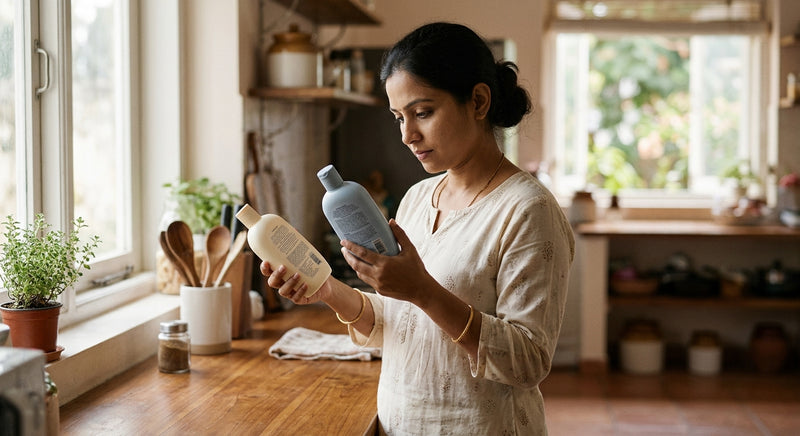
- Morning of: five-minute bath in lukewarm water, pat dry, moisturise on damp skin. A tear-free head-to-toe baby foam wash is easier than juggling two bottles with relatives in the room.
- Dressing: soft cotton layer first, ceremony outfit over it. Cut off any scratchy label and tuck stiff zari away from the neck.
- Bag: spare cotton kurta, nappies, moisturiser, two muslin cloths, water for you.
- During: nappy change every 2-3 hours, whatever stage the ritual has reached. Step out, change, come back.
- After: outfit and all jewellery off, kumkum and haldi wiped with lukewarm water and cotton, a quick rinse if there's residue, moisturise, back into cotton.
The ceremony-day things nobody warns you about
Jewellery and the kala dhaga. A nickel-containing chain or anklet, six hours against a damp neck - that's a classic contact reaction. Thread is kinder than metal. If metal is non-negotiable, keep it loose and take it off the moment the ritual ends.
Smoke and heat. A hawan in a closed room, agarbatti going continuously, twenty bodies in a hall in Nagpur in May. It adds up to a hot, irritated baby. Sit near a door or a window, keep the layers under the ceremony clothes minimal, and carry the baby out for ten minutes between segments.
Hands. Everyone wants to hold the baby and everyone has been eating. A bottle of sanitiser by the door, used by the adults and never on the baby, does more for newborn skin that day than anything you apply.

What about ghutti and the things offered by mouth on the day?
A naming ceremony is often the first time a spoon of something traditional gets offered - ghutti, gripe water, a touch of honey. That's outside skin care, but it comes up at the same function, so it helps to know where you stand before you're standing in a room full of relatives. Our breakdown of what is actually in janam ghutti, ingredient by ingredient and the companion piece on how the age of the child changes the answer will give you a calm, specific sentence to say instead of an argument.
When to see a doctor
Call your paediatrician rather than waiting it out if, after the ceremony, you see spreading redness with swelling or blistering, a rash that appears within minutes of something being applied, any reaction around the eyes or mouth, skin that weeps or crusts yellow, or a baby who is feeding poorly, unusually sleepy or running a fever. In a baby under three months, a fever is always a same-day call. And if a paste or powder went into an eye and the eye stays red or watery after rinsing, that's a doctor's job too, not a home one.
The point of all this
The ceremony is for the family. The skin doesn't need a performance. Keep the rituals that mean something, move the messy ones down to the feet, wash the outfit twice, change the nappy on time. That is the difference between a lovely day and a week spent recovering from it.
If the week around the ceremony has left your baby's skin dry, or looking a little angry in the folds, our Hydra Healing Moisturizing Balm is the one we reach for to comfort dry, sensitive skin and help support the barrier while things settle.
In summary
- Keep a newborn's pre-ceremony prep to three things: a five-minute lukewarm bath, your usual moisturiser on damp skin, and nothing new.
- Treat ubtan, haldi and kumkum as ritual, not skincare - move them to the feet and wipe them off within minutes.
- Refuse kajal near the eyes, black mehndi and face talc outright, however they are framed.
- Wash the ceremony outfit twice with no starch or conditioner, and put a soft cotton layer under any zari.
- Change the nappy every 2-3 hours during the function, and call your paediatrician for spreading, blistering or weeping skin, or any fever under three months.
Frequently asked questions
Should I apply ubtan on my baby before the naamkaran?
Not as a skin treatment. Besan acts as a mild abrasive on newborn skin, which has no dead-skin build-up to remove, and it cannot change your baby's complexion. If ubtan is part of your family ritual, keep it symbolic: a touch on the feet, washed off with lukewarm water within a minute or two. A short bath and your usual moisturiser is the real prep.
Can I put a kajal dot on my baby's forehead for nazar?
We would skip it. Lead has been detected in traditional kajal samples, and the forehead dot reliably ends up rubbed into an eye or mouth by the baby's own hand within the hour. If the gesture matters to your family, use a thread, a small mark of something you know the contents of on the foot, or simply the intention. The eye area is the one place never to use kajal.
Is it safe to oil massage my newborn on the morning of the ceremony?
Do the malish the night before and bathe it off, then keep the morning oil-free. An oiled baby is slippery when being passed around, and oil trapped under silk in a warm, crowded room sits in the neck and groin folds and brings on sweat rash by mid-ceremony. Never massage firmly over the soft spot on the head, ceremony or not.
How do I prepare a new silk or zari outfit so it does not cause a rash?
Wash it twice in your usual mild detergent two days before, with no fabric conditioner and no starch, and dry it in shade. Remove any stiff label, then dress the baby in a soft cotton layer first and put the ceremony outfit over it. Zari and embroidery against a damp newborn neck for four hours is the most common preventable rash after a function.
Should I try a new baby cream or wash before the naming ceremony?
No. The week before a function is the worst time to introduce anything new, because a reaction will surface exactly when you have no time to deal with it. If something genuinely must be added, patch test it 48 hours ahead: a dab the size of a ten-paise coin on the inner forearm, checked at 24 and 48 hours, and skip it at the first sign of redness.
How do I clean haldi and kumkum off my baby after the ritual?
Wipe gently with lukewarm water and soft cotton as soon as the ritual is over rather than letting it sit all evening, then give a short rinse if residue remains, and moisturise on damp skin. Do not scrub at a stain, and do not use lemon, soap on the face or any home paste to lift colour from a newborn's skin.