The short answer: get your child out of the sweaty kit within about 30 minutes of the last whistle. Rinse with plain lukewarm water. Mild cleanser on the sweat traps only. Dry the folds properly. Thin barrier layer wherever the gear rubbed. Ten to fifteen minutes, and it's done before dinner.
That's the whole routine. So if your child is three weeks into camp with red patches behind the knees, a stinging inner thigh and a dark ring where the elbow guard sits, that is a familiar camp-season pattern — though only a paediatrician can say what is actually going on with any particular patch of skin. Salt, friction and damp fabric sat on it for three hours too long, then did the same thing again the next day. Skin stressed that way often responds well to a consistent routine. If your child plays through an Indian summer, read this alongside our complete guide to heat, sweat and friction in active kids.
At a glance
- The damage is done after the match, not during it. Damp kit, friction and salt are what break skin down.
- Change out of the jersey first. Before water, before food, before the phone.
- Rinse everything. Cleanse only the sweat traps: underarms, neck, groin, feet.
- Drying the folds matters as much as washing them. Pat, don't rub.
- A thin barrier layer on the rub-points at night is what stops the dark marks from setting in.
Why camp wrecks their skin when school never did
School sweat is a trickle. Camp sweat is a soak. A 6am cricket session in Nagpur in April, or a 5pm football slot on an astro pitch, keeps a child in continuous heavy sweating for 90 to 150 minutes inside a polyester jersey, pads, a helmet liner and socks that stopped breathing by the first water break.
Three things stack up. Sweat evaporates and leaves salt crystals sitting on the skin; you can see the white tidemark along a temple or a collar. Damp fabric gets heavy and starts to drag instead of glide, so friction climbs in exactly the places the skin is already wet and softened. Then the child stays in that kit. Through the cool-down, the coach's talk, the ride home, twenty minutes flat out on the sofa. That last stretch, honestly, does more harm than the match did.
By week three you don't get random itching. You get a pattern. Raw inner thighs, stinging underarms, a sandpapery band across the lower back, dark knees and elbows, soft white skin between the toes.
The first thirty minutes, in order
The order is the whole trick. Most parents I talk to already do the right steps. They just do them an hour late.
- Kit off at the door. Jersey, pads, socks, shoes. Dry cotton t-shirt and loose shorts go on even if the bath is still 20 minutes away. This one swap prevents more rash than everything else on this list put together.
- Water, and a wipe of the face and neck while they drink. Clean cotton handkerchief dipped in plain water, no soap. It gets the salt off the eyelids and hairline.
- Two-minute plain rinse. Lukewarm. Never a cold shock straight after heat, and never hot. Let water run over the back, chest, arms, thighs and feet first; most of the salt and dust leaves with water alone.
- Cleanser, only where it's needed. Underarms, neck creases, groin and inner thighs, between the toes, and the scalp if it's soaked. Not the whole body. Not twice.
- Pat dry, with a separate towel kept for the folds. Lift the arm, dry under it. Spread the toes, dry between them. In humid weather, a damp fold is where fungal trouble starts.
- Moisturiser on the dry zones, barrier balm on the rub-points. Shins, forearms and back get lotion. Inner thighs, underarms, the waistband line and behind the ears get a thin wipe of something thicker.
- Kit into a bucket, not a corner. Rinse the jersey and socks tonight. Yesterday's bacteria-laden, still-damp socks going back on tomorrow is a real and very common cause of foot trouble.
Which cleanser, and why not just soap?
Look for a mild, soap-free cleanser at a skin-friendly pH that lifts salt and oil without stripping. Hard water does half the damage on its own. In Delhi, in Hyderabad, across much of Maharashtra, it already leaves a film of soap scum on the skin. Put a harsh bar on top of three hours of friction and you get a child who tells you the water itself stings.
Daily deep-cleansing, antibacterial or deodorant soaps are the wrong tool here. They raise skin pH and do the opposite of what post-match skin needs. A gentler formulation is what our Kids Gentle Body Cleanser was built around: mild enough for every single evening of camp season, so skin isn't tight and flaky by Friday.
Where the gear rubs, and what to do about each
| Where | What you'll see | Tonight |
|---|---|---|
| Inner thighs (cricket, running, cycling) | Red, shiny, stings in the shower | Rinse, dry, thin barrier layer. Switch to longer compression shorts under the kit. |
| Underarms (bat swing, bowling action) | Raw line where the sleeve seam sits | Mild cleanser, pat dry, barrier balm. No deodorant on broken skin. |
| Waistband and bra-line (tweens) | Darkened band, sometimes tiny bumps | Loosen the elastic, cotton underlayer, moisturise nightly. |
| Knees and elbows under pads | Grey-brown thickened patches | Never scrub. Barrier balm nightly. Pigment from friction fades slowly. |
| Behind the ears, chin strap line | Red crease, occasionally cracked | Wipe clean, dry, tiny dab of balm. Wash the helmet liner weekly. |
| Between the toes | White, soggy, peeling; sometimes smells | Dry thoroughly, air the feet, two pairs of socks rotated daily. |
Thighs and underarms are the two patterns parents bring to us most often. Both have their own deeper routine: inner thigh chafing in active kids and underarm chafing from sports gear.

Scalp and hair
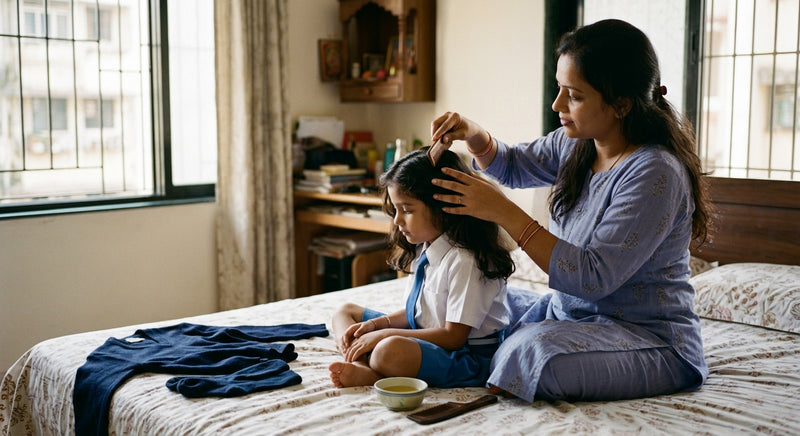
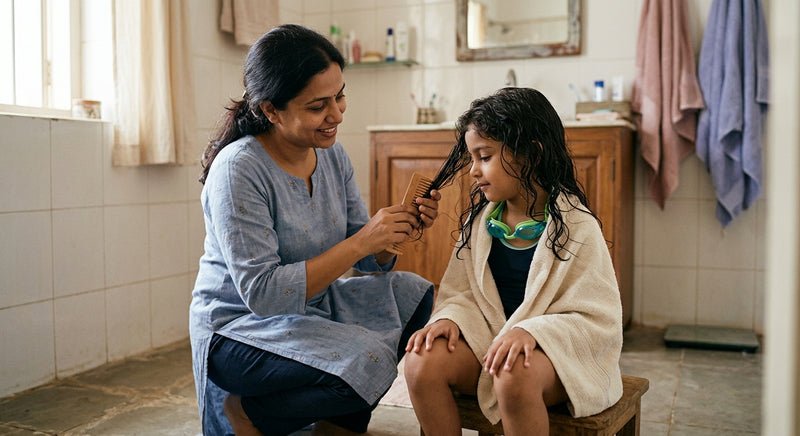
A helmet or a cap plus two hours of sweat means a wet scalp sitting in still air. Rinse the scalp daily through camp season. Plain water does it on most days; shampoo every second or third day unless the hair is actually greasy or muddy. The mistake I see constantly is long hair going back up while it's still damp, or getting plaited tight for the next morning. Damp hair under tension breaks. Dry it loose, tie it in the morning.
Does sunscreen matter if camp is at 6am?
Early sessions are kinder, yes. But UVA is steady through most daylight hours, and UVA is what drives tanning and that slow darkening on cheeks and forearms. For a 5pm slot, there is no skipping it. Apply 15 minutes before they leave. Cover the ears, the back of the neck and the hairline. Send a small tube with the coach for a reapplication at the water break if the session runs past two hours. The full day-long version lives in our sports day skincare guide.
What I'd skip
- Talcum powder in the folds. It cakes with sweat and turns into an abrasive paste. Feels dry for ten minutes, then makes the friction worse.
- Antiseptic liquid in the bath water. Unnecessary on intact skin, and harsh on folds that are already irritated.
- Scrubbing the dark knees. Friction caused the pigment. More friction keeps it there. This one surprises parents more than anything else I tell them.
- Lemon, turmeric or besan on chafed areas. Lemon on sun-exposed, broken skin can sting badly and react.
- A second full bath at night. One proper post-match wash is plenty. Over-washing is its own cause of dry, itchy skin by the end of the week.

The kit bag, realistically
- A spare dry t-shirt and shorts — the most useful thing in the bag
- A second pair of socks
- Small cotton towel kept only for the face and folds
- Water bottle, refilled
- Travel-size mineral sunscreen for the water-break reapplication
- Small tin of barrier balm for a mid-session hot spot
When to see a doctor
Book a paediatrician if the irritation isn't clearly improving within 3 to 4 days of a consistent routine; if there's a ring-shaped patch with a raised, scaly border; if skin is broken, oozing or crusted; if the groin or underarm is swollen and painful to touch; if your child has a fever alongside the rash; or if the same patch keeps returning in the same spot every season. A real diagnosis takes two minutes in a clinic and saves weeks of guessing. Nothing in this article is a substitute for that.
Do this tonight
Put a dry t-shirt and spare socks in the kit bag now, while you're thinking about it. Tomorrow, make the swap at the door before anything else happens. Hold that one change for a week and you'll know how much of your child's camp-season skin trouble was simply damp fabric.
For the rub-points that need a thin protective layer at night, our Hydra Healing Moisturizing Balm is made to comfort dry, friction-stressed skin and help support the skin's natural barrier.
In summary
- Get your child out of the sweaty kit within 30 minutes — before the bath, before food.
- Rinse the whole body with plain lukewarm water, then use a mild cleanser only on underarms, neck, groin and feet.
- Dry the folds properly, especially between the toes, before any product goes on.
- Put moisturiser on dry zones and a thin barrier layer on every spot the gear rubbed.
- Skip talc, antiseptic baths and scrubbing darkened knees — all three increase friction and irritation.
Frequently asked questions
How soon after a match should my child bathe?
Aim for within 30 minutes of finishing, but the bath itself is less urgent than getting out of the sweaty kit. Change into dry clothes immediately, then bathe when convenient. Salt and friction sitting inside damp fabric cause most post-match irritation, so removing the fabric buys you time even if the bathroom is occupied.
Should my child use soap every day during coaching camp?
Use a mild, soap-free cleanser daily, but only on sweat traps — underarms, neck, groin, inner thighs and feet. Rinse the rest with plain water. Harsh or antibacterial soap over the whole body every evening strips the skin and leaves it tight and flaky by the weekend, which makes chafing worse, not better.
Is powder good for sweat rash after sport?
No. Talcum powder cakes with sweat in the folds and becomes gritty, which increases friction exactly where you want less of it. It also hides damp skin rather than drying it. Dry the folds properly with a towel, let them air for a minute, then use a thin barrier layer instead.
Why are my child's knees and elbows getting darker during camp?
Repeated friction from pads and ground contact triggers pigment in the skin, and it is more visible on brown skin. Scrubbing or using de-tan products makes it worse by adding more friction and irritation. Reduce the rubbing, moisturise nightly, use sunscreen on exposed areas, and give it months — this pigment fades slowly.
Does my child need sunscreen for a 6am session?
UVA is present through most daylight hours, so a light application still helps, especially on the face, ears and neck. For sessions after 10am or in the late afternoon it is essential — apply 15 minutes before leaving and reapply roughly every two hours or after heavy sweating if the session is long.
Can he wear the same jersey two days in a row?
Not without washing. A sweat-soaked jersey or socks that dried in the bag still carry salt, bacteria and stiffened fibres that rub harder than clean fabric. Rinse the kit the same evening and dry it fully. Rotating two pairs of socks through camp week is the cheapest foot-problem prevention there is.