In the first week someone will press a bottle of badam tel into your hands and tell you — gently, with complete confidence — that daily malish will rang khol dega. It is usually someone who loves your baby, which is what makes it so hard to argue with. So: no. No oil, cream, ubtan or saffron milk can lighten a baby's skin. Colour is set by genes and arrives on its own schedule — most babies are born lighter than they will eventually be, and their pigment deepens over the first several months as melanin production matures. Almond oil is a decent emollient. That is the whole of its job description, and anything sold to you as a tone-changer is not telling you the truth.
At a glance
- Nothing applied to the outside of skin changes the pigment made inside it. Not almond oil. Not malai, not kesar.
- Melanin output ramps up over a baby's first months. The tone usually settles somewhere in the first two to three years.
- Oil sits on the outermost dead layer. Melanin is made several layers below it, by cells an oil cannot instruct.
- Dry, dusty, flaky skin looks dull. A well-moisturised baby looks brighter — that's light bouncing differently, not less pigment.
- Lemon, bleach, "de-tan" and fairness creams carry real risk on thin baby skin and deliver nothing.
Why does a baby's skin get darker in the first year?
Melanocytes — the cells that make pigment — are already in place at birth, parked in the deepest layer of the epidermis. They're just quiet. There is no UV in the womb, so nothing switches them on, and a newborn arrives with melanin output well below what their genes will eventually dial up. Over the following weeks and months those cells get busier. They hand pigment packets up to the skin cells above them, and the baby settles into the tone they were always going to have.
Which is why the knees and elbows, the outer edges of the ears, the genital area and the strip of skin along the spine can look noticeably deeper than the cheeks for a while. Those sites switch on earlier. Parents read a problem; what they are watching is a sequence. We went through the rest of the house's colour remedies in our complete guide to Indian traditional baby-care practices and what the evidence says, because almost every one of them is aimed at a change that was never a flaw.
Can an oil even reach the cells that make pigment?
No. And the anatomy is worth two minutes, because it ends the argument without anyone having to win it.
The outermost layer of skin — the stratum corneum — is dead. Flattened cells, held in lipid mortar. Your massage oil goes there. A little of the fatty acid works into the gaps between those cells and slows water escaping, and that is what makes the skin feel supple under your palm. Melanin is a different address altogether: four or five living layers down, in the basal layer, inside melanocytes, built by an enzyme called tyrosinase. For an oil to change your baby's colour it would have to (a) travel down there in meaningful quantity and (b) switch that enzyme off. Almond oil manages neither. It has no tyrosinase-inhibiting activity worth the name. And yes, a baby's skin is 20-30% thinner than an adult's, which makes it more absorptive — more absorptive, not more changeable. The oil still gets nowhere near the machinery.
Most of the "it worked for my sister's baby" stories are that baby's own melanin settling, plus a year of growing out of newborn dryness.
Then why does skin genuinely look brighter after malish and a bath?
Because dull and dark are two different things. Three things make a baby look ashy, and none of them is pigment:
- Dry, lifting corneocytes. Flaky skin scatters light in every direction, so it reads grey-white. Hydrate it and the surface goes smooth and reflects light cleanly.
- Surface residue. Dried milk in the neck folds. Sweat. Talc packed into the creases. A week of oil that was never properly washed off. That film genuinely looks like a shade.
- Sun, sitting on top of the natural tone. A tan is real, and a tan fades; pigment deposited by UV goes away. The inherited tone underneath does not budge.

Almond oil, read the way a formulator reads it
Sweet almond oil (Prunus amygdalus dulcis) is mostly oleic acid, with a useful slice of linoleic acid and some naturally occurring vitamin E. That makes a pleasant, slip-heavy massage oil. It spreads far, absorbs slowly, and gives you the long unbroken strokes that make malish worth doing in the first place. Three things I would flag before you commit to it.
- Oleic-rich does not mean barrier-friendly. High-oleic oils can loosen the lipid organisation of the stratum corneum in some infants, which is why an oil-heavy routine sometimes leaves an eczema-prone baby drier. If your baby has eczema-prone skin, judge the oil by how the skin behaves 48 hours later — not by how lovely it felt during the massage.
- It is a tree nut. On broken, weepy or actively eczematous skin, don't. Otherwise patch test on the inner thigh, wait a day, then use it.
- It goes rancid in Indian heat. Cold-pressed, unrefined almond oil in a clear bottle on a Nagpur windowsill in May is a different product by July. Buy small, store it dark and cool, and bin it the day it smells like old paint.
Used like that, almond oil is fine. The massage is worth doing anyway — for the calm, the skin-to-skin, the sleep — with your hands kept off the soft spot on the head, which we go into in our piece on massaging a baby's talu. The ritual is not the problem. The promise printed on the bottle is.
What each popular "fairness" remedy actually does
| What's suggested | What it actually does | What it cannot do | Our verdict |
|---|---|---|---|
| Almond oil malish | Softens, slows water loss, gives good slip for massage | Reach or quieten the pigment-making cells | Fine as a massage oil if the skin tolerates it. Judge it on comfort, never on colour. |
| Besan–haldi–malai ubtan | Mild surface exfoliation; lifts dust, dried milk and old oil | Alter melanin. Turmeric also stains and can irritate | Keep it occasional and ceremonial. Two minutes, no pressure. Not a daily scrub. |
| Kesar in milk (fed, or applied) | Nothing measurable for skin tone | Change an inherited tone from the inside or the outside | Skip it. The most expensive way to buy a myth. |
| Lemon juice, lemon + curd | Puts a strong acid on skin 20-30% thinner than yours; stings, can sensitise | Lighten a baby safely — or at all | Never. This is the one that lands babies in a paediatrician's room. |
| "Baby fairness" / de-tan creams | Varies, and often contains actives never intended for infants | Deliver the promise on the label | Never. Fairness claims are restricted in India for good reason. |
| Daily moisturiser + shade | Hydrates, supports the barrier, prevents a tan layering on top | Change the tone your baby inherited | The only honest version of "brighter-looking" skin. |

What we'd actually do
Put the effort into comfort and barrier. That buys you skin that looks and feels better. Colour will get on with it regardless.
- Massage 10-15 minutes, oil warmed between your palms. Long, slow strokes. No scrubbing, and no rubbing at the knees or elbows to "even them out".
- Bathe within about 15 minutes of the massage. Lukewarm, 37-38°C, 5-10 minutes at most.
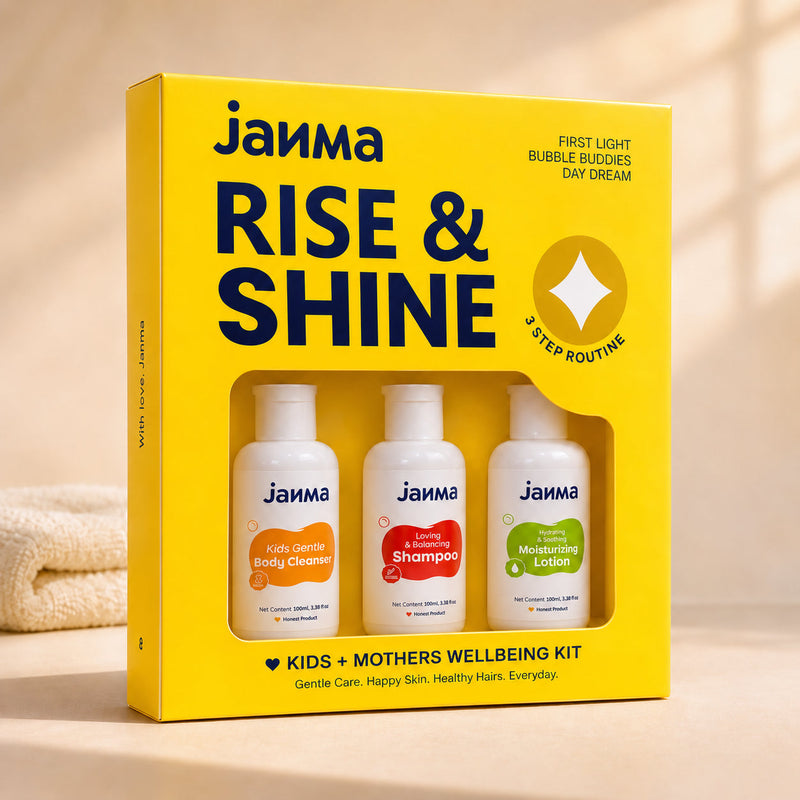
- Wash the oil off properly. A mild, tear-free cleanser does the job an abrasive paste is supposed to be doing — our Head to Toe Baby Foam Wash is built for exactly this, lifting oil and residue without stripping.
- Pat dry, don't rub, and moisturise within 3 minutes while the skin is still slightly damp. This one step does more for "dullness" than every remedy in the table above.
- Dry the neck, underarm and thigh folds specifically. Trapped moisture there reads as a dark line, and sometimes turns into a real rash.
- Under 6 months, keep the baby out of direct sun entirely — shade, a cotton full-sleeve kurta, a cap. At that age the tool is clothing; sunscreen isn't.
- If you want to watch it happen, take one photo a month in the same light at the same time of day. You'll see the tone settle, and it stops feeling like something going wrong.
Ceremonies work the same way. A naming day needs no brightening ritual — clean, calm, well-moisturised skin is all of it, and our guide to skin prep before a naming ceremony sets out the order of operations. And if you're the sort of parent who reads what's in a traditional preparation before it goes anywhere near your baby, good instinct. We did exactly that, line by line, for janam ghutti, ingredient by ingredient.
When to see a doctor
Colour that deepens evenly over months is maturation. These are something else, and they want a paediatrician's eyes:
- A yellow tinge to the skin or the whites of the eyes, especially in the first two weeks, or jaundice that seems to be spreading.
- Skin that looks pale, grey or mottled with poor feeding or lethargy, or any blueness around the lips — same day, urgently.
- Pale or white patches that are losing colour rather than gaining it.
- Dark, thickened, velvety skin in the neck or armpit folds in an older child.
- A single patch that is growing, changing shape or has an uneven border.
- Any redness, bumps or weeping after an oil or paste — stop it, wash the area, and have it looked at if it doesn't settle within a day.
If dryness is what's making your baby's skin look dull and ashy, that part you can genuinely fix — our Hydra Healing Moisturizing Balm was formulated for dry, sensitive, eczema-prone skin and helps support the skin's natural barrier.
In summary
- No oil, cream, ubtan or saffron milk can change a baby's skin colour — melanin is made deep in the skin, where topical products don't act.
- Most babies are born lighter than they will be; pigment output rises over the first months and usually settles within two to three years.
- Dullness is dryness and surface residue, not darkness — moisturising within 3 minutes of a bath fixes the look parents are chasing.
- Use almond oil as a massage oil only: patch test first, skip it on broken or flaring skin, and store it cool and small because it turns rancid in Indian heat.
- Never use lemon, bleach, de-tan or fairness products on a child, and see a paediatrician for yellow tinge, pale or white patches, or a patch that is changing.
Frequently asked questions
Does almond oil massage make a baby fairer?
No. Almond oil is an emollient — it softens the outermost dead layer of skin and slows water loss. Melanin, which decides colour, is made several layers deeper by cells the oil cannot reach or switch off. Babies whose skin "improved" with almond oil were going through normal melanin maturation and growing out of newborn dryness at the same time.
Why was my baby fairer at birth and darker now?
Pigment cells are present at birth but barely active, because there is no UV in the womb. Over the first months they ramp up melanin production towards the level your baby's genes set. Knees, elbows, ear edges and the genital area often deepen first. The final tone usually settles within the first two to three years, and it is nothing you caused.
Is almond oil safe for a newborn's skin?
Generally yes, with three caveats. Patch test on the inner thigh and wait 24 hours. Avoid it on broken, weepy or actively eczema-flared skin, since it is a tree-nut oil. And store it cool and dark in small quantities, because unrefined oils turn rancid fast in Indian heat. If skin reads drier 48 hours after a massage, switch oils.
Can ubtan or besan paste lighten my baby's skin?
It cannot change pigment. What an ubtan does is lift surface dust, dried milk and old oil, which makes skin look cleaner and brighter for a day. Used as a daily scrub it abrades skin that is already 20-30% thinner than yours, and turmeric can both stain and irritate. Keep it occasional, brief and pressure-free.
Is a baby fairness cream ever safe to use?
No. Fairness and de-tanning claims are restricted in India, and products making them often contain actives never intended for infant skin. Nothing applied topically can alter inherited melanin, so the promise cannot be kept at any price. If a product's selling point is a shade, treat that as a reason to put it back on the shelf.
Does sun exposure change my baby's natural colour?
Sun adds a tan on top of the inherited tone, and that tan fades once exposure stops — the base colour underneath never changes. For babies under six months, shade and cotton full-sleeve clothing are the right protection rather than sunscreen. Avoiding sun keeps skin comfortable and prevents added pigment, but it will not make a baby fairer.