Three things at night. A mild cleanse, one hydrating layer on damp skin, and a barrier cream over the patches that really are dry. For postpartum melasma, two levers do almost all the work: daily sun protection, and time. Not a stronger cream at night. Most of what you'd reach for is fine while breastfeeding, and the list of things to park is short, specific, and mostly prescription anyway.
I know what the real scene looks like. It's 2.40am. The baby has finally unlatched, and you catch yourself in the bathroom mirror under that one harsh tubelight. Cheeks flaking along the sides of your nose. A brown shadow across your upper lip and forehead that got darker, not lighter, after delivery. Hands raw from twenty washes a day. And somewhere on the shelf is the serum you used before pregnancy, which you have no idea whether you're allowed to touch.
At a glance
- Three steps at night is enough: mild cleanse, then hydrate on damp skin, then seal the dry bits. Six to eight minutes.
- Postpartum melasma usually fades slowly over months. It darkens fastest with sun exposure, so a morning mineral SPF matters more than any night cream.
- Topical niacinamide, azelaic acid, vitamin C, ceramides and hyaluronic acid are widely considered compatible with breastfeeding. Retinoids and hydroquinone are the ones to hold.
- Do it before the last feed, not after. You will not get up and do it at 3am.
- Season changes the texture you need, not the steps. Lighter in a Nagpur summer, thinner in monsoon, much richer in winter.
This piece sits inside our complete guide to skincare for mothers, which covers pregnancy through the first postpartum year. Here I want to deal with the night only. For most new mothers it's the one slot that's theirs.
Why is my skin dry and blotchy at the same time?
Because two different things are happening on the same face. Oestrogen and progesterone drop sharply after delivery. With them go some of the water-holding and oil-producing signals your skin leaned on for nine months. That's the tightness, and that's the flaking.
The pigment is on a different clock. Melasma, the mask, was made during pregnancy and sits in the skin. It clears at the pace your skin renews itself, which is slow.
Then add the practical stuff nobody counts. You're washing your hands constantly. You're sleeping four broken hours. You're drinking less water than you think. If you had a C-section, you've been showering carefully around a dressing for weeks. Dryness after delivery is so common that we wrote a separate piece on the daytime side of postpartum dry skin and what helps in Indian weather. This one is the night half.
The night routine, exactly as I'd do it
Timing decides whether any of it happens. Do it around 9pm, before the last long feed, not as the final thing before you collapse. And keep all of it in one small pouch, on the bathroom shelf or beside the bed. If it needs three cupboards, it won't survive the week.
- Rinse with lukewarm water, not hot. Hot water feels wonderful on a tired back and strips a dry face. Thirty seconds with a mild, non-foaming cleanser does it. On nights your face feels tight and you haven't worn makeup, skip the cleanser altogether.
- Pat, don't rub. Leave the skin visibly damp. This is the step people skip, and then they wonder why their moisturiser "doesn't work".
- One hydrating layer while damp. A simple humectant serum or lotion: glycerin, hyaluronic acid, panthenol. Two or three drops. Nothing that tingles.
- Seal only where you're dry. Pea-sized, along the sides of the nose, over the cheekbones, anywhere flaking. Look for ceramides or a fatty butter high in the list, and no essential-oil fragrance. Our Hydra Healing Moisturizing Balm is the tub I keep by the bed. It's all-ages, it helps support the skin barrier (a lab study showed increased Keratin-10 and Filaggrin expression) and it comforts dry, sensitive skin, so the same tub does my cheeks and the baby's shins.
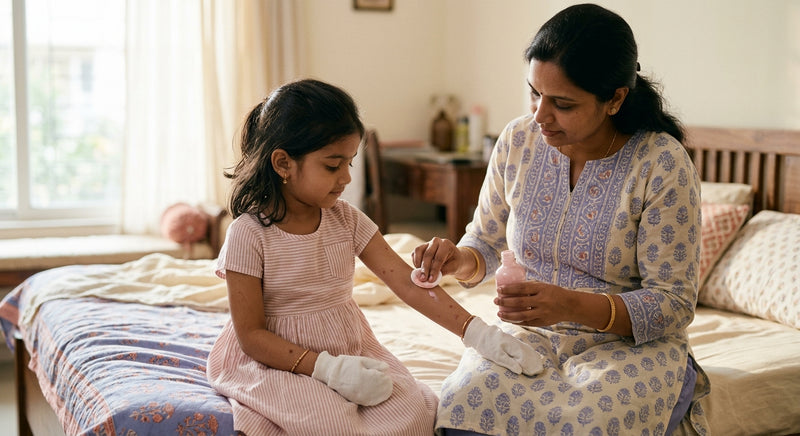
- Hands, lips, heels. Every night. A thick layer on the hands after the last wash of the day. On cracked heels with cotton socks pulled over. Thirty extra seconds, and it's the difference between manageable and bleeding by week three.
- Nipples last, and separately. Nothing from the face routine goes there. If they're cracked or stinging, read our guide to gentle care for cracked nipples from breastfeeding. The fix is usually latch plus a plain, safe emollient, not a new product.
What's safe to use while breastfeeding?
A cream on your face delivers very little into your bloodstream, and less again into milk. But very little isn't zero, and nobody runs trials on nursing mothers. So a few ingredients are held back out of caution rather than evidence of harm. Anything prescription is your doctor's call, not an internet one.
Generally considered compatible, topically
- Niacinamide. Works on the look of uneven tone, and supports the barrier generally.
- Azelaic acid is commonly discussed as an option for postpartum pigmentation while nursing — worth asking your own doctor whether it suits you. Prescription strength stays a doctor's decision.
- Vitamin C. Fine, and it plays well with your morning SPF.
- Ceramides, glycerin, hyaluronic acid, squalane, oat. The unglamorous base the whole routine rests on. We went into the detail in our honest guide to whether ceramides are safe in pregnancy, and nothing changes after delivery.
- Mineral sunscreen. Zinc oxide and titanium dioxide sit on the surface. That's the reason they're the default recommendation in pregnancy and while nursing.
- Low-strength lactic or glycolic acid, once or twice a week at most. Not while your skin is flaking.
Park these until you've stopped nursing, or clear them with your doctor
- Retinoids, meaning tretinoin, adapalene, retinol. The standing advice is to avoid them. No version of postpartum pigmentation is urgent enough to argue about it.
- Hydroquinone. Relatively higher absorption than most topicals, and prescription-only anyway.
- Oral tranexamic acid. A prescription decision. Never a self-start.
- Strong salicylic acid over large areas, plus any at-home peel or de-tan kit.
- Anything sold on a fairness or whitening promise. Unregulated territory at best, and melasma doesn't answer to it. It answers to shade, SPF and time.
Will the melasma go on its own?
Often, yes. A lot of pregnancy melasma fades over the months after delivery as hormones settle. But it fades on its schedule, and every unprotected afternoon pushes it back: the two-wheeler ride, the 3pm wait at the school gate, the desk by the window. So here's the judgement call I'd make in your place. Spend nothing on a night-time pigment product for now. Spend everything on the morning.
That means a broad-spectrum mineral SPF as the last step before you leave the bathroom, on the days you remember and on the cloudy days too. UVA comes through window glass and through monsoon cloud. Visible light matters for melasma as well, so a tinted or lightly-tinted mineral formula has an edge. And a wide-brimmed hat on the school run beats any serum.
Season by season: what changes in an Indian year
| Season | What postpartum skin does | Change at night |
|---|---|---|
| Summer (Apr–Jun) | Sweat, shine on the T-zone, flaking cheeks anyway. Pigment darkens fastest now. | Lighter lotion overall, balm only on the dry patches. Rinse the day's sweat off before bed. Sealing sweat under a thick cream is how prickly heat starts on an adult too. |
| Monsoon (Jul–Sep) | Humid air, damp clothes, skin that feels sticky and is still dehydrated. Folds under the breasts, along the nursing-bra line, in the neck, stay wet for hours. | Thinner layers on the body. Keep the folds properly dry: pat with a cotton cloth, change out of a damp bra, and never apply an occlusive into a damp fold. |
| Winter (Nov–Feb) | Tightness, visible flaking, splitting fingertips from constant hand-washing, cracked heels. | Richer everything. Soak-and-seal: moisturise within a minute of a lukewarm shower, balm on hands and heels nightly, heater kept low with a bucket of water standing in the room. |
| Post-Diwali smog / dry north | Grit and particulate on the skin, itching, eyes that water by evening. | Cleanse properly at night even if you barely stepped out. This is the one season the evening cleanse isn't optional. |
Hard water is doing more damage than your cleanser
In Delhi, Jaipur, Hyderabad, Chennai, or anywhere on borewell supply, the water is half the story. Calcium and magnesium react with soap and leave a fine residue behind. That film keeps skin feeling tight no matter how good the moisturiser is. Two giveaways: your cleanser barely lathers, and there's white scale crusted around the taps.
What helps, easiest first. Swap the bathing bar for a soap-free syndet cleanser or a mild non-foaming wash. Cut the shower short. Moisturise on damp skin, before the film dries down. If it's really bad, an inexpensive shower filter is worth the plumber's visit. Boiling water for a bucket bath does not soften it, whatever your building's WhatsApp group says.
When to see a doctor
Nothing here is a diagnosis. Any prescription-strength pigment treatment while you're nursing should be your dermatologist's decision, with your paediatrician in the loop.
If you add one product this month, make it the morning one: a gentle mineral SPF like our Daily Defender SPF 40 PA+++, formulated for all ages.
In summary
- Keep the night routine to three steps — mild lukewarm cleanse, one hydrating layer on damp skin, a barrier cream only where you are actually dry.
- Do it before the last long feed, with everything in one pouch, or it won't survive the week.
- For melasma, the morning mineral SPF and time matter far more than any night product; skip anything sold on a fairness promise.
- Niacinamide, azelaic acid, vitamin C and ceramides are widely considered compatible with breastfeeding; park retinoids and hydroquinone until your doctor says otherwise.
- Adjust textures by season and treat hard water as part of the dryness — lighter in summer, dry folds in monsoon, richer plus soak-and-seal in winter.
Frequently asked questions
Is it safe to use skincare on my face while breastfeeding?
Almost all of it, yes. Topical products applied to the face reach the bloodstream in very small amounts, and less again in milk. Niacinamide, azelaic acid, vitamin C, ceramides, glycerin, hyaluronic acid and mineral sunscreens are widely considered compatible with nursing. Retinoids, hydroquinone and oral tranexamic acid are the ones to hold until your doctor clears them.
Will postpartum melasma go away on its own?
Often it fades over the months after delivery as hormones settle, but slowly and unevenly, and unprotected sun exposure sets it back each time. The most useful thing you can do is wear a broad-spectrum mineral SPF every morning, including cloudy monsoon days and indoors near windows, and add a hat or scarf outdoors. Ask a dermatologist before starting any prescription pigment treatment while nursing.
How long should a postpartum night routine take?
Six to eight minutes, and that includes hands and heels. Three steps is genuinely enough: a mild lukewarm cleanse, one hydrating layer applied while skin is still damp, and a thicker barrier cream only on the dry patches. Do it before the last long feed rather than after, otherwise it will not happen at 3am.
Can I use my baby's moisturiser on my own face?
If it is a plain, fragrance-light barrier cream or balm, yes — that is what all-ages formulations are for, and one tub saves a step. What it will not do is address pigmentation; a baby moisturiser is built to comfort dry, sensitive skin and support the barrier, nothing more. Keep a separate mineral sunscreen for your mornings.
Why does my skin feel tight even after moisturising?
Usually hard water. Calcium and magnesium react with soap to leave a fine film that keeps skin feeling stripped no matter what you apply on top. Switch to a soap-free syndet or mild non-foaming cleanser, shorten the shower, and moisturise within a minute of stepping out while skin is still damp. A cheap shower filter helps if scale is visible on the taps.
Should I change my routine between summer and winter?
Change the textures, not the steps. In summer use a lighter lotion overall with balm only on dry patches, and rinse sweat off before bed. In monsoon keep layers thin and folds genuinely dry. In winter go richer: moisturise within a minute of a lukewarm shower, and use balm on hands and heels every single night.