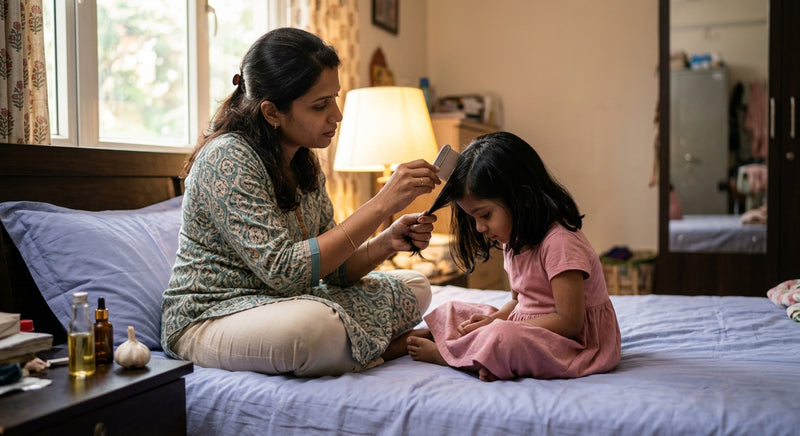
She sent me a photo of her bathroom shelf at 14 weeks. Eleven bottles. Three serums, a retinol night cream she'd used for two years, and a face wash that smelled like a spa. One line under the photo: what do I throw?
Less than she feared. A pregnancy-safe routine is three steps in the morning and two at night. Gentle cleanser, fragrance-free moisturiser, mineral sunscreen by day. Cleanser and moisturiser by night. That is the whole spine. Everything else is optional, and you judge it one ingredient at a time, not one bottle at a time.
What changes across nine months isn't the product list. It's your skin. Oilier and touchier early on. More pigment-prone in the middle. Dry, itchy and hard to reach by the end. The routine below holds its shape; only the emphasis moves. For the reasoning behind each choice, our complete guide to pregnancy-safe skincare goes deeper than one article can.
At a glance
- The entire routine: cleanse → moisturise → mineral sunscreen in the morning, cleanse → moisturise at night.
- First trimester: drop fragrance before you drop anything else. Nausea makes scent unbearable and skin more reactive.
- Second trimester: sunscreen matters more than everything else combined. This is when pigmentation tends to show.
- Third trimester: the work moves from face to body. Dry, tight, itchy skin over a bump you can't see past.
- Pause retinoids, hydroquinone and strong salicylic acid peels for the duration. Ask your doctor before restarting.
- Severe itching on palms and soles, worse at night, is a same-day call to your obstetrician. Not a moisturiser problem.
What actually makes a product pregnancy-safe?
Three questions, and the order matters.
Does it contain a known-risk active? A short list comes off the shelf and stays off: retinoids in every form, hydroquinone, high-strength salicylic peels, and anything oral your dermatologist prescribed for acne. Those first three cause the most confusion, so we've written out the full reasoning on retinoids, hydroquinone and salicylic acid in pregnancy.
Is it fragranced? Fragrance takes more blame than it deserves most of the time. Pregnancy is still the one stretch of life where I'd drop it. A first-trimester nose can turn a mild floral cream into a reason to gag at 6am, and reactive skin picks fewer fights with a plain formula.
Does it need to be there at all? Usually, no serum required. A routine you finish in four minutes at 11pm, back aching and feet swollen, beats a nine-step one you abandon by week 20.
The AM routine, step by step
Do this before you leave the bedroom, not after breakfast. Sunscreen that goes on at 11am, after two hours by a window, has already missed the morning it was meant to cover.
- Cleanse once. Plain lukewarm water is enough on most mornings. If your skin runs oily, a mild fragrance-free cleanser, one that leaves skin soft rather than squeaky.
- Pat, don't rub. Leave the skin slightly damp. That one habit does more for dryness than anything you can buy.
- Moisturise while damp. A simple lotion or cream with glycerin and ceramides. Face, neck, and the backs of your hands, which catch far more sun than anyone plans for.
- Mineral sunscreen last, every single day. SPF 30 or higher, with zinc oxide or titanium dioxide. Roughly two fingers' worth for face, neck and ears. Most people pick the right bottle and then use too little of it.
- Lips. A plain balm. Pregnancy dryness gets to them early, and they crack in a Nagpur winter well before your cheeks do.
- Reapply every 2-3 hours if you're outdoors: the park, a long drive with the sun coming in through the window.
Before you think about brands, look for three things. A mineral filter. No added fragrance. And a texture you will genuinely reapply in Indian humidity, because the fanciest SPF does nothing from inside a drawer. If that combination is hard to find, our Daily Defender mineral sunscreen, SPF 40 PA++++ is one mineral, fragrance-free option, formulated for children's skin and used by plenty of adults in the same house. If you're weighing mineral against chemical filters, we've laid out the arguments in pregnancy-safe sunscreen for Indian weather.
The PM routine: the body gets its turn
In most Indian homes the second bath of the day is the practical anchor. Attach the routine to it and you won't forget.
- Bath with lukewarm water, 8-10 minutes. Hot water feels wonderful and strips the skin barrier faster than anything in your soap dish. Test with your wrist, not your hand.
- Use a mild, fragrance-free body cleanser and only where you need it. Underarms, feet, folds. The rest of you got wet, and that's mostly enough.
- Towel gently, then moisturise within three minutes, while your skin is still slightly damp. If you take one thing from this article, take this.
- Belly, hips, outer thighs, lower back. Sit on the bed for it. By the third trimester you'll need a mirror or a partner for the underside of the bump, which is the patch that itches at 2am.
- Oil, if you like one: til, coconut or sweet almond, massaged into damp skin, then a cream on top in winter. Traditional malish for the expectant mother is fine. It simply works better with a moisturiser sealing it in.
- Face: cleanse, then the same moisturiser, a little more of it. No actives at night for now, unless your doctor has prescribed them.
How the routine shifts, trimester by trimester
| Stage | What skin usually does | What to change |
|---|---|---|
| First trimester (0-13 weeks) | Oilier, occasional breakouts, sudden intolerance to smells | Strip back to the five steps. Drop fragrance. Pause all actives. |
| Second trimester (14-27 weeks) | Pigment changes — the linea nigra, darker areolas, patches on cheeks and upper lip | Sunscreen every day, plus a hat and the shady side of the road. |
| Third trimester (28-40 weeks) | Stretched, dry, itchy skin; swollen feet; cracked heels | Move effort to the body. Richer balm at night. Reach becomes the real constraint. |
| Fourth trimester (postpartum) | Hair shedding, dryness, pigment fading slowly | Keep it short and one-handed; most changes settle on their own. |
First trimester: do less
Skin often gets oilier and pettier at the same time. The instinct is to attack the breakouts with scrubs and acids. Don't. You'll strip the barrier and end up with skin that is oily and flaky, which is a harder problem than the one you started with. Wash twice a day maximum. Moisturise anyway, because oily skin still needs it. Then give the hormonal churn a few weeks to settle.
Second trimester: the sunscreen trimester
Pigmentation is the change mothers ask about most in months four to six, and sun exposure makes it more visible. Prevention is where the wins are. Daily shade and daily SPF help keep it from deepening, and that is worth far more than anything you might apply afterwards hoping to undo it. Be patient. Most of it fades in the months after delivery.
Third trimester: it becomes a body routine
The itch across a stretched belly is real, and simple dryness is a common reason for it — though only your doctor can tell you what is behind yours, so read the box below before you settle on an answer. A thicker balm at night, cotton clothing, and a humidifier or a bowl of water in an air-conditioned bedroom will help more than another cream on your face. If you want a gentle, well-studied soothing ingredient, read colloidal oatmeal in pregnancy and breastfeeding before you buy.
What comes off the shelf, and what quietly stays
Off, for the duration: retinol, tretinoin, adapalene and every other retinoid. Hydroquinone. Strong salicylic acid peels. Oral acne medication. Anything whose label you can't read properly.
Stays, and does most of the work: glycerin, ceramides, hyaluronic acid, colloidal oatmeal, shea and kokum butters, plain plant oils, mineral sunscreen filters. Nothing glamorous on that list. All of it available at any decent chemist, and all of it enough. For the in-between cases, azelaic acid, niacinamide, an acne prescription you were mid-course on, ask your obstetrician or dermatologist rather than a forum. It's a two-minute question at your next visit.
Buying this routine in India without overthinking it
Four products cover it. A mild cleanser, a body wash, a moisturiser (lotion in summer, balm in winter) and a mineral sunscreen. You do not need a dedicated “pregnancy” brand. No such regulatory category exists here. What you need is a readable ingredient list.
An honest shortcut: in most Indian pharmacies the baby aisle is the easiest place to find genuinely fragrance-free, simple formulations, and there's nothing stopping an adult from using them. Plenty of mothers I know finish the baby's balm faster than the baby does. Judge it by the back of the pack.
When to see a doctor
- Severe itching on palms and soles, worse at night — call the same day.
- A rash that spreads, blisters, or appears with fever.
- Sudden swelling of face and hands with a headache or visual changes. This needs urgent review.
- Any patch that is weeping, cracked, painful or clearly infected.
- Skin changes that distress you, even mildly. Pigmentation and stretch marks are cosmetic, but your peace of mind is worth raising.
After delivery the routine gets shorter again, and most of what worried you fades on its own. We've mapped what settles and what needs attention in postpartum skin changes.
For the dry, stretched skin of the last twelve weeks, look for a rich barrier balm — butters or ceramides, no added fragrance — applied at night on damp skin. Our Hydra Healing Moisturizing Balm is one such option: it comforts dry, tight skin and helps support the skin's natural barrier, for every age in the house. It is not an answer to the palm-and-sole itching described above — that one belongs to your obstetrician.
In summary
- Keep the routine to three morning steps — cleanse, moisturise, mineral sunscreen — and two at night.
- Moisturise within three minutes of a bath, while skin is still damp; it beats any upgrade in product.
- Pause retinoids, hydroquinone and strong salicylic peels for the whole pregnancy, and ask your doctor before restarting.
- Shift effort from face to body in the third trimester, when stretched skin gets dry and itchy.
- Call your obstetrician the same day for intense itching on palms and soles, especially at night.
Frequently asked questions
Can I keep using my regular face wash during pregnancy?
Usually yes. If it is a mild cleanser without retinoids or strong acids, keep it. The two reasons to switch are a strong fragrance that your first-trimester nose can no longer tolerate, and a squeaky-tight feeling after washing, which means it is stripping your barrier. Swap to a gentle fragrance-free cleanser and wash no more than twice a day.
Do I need a special pregnancy skincare brand?
No. There is no separate regulatory category for pregnancy skincare in India, so the label claim tells you very little. What matters is the ingredient list on the back: no retinoids, no hydroquinone, no strong salicylic peels, and ideally no added fragrance. A simple moisturiser and a mineral sunscreen from any trustworthy brand will do the job.
Is oil massage safe during pregnancy?
Gentle body massage with a plain oil like til, coconut or sweet almond is fine for most mothers, and many find it genuinely comforting for a stretched belly. Apply on damp skin after a bath and follow with a moisturiser in winter. Avoid deep abdominal pressure, skip essential oils unless your doctor approves them, and stop if anything feels uncomfortable.
My skin is oily and breaking out. Should I still moisturise?
Yes. Skipping moisturiser on oily pregnancy skin usually backfires — the barrier gets stripped, skin overcompensates, and you end up oily and flaky at once. Use a light lotion rather than a heavy cream, cleanse twice daily at most, and avoid scrubs and acid peels. Ask your dermatologist before starting any acne treatment while pregnant.
Do I need sunscreen if I am mostly indoors?
Most days, yes. Pigment changes in pregnancy are common, and UVA passes through window glass, so a seat near a window or a daily commute counts as exposure. Apply a mineral SPF 30 or higher every morning, roughly two fingers' worth for face, neck and ears, and reapply every 2-3 hours only if you are actually outdoors.