She's home by four. Hair damp at the roots, PE kit smelling faintly of the ground, one strap of the bag already off her shoulder. And the same small decision lands on you again: wash it tonight, or leave it?
Most school-age children don't need a shampoo after games. Sweat is roughly 99% water plus salts, so a 60-second rinse under plain water clears it. Shampoo is built for a different job: oil, styling product and road grime. On a typical seven-year-old that takes two to three days to build up, not one. The child who genuinely needs alternate-day or daily washing is the one whose roots already look oily by evening, and that usually starts somewhere between 9 and 12.
At a glance
- Sweat is mostly water and salt, and water rinses it out. Shampoo is for sebum, product and pollution grime.
- Most kids aged 3-9 do well on 2-3 shampoos a week, plus a quick rinse on heavy PE days.
- Once the oil glands switch on, roughly 9-12, alternate-day or daily washing starts to earn its place.
- If you do wash daily, change the formula and not just the frequency: mild surfactants, mildly acidic pH, conditioner on the lengths.
- Hard water is the hidden reason daily washing leaves hair dull and rough in so many Indian homes.
This one sits inside our complete guide to kids' hair through Indian seasons, next to the frizz, monsoon and detangling pieces.
What sweat actually leaves on a scalp
The sweat that soaks a shirt through a PT period in May is eccrine sweat. Water, sodium chloride, a little potassium, urea, lactate, traces of amino acids. None of that needs a surfactant. Salt dissolves in water, so water is the right tool for the job.
Sebum is the thing that does need one. It's the oily film the scalp's sebaceous glands produce continuously: triglycerides, wax esters, squalene, fatty acids. Oil doesn't leave a hair fibre with water alone. That is the whole reason shampoo exists. Surfactant molecules carry a water-loving head and an oil-loving tail, so they wrap around the oil droplets, lift them off the scalp and hold them in the rinse water until it goes down the drain instead of resettling.
So the question at the bathroom door isn't really about sweat. Is there oil on this scalp yet? On a young child, often there isn't. Their sebum output stays low until adrenarche.
Then why does her hair smell by evening?
Fresh sweat barely smells at all. The odour is bacterial. Skin microbes on the scalp break down sebum and, once puberty begins, apocrine secretions, into short-chain fatty acids. Sweat is only the warm wet medium that lets it happen. Sebum and skin proteins are the fuel.
Which is why a rinse does more than it looks like it should. You take away the medium while it's still fresh, and you cool the scalp so it stops sweating. Leave it and the opposite happens: damp hair, tied tight, a sticky Mumbai afternoon, and the smell settles in properly. That's also the most dependable way to end up with an itchy scalp by morning. There's more on it in our piece on why damp hair should never go into a braid.
The real cost of washing every day
Nobody tells parents this part, and it's why I'm slow to recommend a daily shampoo.
The outermost layer of every healthy hair fibre carries a covalently bound lipid, 18-MEA. It's what makes clean hair feel slippery rather than squeaky, and what lets strands slide past each other instead of catching. Wash repeatedly with a high load of harsh anionic surfactant and that layer erodes. The cuticle roughens. Friction climbs. Hair tangles more, breaks more at the comb, looks frizzier. Parents blame the weather. Often it's the wash.
Then the water itself. Across a large part of India, borewell supply in Nagpur, Pune, Hyderabad, Chennai, much of Rajasthan, the water runs hard with calcium and magnesium. It's the same water that leaves a white crust on the tap. Those ions react with anionic surfactants to form insoluble residues that deposit on the hair shaft, and every extra wash is another deposit. In a hard-water home, daily shampooing does more visible harm to a child's hair than two sweaty days ever will.
The scalp is skin, too. Over-cleansing can leave it tight, flaky and itchy, which parents then treat with more washing, usually with something stronger. That loop is very hard to break once it starts.
Daily, alternate days, or just a rinse?
| Option | What it actually removes | Best for | The trade-off |
|---|---|---|---|
| Plain-water rinse, 60 seconds | Sweat salts, dust, most of the smell, the heat | Any child, straight after PE, games or a hot bus ride | Won't touch heavy sebum or an oiling day's residue |
| Shampoo 2-3× a week | Sebum, pollution particles, leftover product and oil | Most children roughly 3-9, in any season | Needs a proper scalp wash, not a splash. Roots get missed |
| Alternate-day or daily shampoo | A full day's sebum and scalp odour | Oily roots by evening (usually 10+), daily swimmers, high-sweat sport | Cuticle wear and hard-water dullness unless the formula is mild and you condition |
| Dry shampoo or wipes | Nothing. It absorbs surface oil, it doesn't clean | An occasional rushed morning for an older child | Powder accumulates on a child's scalp and can itch. Not a substitute for washing |
What I'd actually do
Ages 3-9: shampoo twice a week. Three times in peak summer, or if she's outdoors every day. On the other days, a 60-second lukewarm rinse after PE and nothing more. This is the setting that keeps most kids' hair soft for the least effort.
Ages 10-14, oily roots: alternate days as the default. Daily only if the scalp genuinely looks greasy by evening. Wash the scalp, let the lather run down the lengths, and condition mid-length to ends every single time. At this age the job stops being cleanliness. It's protecting the fibre from the extra washes.
Swimmers and daily sport: rinse straight after, every time, no exceptions. Shampoo three or four times a week rather than seven, and use a conditioner at every wash.
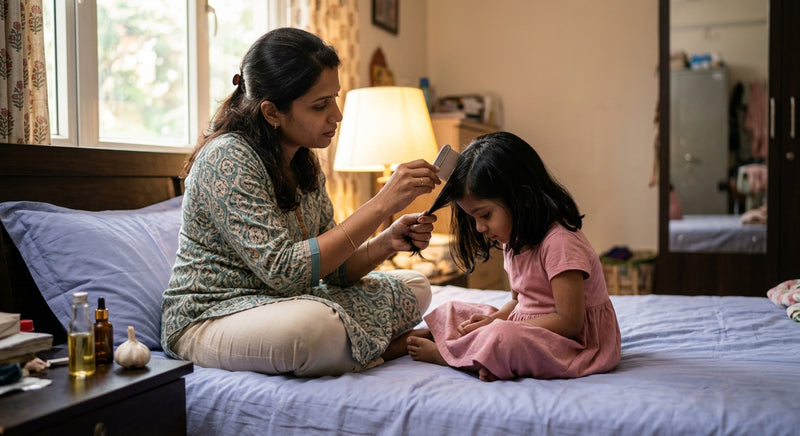
Oiling days: a malish always needs a real wash, never a rinse. And don't count it as one of your two or three. Coconut or almond oil sitting in the hair with a day's sweat is what makes a scalp itch by day two.
The 60-second rinse, step by step
- Lukewarm water, not hot. Hot water makes the scalp produce more oil and dries the lengths.
- Head under the tap or shower, fingertips working the scalp in small circles for 30-40 seconds. Fingertips, never nails.
- Let the water run through the lengths for the last 20 seconds. No shampoo needed.
- Squeeze out water with a cotton T-shirt instead of rubbing with a rough towel. Less cuticle friction, fewer tangles.
- Loose and open until dry. Tie or braid only after 20-30 minutes.
If she needs washing most days, change the shampoo
When a scalp genuinely needs a wash most days, a gentler formula is the fix. Cutting back to washes she'll only end up needing anyway isn't.
What I look for on a label. Mild surfactants doing the main work: sodium cocoyl isethionate, decyl or coco-glucoside, cocamidopropyl betaine, rather than a heavy load of harsh sulfates. A mildly acidic pH, near the 4.5-5.5 the scalp and cuticle prefer, because alkaline washes swell the cuticle and leave hair rougher to comb. A low-sting eye profile for the younger ones, so bath time doesn't turn into a nightly fight. And an ingredient list short enough to read on the bottle. A shampoo has no reason to be complicated.
Conditioner is the half people skip, and it counts for more the more often you wash. Cationic conditioning agents such as behentrimonium methosulfate or cetrimonium chloride carry a positive charge that's drawn to the negatively charged, damaged parts of the cuticle. They land exactly where the hair is roughest and cut the force needed to pull a comb through. On long or curly hair especially, a proper detangling conditioner on the mid-lengths and ends will do more for morning tangles than any brush. Skip the roots.
Monsoon is its own case. Through peak humidity, the problem is hair that never fully dries rather than the number of washes, so those weeks get a separate monsoon hair-care guide for kids.
When to see a doctor
Wash frequency isn't the answer to everything. Take your child to a paediatrician or dermatologist if you see any of these, rather than trying another shampoo:
- A round patch of hair loss, especially with broken stubbly hairs, scaling or a boggy swelling. This needs medical assessment, not a scalp product.
- Itching that keeps her awake, or scratching that has broken the skin.
- Yellow crusting, pus, or a tender, warm area on the scalp.
- Flaking that keeps returning over weeks despite a gentle routine.
- Live lice or nits, which need a specific treatment your doctor or pharmacist will guide you on.
- Sudden, noticeably heavier shedding.
If you're washing your child's hair a few times a week and want it to stay soft through it, a mild, tear-free wash made for children is the simplest place to start. Ours is the Loving & Balancing Shampoo.
In summary
- Rinse a sweaty scalp with plain water for 60 seconds after PE — sweat is mostly water and salt, so shampoo isn't needed.
- Shampoo children aged roughly 3-9 two to three times a week; move to alternate days only when roots look oily by evening.
- An oil malish always needs a proper wash, not a rinse — and it shouldn't count as one of the week's washes.
- If daily washing is genuinely needed, switch to a mild, mildly acidic formula and condition mid-lengths to ends every time.
- See a paediatrician or dermatologist for a round bald patch, crusting, pus, sleep-disturbing itch or flaking that keeps returning.
Frequently asked questions
Should my child wash their hair every day after PE?
For most school-age children, no. Sweat is mostly water and salt, so a 60-second rinse with plain water removes it. Shampoo is for sebum, product and pollution grime, which build up over two to three days on younger children. Daily shampoo becomes reasonable only once the scalp looks genuinely oily by evening, usually from about age 10.
Is rinsing hair with only water after sports actually enough?
Yes, on most days. Rinsing removes the sweat salts and dust while they're fresh, cools the scalp so it stops sweating, and takes away the warm damp conditions that cause the smell. What water cannot remove is oil. So a rinse works between washes, but it never replaces a proper shampoo after an oil malish or on a heavy build-up day.
At what age do children need to wash their hair more often?
Usually between 9 and 12, when the oil glands become more active and roots start looking greasy by evening. That's the signal to move from two or three washes a week to alternate days. Go by how the scalp actually looks and smells rather than the birthday — some children need it at 9, others not until 13.
Does washing hair daily cause hair fall in children?
Washing doesn't pull hair out at the root. The strands you see in the drain were already shed and would have come out on the pillow or comb anyway. What frequent harsh washing can cause is breakage — a stripped, roughened cuticle tangles more and snaps at the comb. That looks like hair fall but starts mid-shaft, not at the scalp.
Does hard water make daily hair washing worse?
It does. Calcium and magnesium in borewell water react with shampoo surfactants and leave insoluble residue on the hair, so each extra wash adds more deposit. In hard-water cities, hair feels rough and dull and lathers poorly. Washing less often, conditioning every wash, and a final mug of stored or filtered water all help noticeably.
Can my child sleep with damp hair after an evening wash?
Try not to let them. Wet hair is at its most fragile, and hours of friction against a pillow causes tangling and breakage. Damp hair tied or braided also stays warm and humid at the scalp, which is exactly what makes it smell by morning. Aim to finish the wash at least an hour before bed.