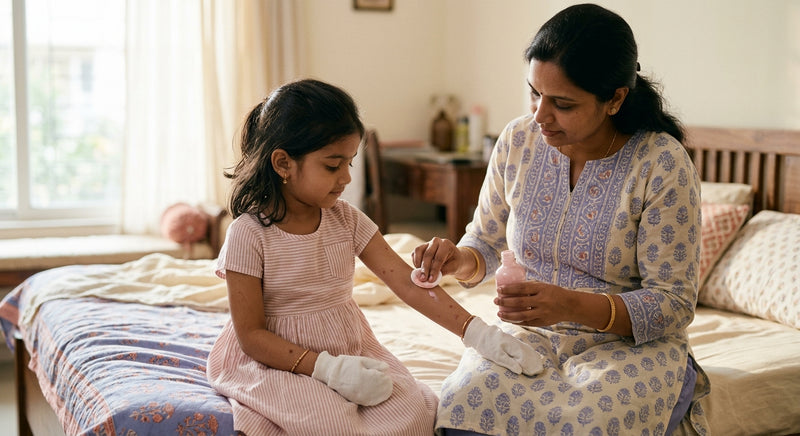
No, please don't put kerosene on your child's head. Not diluted. Not "only for ten minutes". Not with a towel tied over it overnight. Same answer for raw garlic paste, custard-apple (sitaphal) seed paste, loose "lice powder" from the kirana shop, and undiluted tea tree or eucalyptus oil. None of them reliably kill head lice, and every one of them has caused a child an injury far worse than an itchy scalp.
Here is what helps at 2am. The method with the best safety record costs about ₹200 and takes twenty minutes a session: a slippery conditioner, a fine steel nit comb, good light. Slow, unglamorous, and it works.
At a glance
- Kerosene, petrol and diesel are the most dangerous — flammable, and swallowing or inhaling even a little is a poisoning emergency.
- Garlic, onion and custard-apple seed pastes cause contact burns on thin scalp skin; sitaphal seed paste has blinded children when it ran into the eye.
- Neat essential oils are no "natural" shortcut — camphor and eucalyptus are specifically risky under 6, and undiluted tea tree burns scalps.
- Nothing dissolves nit glue. Not vinegar, not lemon. Eggs come off by combing, full stop.
- Wet combing with conditioner every 3–4 days for two weeks is the safe, repeatable core of any plan.
- Tell the school, check every head at home the same night, and don't fumigate the house.
If you have only just heard that lice are going around the class, start with our complete guide to head lice in school-age children. That one covers how to confirm it is lice before you treat anything. This is the other half of the panic: the long list of things people will tell you to try, and which of them can hurt your child.
Which home lice remedies are actually unsafe for children?
I have grouped these by what they do, because "natural" is carrying a lot of unearned weight in this conversation. Garlic is natural. So is the crude oil kerosene comes from. A child's scalp does not read labels.
| Remedy | What parents are told it does | What it actually does |
|---|---|---|
| Kerosene, petrol, diesel | "Suffocates lice overnight" | Chemical burns on the scalp, hair loss, and a flammable child standing near a gas stove or a diya. Swallowed or inhaled, it is a hospital case. |
| Raw garlic / onion paste | "Sulphur kills the lice" | Garlic held against skin under a cap causes irritant burns, and the blistering is well documented. The lice survive it. |
| Custard-apple (sitaphal) seed paste | Village remedy, "always worked" | Severe eye injury if it runs into the eyes while you rinse. Ophthalmology literature carries case reports of permanent damage. |
| Loose "lice powder" sold by weight | "One wash and they're gone" | Often repackaged agricultural pesticide. No label, no dose, no safety data for scalp use. |
| Household antiseptic liquids, phenyl, bleach, floor cleaner | "It's a disinfectant" | Formulated for tiles, not for skin 20–30% thinner than yours. Burns and chemical dermatitis. |
| Undiluted tea tree, eucalyptus, camphor oil | "Natural insecticide" | Scalp irritation and allergic dermatitis. Camphor and eucalyptus carry real toxicity risk in young children. |
| Hot blow-dryer, hot comb, hair straightener | "Heat kills eggs" | Scalp and ear burns. Hot air also scatters live lice around the room. |
Why kerosene is the one to never try
This is the remedy I hear about most, and the one worth being blunt about. Kerosene does not kill lice efficiently. It stuns some of them, and the eggs cemented to the hair shaft are untouched. So people leave it on longer. They wrap a towel or a plastic cover over it, because that is what the advice says. That is the moment it stops being a folk remedy and becomes an injury.
Occluded under a cap for an hour, kerosene strips the scalp's lipids and causes a chemical burn that can look like a bad sunburn and shed hair for weeks. The vapour collects under the cover and gets inhaled. And if any is swallowed — a toddler sibling, a drip into the mouth while rinsing — hydrocarbons can go down the wrong way into the lungs. That is one of the more serious paediatric poisonings we see in India.

Are essential oils safe for lice in children?
This one gets a longer answer than a flat no, because the evidence is not all one way.
There is laboratory data showing tea tree oil has activity against lice. That part is true. What there isn't is a safe, standardised, scalp-tested concentration for a seven-year-old. "A few drops in coconut oil" is not a formulation. It is a guess. Undiluted tea tree on a scalp commonly produces redness, stinging and sometimes an allergic reaction that outlasts the lice. An old oxidised bottle is worse than a fresh one.
Two oils I would rule out completely for young children: camphor (kapoor) and eucalyptus. Both sit in ordinary Indian homes. Both are absorbed readily. Both are associated with serious reactions in small children, and camphor ingestion is a recognised household poisoning here. Keeping them away from the face and nostrils of anyone under six is standard paediatric advice, and lice are not a reason to make an exception.
Neem oil sits in the middle. Traditionally used, usually better tolerated, and still able to cause dermatitis when it goes on broken, already-scratched skin. On a scalp a child has been clawing at for a week, that skin is not intact.
What about mayonnaise, oil and vinegar? Those seem harmless
They are far safer than anything above, so if you have already done a mayonnaise mask, nothing bad has happened. The problem is that they mostly do not work, and the hours spent on them are hours the lice spend laying eggs.
Heavy oils and mayonnaise are meant to suffocate lice. A louse can close its breathing openings for a long stretch, so the coating has to stay on for hours to have any chance, and the eggs hatch afterwards regardless. Vinegar and lemon are supposed to dissolve the glue holding nits to the hair. They don't. That glue is remarkably tough, which is exactly why nits sit tight while you shampoo.
And there is a practical cost: a head slick with mustard oil or mayonnaise is almost impossible to comb properly, and combing is the part that removes lice.

What to do tonight instead
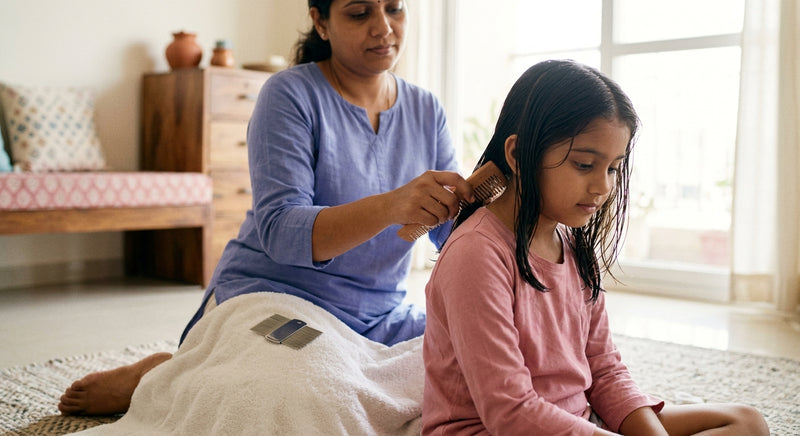
Wet combing is what I would hand any parent on a school night with no plan. It is mechanical and repeatable, and nothing goes on the scalp that can harm a child.
- Set up under the brightest light you have. Daylight at a window beats a tubelight. Keep a white towel or an old bedsheet under the chair.
- Detangle the dry hair first with a wide-tooth comb, working from the ends upward. Skipping this is why combing sessions end in tears.
- Wet the hair and work in a generous layer of conditioner, right down to the scalp. Lice cannot grip a slippery shaft, and they cannot run once they are slowed down.
- Section into four. With a fine steel nit comb, comb from scalp to tip in overlapping strokes — our step-by-step on how to use a nit comb properly has the exact angle and stroke pattern.
- Wipe the comb on a white tissue after every stroke. That tissue is your evidence of progress.
- Rinse, dry, and repeat every 3–4 days for two full weeks. That cycle catches the lice that hatch after the first session.
- Hot-wash pillowcases, caps, hair ties and the pillow-side of soft toys. Comb and brush go in hot soapy water for ten minutes.
- Check every head in the house tonight, adults included, and message the class group. Lice travel back from one untreated friend within a week.
If you want a pharmacy treatment alongside the combing, ask your paediatrician or pharmacist for one suited to your child's age, follow the label timing exactly, and repeat the dose on the day the pack specifies. Most failures come from a skipped second application, not a weak product. The combing continues either way. And if the school is in the middle of an outbreak, our calm step-by-step plan for a school lice outbreak covers siblings, sleepovers and the group chat.
One small thing that makes a fortnight of this bearable. You will be washing hair far more often than usual, so reach for a mild, tear-free formula rather than whatever happens to be in the bathroom — our Loving & Balancing Shampoo was built for exactly that kind of frequent, gentle washing. And whatever you use as the slip layer, it has to detangle, because a comb that snags will end the session before it is finished.
When to see a doctor
Lice themselves are a nuisance, not a danger. These are the situations where a paediatrician should look, and soon:
- Any kerosene, petrol, pesticide powder or disinfectant has been swallowed, inhaled, or has got into the eyes — that's emergency care, not a next-day appointment.
- The scalp has weeping, crusting, yellow-golden scabs, or tender swollen lumps behind the ears or at the neck — scratched skin can get secondarily infected.
- Blistering, raw patches or sudden hair loss after any home remedy.
- Lice are still live after two correctly completed rounds of a pharmacy treatment plus two weeks of combing.
- A child under two years old, or a child with eczema or broken scalp skin, where you'd want a doctor's guidance before applying anything at all.
Don't feel you need to have "tried everything" first. A ten-minute consult is cheaper than a burn.
For the fortnight ahead, what matters in a slip layer is simple: it should detangle well, rinse clean and feel comfortable on a scalp that has been scratched, so the comb glides instead of snagging. Our Rejuvenating & Detangling Conditioner is one option that fits that description. To be clear: no conditioner, ours included, kills lice or loosens nits — the comb does that work.
In summary
- Keep kerosene, petrol, pesticide powders, Dettol and bleach off a child's scalp entirely — they burn skin and the poisoning risk is real.
- Skip raw garlic, onion and custard-apple seed pastes; they cause contact burns and sitaphal paste has injured children's eyes.
- Never use neat essential oils, and keep camphor and eucalyptus away from children under six altogether.
- Wet-comb with a slippery conditioner and a steel nit comb every 3-4 days for two weeks, detangling dry hair first.
- See a paediatrician the same day for swallowed or inhaled kerosene, eye exposure, blistering, or a weeping, crusted scalp.
Frequently asked questions
Does kerosene kill head lice?
Not reliably, and it does nothing to the eggs glued to the hair shaft. Because it half-works, people leave it on longer and cover the head, which is exactly when it causes chemical burns, hair loss and inhaled vapour. Kerosene is also flammable near a stove or diya, and swallowing even a small amount is a serious poisoning. There is no safe way to use it on a child.
Is tea tree oil safe to use on my child's scalp for lice?
There is laboratory evidence that tea tree oil affects lice, but no standardised safe scalp concentration for children. Undiluted, it commonly causes stinging, redness and allergic dermatitis, especially on skin already scratched raw. If you want to try it, dilute heavily, patch test behind the ear for 24 hours, and never use camphor or eucalyptus oils on a child under six.
Will vinegar or lemon juice loosen nits?
No. The cement a louse uses to attach its egg to the hair shaft is not dissolved by vinegar, lemon, baking soda or any kitchen acid. Nits come off one way only: by dragging a fine-toothed steel nit comb along a well-conditioned, detangled hair shaft from scalp to tip. Vinegar rinses mostly just sting an already itchy scalp.
My grandmother swears by custard-apple seed paste. Is it safe?
I'd avoid it. Sitaphal seed paste is a genuinely old remedy, but eye specialists have reported serious, sometimes permanent corneal injury in children when the paste or rinse water reaches the eyes. The risk is in the rinsing step, which is impossible to fully control with a wriggling child. Wet combing achieves the same goal with no chance of that outcome.
How long do I have to keep combing before the lice are really gone?
Plan on two weeks of combing every three to four days, counted from the last session where you found a live louse. That schedule catches anything hatching from eggs laid before you started. Stopping after one good session is the single most common reason lice come back a fortnight later and parents conclude the treatment failed.
Do I need to fumigate the house or throw away pillows?
No. Head lice die quickly away from a human scalp and cannot live on furniture, floors or pets. Hot-wash pillowcases, caps, hair ties and bedsheets, soak combs and brushes in hot soapy water for ten minutes, and seal rarely-washed soft toys in a bag for a couple of days. Insecticide sprays around the house add risk without adding benefit.