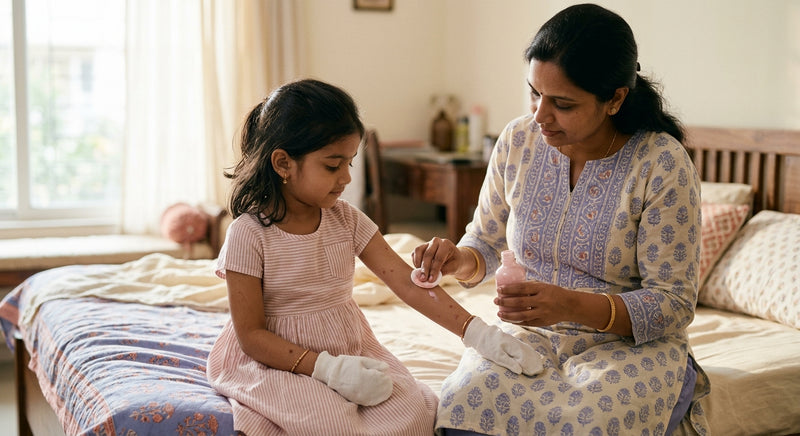
It's 2am in May, the fan is going full tilt, and your 5-year-old is clawing at a patch of tiny red bumps across the back of the neck and shoulders. You press one gently — not a blister, not one big angry spot, just a rash of pinhead bumps that came up after a sweaty afternoon. Take a breath. This is almost certainly heat rash (prickly heat, or miliaria), it is not an infection, and it usually settles within a few days once the skin cools down.
Here's what's happening under there. Sweat gets trapped because the tiny sweat ducts are blocked. In an Indian summer — a sticky Mumbai afternoon, or a bone-dry 44°C day in Nagpur — a child sweats far more than the skin can evaporate, especially under tight clothes, a school collar, or a backpack strap. That trapped sweat leaks sideways into the skin, and you get the prickly, itchy, bumpy patch. So the fix is mostly cooling and airflow. Not slathering on a heavy cream.
At a glance
- Heat rash is trapped sweat, not an infection — it clears once skin cools.
- It shows up where sweat pools: neck, chest, back, skin folds, under straps.
- Cool the child, loosen clothing, keep skin dry — skip heavy, greasy creams.
- A short tepid bath and a light, breathable moisturiser beat thick balms here.
- See a doctor if bumps turn into pus, the child has fever, or it spreads fast.
This is one of the most common summer worries parents bring to us, and it sits squarely inside our complete guide to skincare for kids aged 3 and up. So before you head back to bed — here's how to read it, and what to do.
How do I know it's heat rash and not something else?
Heat rash has a few honest tells. The bumps are small and uniform — pinhead-sized, clustered together rather than scattered as separate spots. They land exactly where sweat collects: the neck, upper chest and back, the crooks of the elbows, behind the knees, anywhere clothing rubs. There's a prickle or an itch to it — hence the name. And it shows up after heat and sweating, then starts to fade once the child cools off.
There are a few types. Knowing which one you're looking at tells you how much to worry.
| Type | What it looks like | How worried to be |
|---|---|---|
| Miliaria crystallina | Tiny clear, fluid-filled blisters that burst easily, no redness | Mildest — fades fast with cooling |
| Miliaria rubra (prickly heat) | Red bumps, prickly and itchy — the common one | Mild, but uncomfortable; settles in days |
| Infected heat rash | Bumps with pus, increasing redness, warmth, sometimes fever | See a doctor |
Stuck deciding whether it's heat rash, an allergy, or something viral? Three things point to heat rash: the location (sweat zones), the timing (after heat), and how fast it improves once you cool things down. A rash that spreads to the palms and soles, arrives with a fever, or won't budge after a couple of cool days deserves a doctor's eyes.
What can I do tonight to cool the skin?
Three jobs: bring the body temperature down, get air to the skin, stop new sweat from getting trapped. Here's exactly what I'd do, right now.
- Move the child somewhere cooler. A fan, an AC room, even a cross-breeze through two open windows. Stopping the sweat is the single most effective thing you can do.
- Give a tepid (cool, not icy) bath or sponge-down. Lukewarm-to-cool water rinses away the sweat and salt sitting on the skin. Don't scrub. Pat — don't rub — dry with a soft cotton towel.
- Loosen and lighten the clothing. Switch to loose, breathable cotton. Lose the synthetic school vest, the tight pyjamas, the strap that's pressing right on the rash.
- Let the skin breathe and dry fully. Heat rash hates airflow. A few minutes with the affected area uncovered and dry does more than any product.
- Skip the heavy, greasy balm on the rash itself. Thick occlusive creams can trap more sweat and make miliaria worse. If the skin feels dry, use light, breathable hydration instead.
- Keep nails short and keep little hands busy. Scratching is how a harmless rash turns into an infected one.
For the bath, the cleanser matters more than people expect. Harsh soaps strip the skin and leave it more reactive — the last thing prickly, inflamed skin needs. A mild, pH-balanced wash like our Kids Gentle Body Cleanser rinses sweat and salt away without that tight, squeaky-clean feeling that actually signals a damaged barrier.
Why does my child get heat rash so easily in Indian summers?
It's the skin and the climate together. A child's sweat system is less mature and less efficient than an adult's, and the skin itself is thinner — around 20–30% thinner — so it reacts faster to heat and friction. Then the weather piles on. In humid coastal cities, sweat simply can't evaporate, so it pools on the skin. Up in the dry north, the heat is so fierce that the sheer volume of sweat is enormous either way. Add a polyester school uniform, a tight nylon swim costume at the pool, or a synthetic football jersey, and you've built a perfect little trap.
Hard water plays a quiet role in plenty of Indian homes too. Mineral-heavy water leaves a film and can make skin feel rougher and more easily irritated, so a gentle rinse and a soft towel-dry earn their keep. And here's the irony: over-doing the rich oils and thick creams — that lovely malish habit we carry over from the cooler months — can make summer heat rash worse by blocking the ducts. Keep the ritual. Just change the texture with the season.
Should I use a moisturiser at all if the skin is sweaty?
Yes — but lightly, and only if the skin also feels dry. After a cool bath, when the skin is irritated and a little tight, a thin layer of a light, breathable lotion — one built around soothing ingredients like colloidal oats rather than heavy waxes — calms the prickle without sealing the sweat in. You want something that absorbs and vanishes, not something that leaves a greasy sheen. Our Hydrating & Soothing Moisturizing Lotion sits in that lighter category and is formulated to comfort dry, sensitive kids' skin without feeling heavy in the heat.
Want the bigger picture on keeping kids' skin balanced across seasons? Our take on a simple nightly routine for dry skin in kids is written for the cold months, but the principle is the same — just flipped: match the product texture to the weather.
How do I stop heat rash coming back this summer?
It comes down to staying ahead of heat and sweat through the day. Nothing fancy.
- Dress kids in loose cotton, and get them out of sweaty clothes quickly — don't let a damp uniform sit on the skin all afternoon.
- Keep bedrooms cool and well-ventilated; a fan moving air over the skin overnight heads off the classic morning neck rash.
- Hydrate them well — plenty of water and watery fruits help the body manage heat.
- Rinse off after the pool, the beach, or a long sweaty play session, and dry the skin folds properly.
- Push outdoor play to early morning or after 4pm, and keep heavy products off the skin through the hottest hours.
Two summer notes worth folding in here. Sweat is also why kids start to develop body odour around this age, so a gentle daily rinse handles both at once. And more sun means sun protection — our guide to how much sunscreen kids actually need and how often pairs naturally with a good summer routine. Just apply sunscreen to clean, cool, dry skin — never over an active, sweaty rash.
When to see a doctor
Most heat rash clears on its own with cooling and a little patience. Book a paediatrician if any of these are true: the bumps fill with pus, or the skin around them turns red, warm and tender; your child has a fever or seems genuinely unwell; the rash hasn't improved after two to three days of consistent cooling; or your child is so itchy and distressed they can't sleep or stop scratching. A doctor can confirm it's heat rash, rule out infection or an allergic reaction, and advise on anything stronger if it's needed. When in doubt, a quick check is the safer call — especially with younger children.
For most families, though, the answer at 2am stays simple: cool the skin, lighten the clothes, keep it dry, let it breathe. And if your child's skin feels dry and prickly after a cool summer bath, a thin layer of a light, soothing lotion can calm the irritation without weighing the skin down.
In summary
- Heat rash is trapped sweat, not an infection, and usually clears in two to three days once skin cools.
- Look for pinhead bumps in sweat zones — neck, chest, back and skin folds — appearing after heat.
- Tonight: move to a cooler spot, give a cool bath, switch to loose cotton, and let skin breathe.
- Avoid thick, greasy creams on active heat rash; use only a light, soothing lotion if skin feels dry.
- See a paediatrician if the rash blisters or oozes, there's fever, or it doesn't improve in a few days.
Frequently asked questions
How long does heat rash last in kids?
Simple heat rash usually settles within two to three days once the skin is kept cool and dry. The milder, clear-blister type can fade in hours. If the rash hasn't improved after a couple of days of consistent cooling, or it's spreading or oozing, see a paediatrician, as it may be infected or something other than heat rash.
Should I put cream on my child's heat rash?
Skip thick, greasy ointments on active heat rash — they can trap more sweat and make it worse. The priority is cooling, airflow and keeping skin dry. If the skin also feels dry and prickly after a cool bath, a thin layer of a light, breathable lotion with soothing ingredients like colloidal oats can help, but go light and let the skin breathe.
What's the difference between heat rash and an allergy?
Heat rash appears in sweat zones — neck, chest, back, skin folds — after heat and sweating, and improves when the child cools down. An allergic rash can appear anywhere, may come with swelling or hives, and isn't tied to heat. If a rash spreads fast, involves the face or breathing, or comes with fever, treat it as urgent and see a doctor.
Can I prevent heat rash in the Indian summer?
Largely, yes. Dress kids in loose cotton, change out of sweaty clothes promptly, keep rooms cool and ventilated, give a cool rinse after heavy play, and plan outdoor time for early morning or after 4pm. Keep heavy oils and thick creams off the skin in peak heat — they can block sweat ducts and bring the rash back.
Is a cold bath good for heat rash?
A cool or tepid bath helps — but not an icy one. Lukewarm-to-cool water rinses away sweat and salt and brings skin temperature down gently. Very cold water can shock the skin and isn't necessary. Use a mild, pH-balanced cleanser rather than harsh soap, don't scrub, and pat the skin dry with a soft cotton towel, drying skin folds fully.