My sister-in-law cornered me in a supermarket aisle in Nagpur last May with a bottle in each hand. "Can I just buy one and use it on all three of us?" For most Indian families, yes. One genuinely mild, tear-free shampoo can cover a baby, a school-goer and Mum, as long as it clears four bars: a low-irritation cleansing base, a scalp-friendly pH, little or no fragrance, and enough conditioning to survive hard water. Very few people in a house need their own bottle. The shelf would have you believe otherwise.
What follows is the label test I use, and then how one shared bottle behaves through a Nagpur summer, a Mumbai monsoon and a Delhi winter. Season breaks a shared shampoo far more often than age does. This piece sits inside our complete guide to shared family skincare, if you want the wider picture on what a household can safely pool.
At a glance
- Scalps differ far less than hair does. That is the whole reason one mild shampoo can serve several ages.
- Judge the cleansing base first, the fragrance second, the marketing last.
- The risky swap is an adult shampoo on a baby's head. The other direction does no harm.
- When a shared bottle "stops working", hard water is usually behind it. Age rarely is.
- Separate bottles are genuinely needed for medicated shampoos, coloured or chemically straightened hair, and some oily teen scalps.
Can one shampoo really work for a baby and a 40-year-old?
Hair varies enormously across a family. A seven-month-old has fine, sparse hair that barely needs cleaning. A twelve-year-old comes home from cricket practice with a sweat-soaked scalp. Mum has three feet of hair that tangles in the monsoon. But what a shampoo actually washes is scalp, and scalps are much more alike than hair is. Same barrier structure. Same preference for a mildly acidic surface, and the same dislike of harsh detergents.
Resilience is where they part company. A baby's skin is 20-30% thinner than an adult's, so a formula that leaves your scalp feeling merely "squeaky" can leave theirs tight and flaky. Which is why the direction of the swap matters so much. A gentle shampoo on an adult head is, at worst, underwhelming: you use a little more, you condition afterwards, and nothing is harmed. A strong adult shampoo on a baby's head is the swap I'd avoid. It is also the one that happens most often in Indian bathrooms, for the dull reason that the big bottle is the one within reach.
So build the shared bottle around the youngest, most sensitive head in the house. Then check it still does enough work for the oiliest one.
What to look for on the label, in order of importance
- The cleansing base. Turn the bottle over. If the first surfactant listed is sodium lauryl sulphate, that's a strong cleanser for a shared family bottle. Milder bases clean perfectly well on a child's scalp and won't strip an adult's: cocamidopropyl betaine, decyl or coco glucoside, sulfosuccinates.
- Tear-free, and tested. "No more tears" on the front of a bottle means very little on its own. Look for wording that points to actual testing. Ophthalmologically tested, dermatologically tested, clinically tested. In India, I'd also look for a manufacturer that owns its formulation rather than buying it off a white-label shelf.
- pH. Scalp skin is happiest mildly acidic. A shampoo that states a pH in the 4.5-5.5 range, or says pH balanced and can back it, is a better shared choice than one that says nothing at all.
- Fragrance and dye. The two most common irritants in a bathroom. A light fragrance is fine for many families. A strong perfume shampoo makes a poor shared choice, especially if anyone at home has very sensitive, easily irritated skin.
- Conditioning agents. Glycerin, panthenol, mild conditioning polymers. In hard-water cities, these are what keep long hair from turning into a knot.
- A preservative. Yes, you want one. A water-based product sitting in an Indian bathroom at 32°C and 80% humidity, opened with wet hands twice a day, needs protecting.
I've written that test out at more length for sensitive scalps across both kids and adults. The shortlist comes out nearly identical, which is the whole argument here.
Does one bottle suit every age? 0 to 16, honestly
Newborns and babies (0-1)
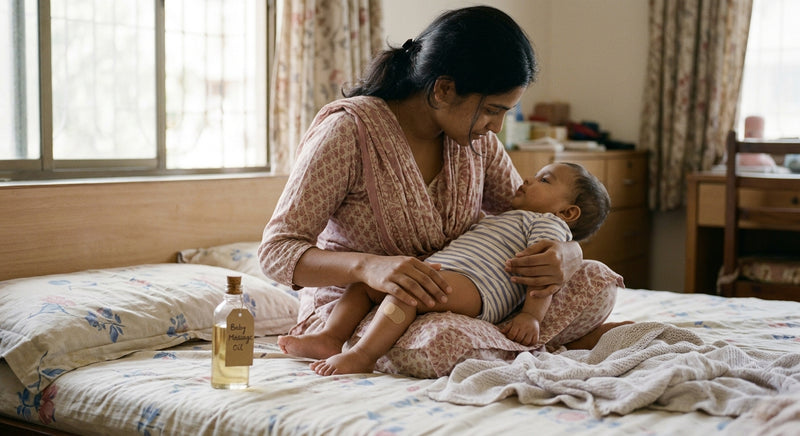
Barely any shampoo, and not very often. Twice a week is plenty. The amount is about a one-rupee coin, diluted in your palm. Most of the first year is really scalp rinsing. If there's cradle cap, a soft massage with a little oil for 15-20 minutes before the wash lifts the flakes better than any amount of scrubbing.
Toddlers (1-3)
This is where a shared bottle earns its place. Toddlers arrive at bath time carrying dust, sweat and yesterday's malish oil, all at once. A mild shampoo removes oil residue better than most parents expect. The trick is two short lathers instead of one long scrub: the first lather lifts the oil, the second actually cleans.
School years (3-10)
Sweat under a school cap, dust off the ground, chlorine if they swim. Three washes a week suits most Indian school kids. Five in peak summer is fine so long as the shampoo is mild. What damages a child's scalp is harshness, and frequency gets blamed for it.
10-16
Here is where families split, and it's worth saying so plainly. Around 11 to 13, sebum production climbs, and some teens outgrow the family bottle. The tell is specific: hair that looks greasy at the roots by evening even after a morning wash, two days running. That teen either washes daily with the mild shampoo, which is perfectly fine, or gets their own. Please don't hand them an anti-dandruff shampoo to "sort it out". Flaking and oiliness are two different problems.
Mums
A gentle shampoo works well for most adult scalps, and particularly through the postpartum months, when shedding is at its worst and nobody wants anything aggressive near their scalp. The limitation is coloured, keratin-treated or chemically straightened hair, which usually needs a formula built for it. I've gone into that trade-off properly in whether mums can use baby shampoo.
What changes season by season in India
The bottle stays the same all year. How you use it doesn't. Frequency shifts, water temperature shifts, and so does what you do after the wash.
| Season | What it does to scalps | The one adjustment |
|---|---|---|
| Peak summer (Mar-Jun) | Sweat and dust settle along the hairline; kids' scalps smell by evening | Same shampoo, higher frequency, smaller quantity each time |
| Monsoon (Jun-Sep) | Hair stays damp for hours; damp scalps itch, and tied hair traps the moisture | Dry the scalp fully before bed; never plait or braid damp hair |
| Winter (Nov-Feb) | Room heaters plus hot water dry the scalp; flaking and static increase | Drop the water temperature to lukewarm and condition mid-length down |
| Hard water (year-round) | Film on the hair, lather that vanishes, hair that squeaks then tangles | Rinse 30-60 seconds longer; finish with a mug of stored or filtered water |
Hard water is what actually breaks a shared shampoo
Across large parts of Delhi NCR, Rajasthan, Gujarat, Hyderabad and Chennai, the water carries enough dissolved calcium and magnesium to change how every shampoo behaves. Those minerals react with the cleansing agents and leave a fine film on the hair shaft. Which produces the complaint I hear most: "This shampoo stopped working." The formula hasn't changed. The water has.
Three signs, and the first is the most reliable. Lather collapses fast and you keep reaching for more product. Hair feels rough and squeaky while wet, then tangles the moment it dries. There's a chalky ring where water sits in the bucket or around the taps. If two of those are true, rinse longer before you change brands. And for anyone with long hair, conditioner from mid-length to ends is doing more work than the shampoo choice ever will. Ours is formulated for all ages, so it stays in the shared corner of the shelf: the Rejuvenating & Detangling Conditioner.
Who genuinely needs their own bottle?
- Anyone on a medicated or prescribed shampoo. That bottle is treatment. It belongs to one person, and a paediatrician or dermatologist decides when it stops.
- Coloured, keratin-treated or chemically straightened hair. Usually Mum. A gentle shampoo won't harm it, but it won't hold the treatment either.
- A teen with a heavily oily scalp who won't wash daily. Some do better with a formula built for their sebum level.
- A newborn in the first weeks, in one narrow sense. Same product, far less of it, far less often.
That's the whole list. Most other families are already sharing one bottle and have simply never thought of it that way.
The shared-shampoo routine you can start tonight
- Decant the family bottle into one pump dispenser near the bucket, so nobody grabs the strong adult shampoo by mistake in the dark.
- Dilute for the youngest: a coin-sized amount in half a mug of water, poured slowly over a wet scalp.
- Wash the scalp, not the lengths. The lengths get clean from the rinse running down.
- Two short lathers on oiled hair. One is enough on a normal day.
- Rinse for a full extra 30-60 seconds if your water is hard. Keep one mug of filtered water for the last pour over the scalp.
- Condition from mid-length down for anyone with hair past the shoulders. Never on a baby's scalp.
- Dry the scalp properly before bed, especially in monsoon. Damp roots under a pillow all night are what turn into itching.
Two things I'd hold firm on. Adult anti-dandruff shampoo is not a shared product. It isn't formulated for a child's scalp, and flaking in kids has several possible causes that need identifying rather than covering up. And "tear-free" describes a formula designed to sting less. It is not a licence to let shampoo run into a child's eyes. Tilt the head back and pour from the forehead towards the crown.
When to see a doctor
Book a paediatrician or dermatologist if the scalp is weeping, crusting or has yellow scabbing. Also if flaking persists for more than two to three weeks despite a mild routine, or if itching is bad enough to wake your child at night. A bald patch with a clear border, or broken hairs, needs looking at. So does lice that don't clear after a proper treatment cycle. For mums, shedding that continues heavily beyond about a year postpartum, or that comes with fatigue or changes to nails and skin, is worth raising with a doctor rather than solving with a new shampoo. Nothing on this page replaces an examination. A doctor looking at the actual scalp will get you an answer far faster than trial-and-error on the shelf.
If you'd like one bottle mild enough for the youngest head in the house, our tear-free Loving & Balancing Shampoo is made in our own GMP-certified facility and formulated to that standard.
In summary
- One mild, tear-free shampoo can serve a baby, a school-goer and Mum — formulate for the youngest head, then check it still works for the oiliest.
- Judge the cleansing base first: skip a shampoo that lists a strong sulphate as its main surfactant for shared family use.
- Change frequency and water temperature with the season, not the bottle — more washes in summer, lukewarm water in winter, dry scalps fully in monsoon.
- In hard-water cities, rinse 30-60 seconds longer and finish with stored or filtered water before blaming the shampoo.
- Keep separate bottles only for medicated shampoos, chemically treated adult hair, and teens whose roots turn greasy by evening.
Frequently asked questions
Can I use my baby's shampoo on my own hair?
Generally yes. A gentle shampoo cleans an adult scalp perfectly well — you'll simply use a bit more and want conditioner on the lengths. The real limitation is chemically treated hair: colour, keratin or straightening usually needs a formula built for it. Postpartum, when shedding is heaviest, many mums actively prefer the milder bottle.
Is one shampoo enough for a 2-year-old and a 12-year-old?
Usually, yes. Their scalps need the same kind of mildness; what differs is frequency and quantity. The toddler needs a coin-sized amount two or three times a week, the twelve-year-old may want a daily wash in summer. Only consider a separate bottle if the older child's roots look greasy by evening even after a morning wash.
How often should the family shampoo in Indian summer?
More often than in winter, but not more harshly. Babies stay at two or three washes a week. School-age children can go to four or five in peak heat, especially with sweat and dust along the hairline. Teens and adults may wash daily. Frequency isn't what damages a scalp — a harsh formula is.
Does a shared shampoo work with hard water?
It works, but it needs help. Hard water leaves a mineral film that makes lather vanish and hair tangle, which reads as "the shampoo stopped working". Rinse 30 to 60 seconds longer than feels necessary, finish with a mug of stored or filtered water over the scalp, and condition long hair from mid-length down.
Can a teenager use a mild kids' shampoo if their scalp gets oily?
Often yes, provided they wash more frequently — daily is fine with a gentle formula. The clearer signal that they need their own bottle is roots looking greasy by evening even after a morning wash, two days running. Don't reach for an adult anti-dandruff shampoo as a fix; oiliness and flaking are different problems.
Is tear-free shampoo safe for a newborn's scalp?
A mild, tear-free formula is suited to newborn scalps, but the amount and frequency matter more than the label. Twice a week is plenty in the first year, using a coin-sized amount diluted in your palm or in half a mug of water. Tilt the head back and pour from the forehead towards the crown so nothing runs into the eyes.