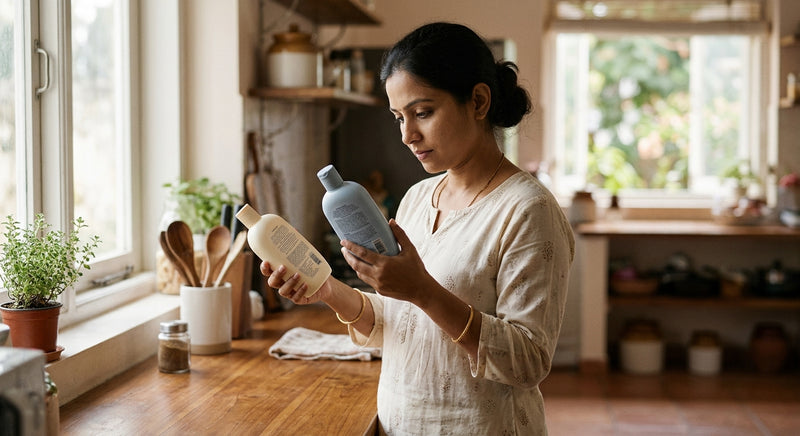
Checkout screen, baby moisturiser in the cart, UPI app half open — and there it is. A small radio button offering 15% off if you subscribe. Tempting. Also faintly alarming: are you signing up for jars of cream arriving till the child starts school?
Short version. Subscribe and save earns its place on exactly one kind of product — the one your child uses every single day, and that you have already run out of at least once. Everything else is better bought one at a time. The discount is almost always smaller than the cost of product you never finish. Baby skincare isn't rice or detergent. Every jar has an open-jar clock running on it.
I make these formulations for a living, in our own GMP-certified facility in Nagpur, so I see the unglamorous end of this: how long a preservative system is tested to hold, what a jar looks like after four months in a Nagpur bathroom, and how much product a real baby gets through versus how much parents think they do. That last gap is where nearly all subscription regret comes from.
At a glance
- Subscribe only for daily-use items — moisturiser and bath wash. Everything else: one-time.
- Compare price per gram or per ml, not the headline discount. A bigger pack at a worse ₹/g is not a saving.
- Look for the open-jar symbol (6M or 12M). That is how long the product is meant to be used after you open it.
- Set the delivery interval from your own measured usage, not from the brand's default.
- Three stockpiled jars that expire half-full is a 100% loss, which no 15% discount can beat.
Building a routine from scratch rather than restocking one? Start with our complete guide to buying baby and kids' skincare by age. The age gates there decide which products belong in the cart at all, and that question comes well before how you pay for them.
Does subscribing change the product that arrives in the box?
No. The jar on a subscription order and the jar on a one-time order come off the same line, from the same batch pool, filled on the same day. No subscriber formula. No special batch. Nobody in manufacturing would run two versions of one SKU — it doubles your testing, your stability work and your compliance paperwork, and buys you nothing.
A subscription moves two things and no others: price and timing. So this is arithmetic. You can do it yourself at the kitchen table, which is more than you can say for most claims on a box.
Myth 1: "A subscription is automatically cheaper"
What's true: the per-order price really does drop. Plenty of Indian baby brands offer a discount on a repeating order, and on something you buy twelve times a year, that is real money.
What isn't: that the discount is the whole sum. Two things eat it. Pack size first — a subscription tends to nudge you towards the larger jar, and larger is not automatically better value, so work out the rupees per gram for both sizes before you tick anything. Then the expensive one: unused product. If a 15% discount sends you a jar every month and you finish one every three, you have paid 85% for stock that will pass its open-jar date sitting on a shelf. You didn't save 15%. You lost two jars.
Myth 2: "Unopened baby skincare keeps for years, so stocking up is fine"
What's true: sealed and properly stored, a product holds for its stated shelf life. That date comes out of stability testing. It is not a guess.
What isn't: that any of it survives the lid coming off — or that "properly stored" describes an Indian bathroom in May. Two different clocks run on every bottle:
- Shelf life — the best-before date on a sealed pack.
- Period after opening (PAO) — the little open-jar symbol printed with 6M or 12M. From the day you open it, that's your window. Air, fingers and bathroom humidity all go in with every use, and the preservative system is only tested to hold the product safe and stable for that long.
Heat speeds all of it up. Put a jar on the shelf above the geyser, or on a windowsill in a bathroom that hits 40°C by three in the afternoon, and it will separate, thin out or smell different long before the same jar kept in a bedroom cupboard. Water-based lotions and emulsions feel it first. An anhydrous balm is more forgiving — not immortal, just slower to complain. And a baby's skin is 20-30% thinner than an adult's. That is the last skin on earth you want to experiment on with a product that's past its window. If you'd like to read the back of a pack properly, our A-Z baby skincare ingredient glossary for India goes down the ingredient list line by line.

Myth 3: "Subscribing means I always get the freshest stock"
Half right, and the half that's right is worth knowing. A brand with steady, predictable subscription demand plans production better, and fast-moving stock is fresher stock. No argument there.
But a subscription does not entitle you to a newer batch than the person placing a single order, and no honest brand will tell you otherwise. What actually keeps the jar on your shelf fresh is far duller: buy an amount you'll finish in two to three months, and keep it off the geyser shelf.
While we're on claims — the words on the front of the box are a separate question from the price at checkout. "Mild", "gentle" and "tear-free" have specific meanings in India, and we've written about what they legally do and don't mean. Put a product you don't yet trust on repeat and you've simply automated the mistake.
How much does a baby actually get through in a month?
This is the number that settles everything, and almost nobody measures it. Two babies the same age can differ threefold. Here's the pattern I see:
- Targeted use — face, nappy area, a dry patch behind the knees — is slow. A single jar can last a whole season.
- Head-to-toe moisturising, twice a day, in winter or on eczema-prone skin is fast. This is where parents run out on a Wednesday night, and the one place a subscription earns its keep.
- Everything in between tracks your climate more closely than your child's age. The same baby gets through visibly more moisturiser in a Delhi December than a Chennai August.
So mark the open date. Note the day it runs out. Count the weeks. That's your interval — not the one the dropdown suggests.
Which baby products are worth subscribing to?
| Product | How fast it really goes | Verdict |
|---|---|---|
| Daily moisturiser / balm | Fastest of the lot, and doubles in dry season | Subscribe — the one clear case |
| Bath wash / foam wash | Steady and predictable; faster with two kids sharing | Subscribe if you've run out before |
| Shampoo | Two to three washes a week stretches a bottle a long way | One-time |
| Conditioner / detangler | Small amounts, only on longer hair | One-time |
| Sunscreen | Spikes with school term and holidays, near-zero in between | One-time, bought to the season |
| Anything for a flare-up | Completely unpredictable — that's the nature of it | One-time, always |
Sunscreen deserves a line of its own. It is the product parents most often put on auto-delivery and most often over-order, because the amount a child needs shifts sharply with age and school routine. Our age-by-age sunscreen guide for India sets out the quantities at 3, 6, 10 and 12. Settle the quantity first. Then decide how to buy it.
Bath products sit in the middle: predictable enough to subscribe to, once you know your own rhythm. Bathe daily with a pump-dispenser head-to-toe baby foam wash and you'll notice the bottle lasting longer than you expected. A foam delivers far less actual product per pump than a gel does. We designed it that way; it isn't a line from the marketing team.

What should I check before ticking the subscribe box?
- Is the discounted price locked for every order, or only the first one?
- Can you skip a single delivery without cancelling the whole thing?
- How do you cancel — one click, or an email and a wait?
- Can you change the interval yourself after the first order?
- Is the ₹ per gram actually better than the one-time price of the size you'd normally buy?
- Does the pack carry a batch number and a readable PAO symbol?
- Will you still want this product in four months, or are you subscribing to something you've used twice?
My rule of thumb, and I hold my own cart to it: never subscribe to a product you haven't finished at least once. Buy one. Use it to the bottom. If you reach for it on a 2am nappy change without thinking about it, that's the one to put on repeat.
What about bundles and hampers — are those the same thing?
Different animal. A bundle is one purchase of several products, so every open-jar clock inside it starts ticking on the same day. Fine, if all of those products are already part of a routine you run. It goes wrong when a bundle is really a way to shift something you'd never have bought on its own — you end up with two jars you love and one you'll throw away half full. So price a bundle on the items you'd have bought anyway, and count the rest as zero.
When to see a doctor
If the reason you're thinking about a subscription is that you're going through moisturiser unusually fast — skin that keeps flaring, broken or weeping patches, redness that returns within days of settling, or a baby scratching enough to disturb sleep — the answer isn't more product on a schedule. Please see your paediatrician or a dermatologist. Recurring flares need a diagnosis and a plan; skincare supports that plan, it doesn't replace it.
And if the daily moisturiser is the one thing you know you'll finish, look for a jar with a readable PAO symbol, a batch number and a short, decodable ingredient list — our Hydra Healing Moisturizing Balm is one option: it is clinically tested, helps support the skin's natural barrier, and comforts dry, sensitive skin.
In summary
- Subscribe only to a daily-use product you have already finished at least once — usually the moisturiser.
- Compare price per gram or per ml; the headline discount percentage tells you very little.
- Check the open-jar symbol (6M or 12M) and write your opening date on the lid tonight.
- Set the delivery interval from your own measured usage rate, not from the brand's default.
- Buy sunscreen, shampoo, conditioner and flare-up products one at a time, since usage is irregular.
Frequently asked questions
Is subscribe and save actually cheaper for baby skincare?
Only if you finish each delivery before the next arrives. The 10-20% discount is real, but a jar you abandon half-used past its open-jar date is a total loss, which no discount covers. Work out your usage rate first, set the interval to match it, and compare price per gram rather than the headline percentage. On daily moisturiser it usually pays; on occasional products it rarely does.
How long does baby skincare last after you open it?
Look for the small open-jar symbol on the pack, marked 6M or 12M. That is the period after opening — the number of months the product is tested to stay safe and stable once air and fingers reach it. It is separate from the sealed shelf life. Indian heat shortens real-world performance further, so store bottles in a cool cupboard rather than a hot bathroom shelf.
Which baby products are worth subscribing to?
Daily moisturiser is the clearest case, because head-to-toe use twice a day gets through a jar quickly, especially in dry season. Bath wash is a reasonable second if you bathe daily or have two children sharing a bottle. Shampoo, conditioner, sunscreen and anything you reach for only during a flare-up are better bought one at a time, since their usage is irregular.
Do subscription orders arrive from a fresher batch?
No, and no honest brand will claim so. Subscription and one-time orders are picked from the same stock, made on the same line, in the same batches. Steady demand does help a brand plan production, which keeps stock moving generally. But what keeps your own jar fresh is buying an amount you will finish in two to three months and storing it away from heat.
Should I stock up on baby skincare during a sale instead?
Buy one extra of something you already use daily, not six. Sealed products hold to their shelf life, but a stockpile tempts you into opening several at once, and then every open-jar clock runs in parallel. Check the best-before date on anything deeply discounted, and skip bulk buys of products your child has not used before — babies outgrow and react to things fast.
Is a bundle better value than a subscription?
They solve different problems. A bundle is one purchase with several open-jar clocks starting together, which suits a routine you already run. A subscription spreads delivery over time, which suits one fast-moving product. Judge a bundle only on the items you would have bought anyway and count the rest as zero — that is usually where the apparent saving disappears.