Your ten-year-old comes in from games period with a damp head that smells faintly sour. Wash it now? Or not, because someone in the family is certain daily shampoo causes hair fall. The short version: most tweens do well washing every 2-3 days, roughly three times a week. A child with an oily scalp who sweats through school can wash daily without harm, as long as the shampoo is mild and the conditioner goes on the lengths. Frequency is not what makes hair fall. A stripping, harsh formula dries the hair out and then it breaks, and that is the shampoo's fault rather than the schedule's.
What changed in your house isn't hygiene. It's hormones. Somewhere between 8 and 13, the same shift that brings body odour and oilier skin turns the scalp's oil glands up a gear. Hair that stayed fresh for four days at seven now looks flat by the second evening. If several of these changes have arrived together, our complete guide to tween body changes lays out the whole timeline.
At a glance
- Start with a wash every 2-3 days, then follow what the scalp actually does rather than a rule somebody handed you.
- Daily washing is safe when the shampoo is mild. Hair breaks from heat, rough towels and tight bands, not from frequency.
- After a sweaty PE class, a plain water rinse counts. Sweat-wet hair does not need shampoo every time.
- Curly and coily hair usually wants fewer washes, once or twice a week, and conditioner every single time.
- Persistent flaking, round bald patches or a sore, itchy scalp needs a doctor, not another shampoo.
So how often should a tween wash their hair?
No honest single number fits every child. Three things set it: how much oil the scalp is producing this year, how much the child sweats, and how dry the lengths are. Find your row below and start there. Give it a fortnight, then move up or down by one step.
| Hair type & routine | Wash how often | Why |
|---|---|---|
| Fine or straight, oily scalp, mostly indoors | Every 1-2 days | Oil slides fast down a smooth shaft, so roots look greasy long before the ends do |
| Medium thickness, average school day | Every 2-3 days | Where most tweens land |
| Thick or wavy with dry ends | Twice a week, water rinse in between | The scalp can take more; the ends cannot |
| Curly or coily | Once or twice a week, condition every wash | Oil struggles to travel down a coiled shaft, so the lengths stay dry |
| Daily sport, coaching or outdoor practice | Rinse daily, shampoo on alternate days | Sweat and dust come out with water; you only need surfactant for oil |
| Swimming three or more times a week | Rinse straight after every session, shampoo each pool day | Chlorinated water left to dry in the hair is what turns it straw-like |
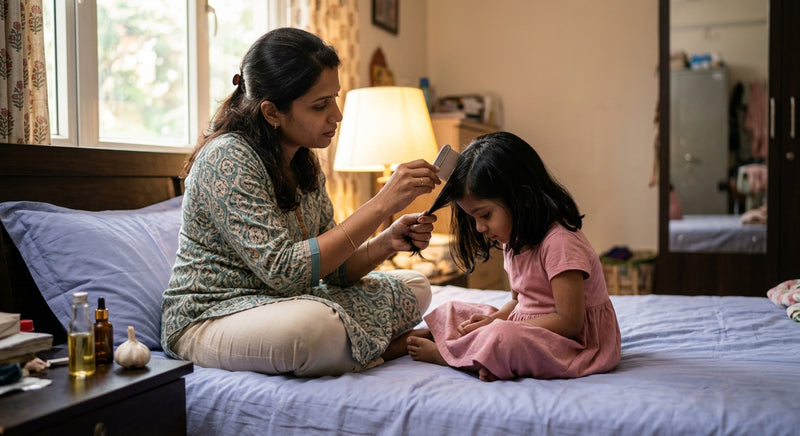
| Long hair, oiled weekly | Shampoo on oiling day, double lather | Oil left sitting needs a proper wash, or it traps dust |
Myth: "Daily shampoo causes hair fall"
This is the one I hear most, and I know exactly where it comes from. You wash, and there is hair in the drain. But hair sheds on its own cycle whether it gets washed or not. Those strands had already let go. The water only carried them out. Wash twice a week and three days of shedding arrives in one go, which looks alarming. The same quantity leaving quietly onto a pillow over three mornings does not.
In most tween houses, the things actually breaking hair are mechanical. A rough terry towel rubbed hard over a wet head. A comb dragged root to tip through wet curls. Those thin rubber bands off the stationery shop rack, yanked out at four in the afternoon. Fix those three and the drain will look better than any change of wash schedule can manage.
"Skip washes and the scalp will learn to make less oil" — it won't
Oil glands take their orders from hormones. There is no training them. What happens instead is that sebum sits on the scalp, mixes with sweat, dust and whatever came off the school bus window, and for some children that stale layer makes the itching and flaking worse. So the parent washes less often, and it builds. If your child's hair looks oily again by the next morning no matter what you do, that is the puberty switch, and we've written about why a tween's hair turns greasy overnight in detail.
Oil before every single wash? Not needed
Malish stays. A warm oil massage on the scalp is genuinely comforting, it buys you ten quiet minutes with an eleven-year-old who is usually halfway out of the room, and it makes detangling easier. The amount and the timing are what I'd change. A heavy coat left on overnight, on a scalp already producing plenty of oil, means a much harder wash the next day. Usually two rounds of shampoo, which is more cleansing than the child needed in the first place.
So: warm oil, 30-60 minutes before the bath, scalp and lengths, on wash day only. Not four nights a week. Not left on for two days "to let it soak in".
What about PE days, sweat and swimming?
Sweat is mostly water and salt. Water rinses it out. So on a Tuesday when the child comes home damp from the field and the hair was washed on Monday night, two minutes under the shower, a squeeze and air-dry is a complete answer. No shampoo, and no guilt about it. It is the same reasoning behind a ten-year-old needs deodorant or just a better bath routine: the smell usually belongs to sweat sitting on skin and hair, and washing it off at the right moment beats adding another product.
The pool is a different matter. Pool water left to dry in the hair keeps working on it all evening. Rinse in the changing room before the hair dries, then shampoo and condition properly at home that night.
The wash itself matters more than the number
Two children can wash three times a week and end up with completely different hair, because technique does most of the work. Here is the routine I'd hand a tween who has started washing their own hair:
- Detangle dry hair with a wide-tooth comb before it goes anywhere near water. Wet hair stretches and snaps.
- Wet thoroughly for about 30 seconds. Warm, never hot. Hot water in a Nagpur summer is a habit, not a need.
- One coin-sized blob of shampoo for shoulder-length hair. Two rounds only if the hair was oiled.
- Fingertips, never nails, working the scalp for a minute or two. The scalp is the thing you are washing; the lengths clean themselves in the runoff.
- Rinse for a full 60 seconds, until the water runs clear. Under-rinsing is a very common reason behind "my child's scalp itches after every wash".
- Conditioner from ear-level down only. Never on the roots.
- Squeeze the water out, then blot with an old cotton t-shirt instead of rubbing with a terry towel.
- Let it dry loose. No braids, no tight ponytails, no school bun on damp hair.
Does a tween actually need conditioner?
If they wash more than twice a week, have long hair, swim, or have curls, then yes. Something light that goes on the lengths and rinses out clean. Watch for silicone-heavy build-up, which has the child asking to wash again two days later. A gentle detangling conditioner earns its keep mainly by making the morning comb-through survivable, and that prevents a lot of breakage.
What I won't budge on is the shampoo from a reel. Tweens are being sold adult clarifying and anti-dandruff formulas by people with no idea who is watching, and a strong active on a young scalp is a fast route to a dry, itchy one. If that argument has started at your house, we wrote the exact script for the viral-product conversation in the Janma Journal.
Signs you've got the frequency wrong
Washing too little: the scalp itches by evening. The parting looks damp and darker. Flakes are yellowish and greasy rather than dry and white, and the hair smells faintly within a day.
Washing with something too harsh reads quite differently. The ends feel like straw. Hair goes fluffy and frizzy instead of soft, the scalp feels tight the moment the wash ends, and the scratching starts within an hour of a bath. Change the shampoo before you touch the schedule.
When to see a doctor
Take your child to a paediatrician or a dermatologist if you see flaking with redness, or thick scaly patches that haven't settled in two to three weeks. Same for a round patch where hair is missing or broken off close to the scalp, for sore spots or pus-filled bumps, and for intense itching, especially if anyone at school has had lice. Also for sudden noticeable thinning across the whole head after an illness or fever. Scalp infections in children are common and very treatable, but they need a prescription. No shampoo, however gentle, is the answer to one.
Get the frequency right and everything after it is just a mild wash, rinsed properly. That is what our Loving & Balancing Shampoo was formulated to be, for hair that is now getting washed more often than it used to be.
In summary
- Start at a wash every 2-3 days, then move up or down based on how the scalp looks and feels by evening.
- Daily washing with a mild shampoo is safe — harsh formulas, hot water and rough towels are what damage hair, not frequency.
- On sweaty PE days a plain water rinse is enough; save shampoo for oil, not sweat.
- Detangle dry, massage the scalp with fingertips, rinse for a full 60 seconds, and keep conditioner on the lengths only.
- Flaking that lasts weeks, bald patches, sore spots or sudden thinning need a paediatrician or dermatologist, not a new shampoo.
Frequently asked questions
How often should a 10-year-old wash their hair?
Most 10-year-olds do well with a wash every 2-3 days. Go daily if the scalp turns oily overnight or the child plays sport every afternoon, and stretch to twice a week if the hair is curly, coily or dry at the ends. Set the number by what the scalp does by evening, not by a fixed rule.
Is it okay for a tween to wash their hair every day?
Yes, provided the shampoo is mild and conditioner goes on the lengths. Daily washing does not cause hair fall. Problems come from harsh, stripping formulas, very hot water and rough towel-drying. If daily washing leaves the ends dry, change the shampoo and add conditioner before you reduce how often they wash.
Should my tween oil their hair before every wash?
No. Oil on wash day is plenty. Warm oil, applied 30-60 minutes before the bath on the scalp and lengths, is comforting and makes detangling easier. A heavy overnight coat on an already oily tween scalp needs two rounds of shampoo to remove, which cleanses more than the hair actually needed.
My tween's hair gets oily one day after washing. What do I do?
That is the puberty shift in the oil glands, not poor washing. Wash more often with a mild shampoo rather than less; skipping washes will not train the scalp to produce less oil. Keep conditioner strictly on the lengths, rinse for a full minute, and avoid heavy leave-in products near the roots.
Can a tween use adult shampoo?
A plain, mild adult shampoo is usually fine occasionally, but adult clarifying and anti-dandruff formulas are not. Strong actives on a young scalp often leave it tight, dry and itchy, which starts a cycle of more washing. If flaking is the reason you are reaching for a medicated shampoo, have the scalp examined first.
Does washing hair more often make it fall out faster?
No. Hair sheds on its own cycle regardless of washing; the strands you see in the drain had already released. Washing twice a week simply collects several days of shedding into one visible moment. Breakage is driven by rough towel-drying, combing wet hair from the roots and tight rubber bands.